

Trust in the power of the universe,
for we are all made of the cosmos.
We are made of matter.
Though we feel inextricably small
in the scale of things,
we matter.
Tag Archives: Writing

Past, Present, Future
3 months.
You disappeared
without warning,
no note,
no explanation.
But I found you
in the middle of the Middle East
in the house where you were born,
rediscovering your roots?
“Something like that,” you tell me.
Then I realised,
you were not looking ahead,
you were looking back.
You tell me that things would have been different
if you had just walked away from your father’s world.
“This is what I made of myself!”
But it is not who you wanted to be,
a ballerina was your childhood dream,
written on a list buried deep in an orchard.
“This little girl was strong,”
yet so is the woman standing before me,
having witnessed more things than a soul should ever see.
You thought going back to your roots
would assuage your guilt
of all the things you have done,
but the universe was begging you
to wipe the slate clean,
begin again.
You tell me I should not have come,
but I tell you that you are not alone,
the only way I know how.
“I just want you to come home with me.”
I know it’s hard
and I know you want to change,
but I can change with you,
and as I place a kiss upon your fingertips
I wonder
is there anything more I can do to stop you
from wanting to stay?
Is there anything more I can say?
No,
of course not.
Your mind is made up.
Something which
is difficult to change.
My heart is aching
because I want you with me
need you with me,
as you have been for the last eight years,
as I become the person I want to be.
My whole world revolves around you.
I don’t know how it works any other way.
I sit on the plane and journey home,
alone
wondering if I’ve made a mistake.
It is then I find your necklace
buried deep in my pocket,
it is not a heart-shaped locket
but it might as well have been,
because I know what this means.
We did not say those three famous words,
though we felt them with our souls:
“I’m fighting for you.”
“I know.”

Where Have I Been?
Hello. It’s been a while.
You’re probably wondering where I’ve been? The truth is – nowhere (and everywhere!)
Back in August 2023, I enrolled as an apprentice on the Level 3 Content Creator course – something which excited me greatly. If you know me, you’ll know that I love learning new things and I’m an immensely creative individual, and so the course sounded like the perfect development tool for myself – and it was! I learned so much about creative process such as editing, videography, how to create content for social media, how to optimise blog posts, and more. But, even though it is a course that I completed alongside my full time job (i.e within work hours), I found that doing both was utterly exhausting, which meant that I didn’t have the motivation for much else after I finished work, despite trying very hard. I mean, I only read five books last year – a whopping 45 less than the year before, and 95 less than the year before that!
That being said, I did try to keep up with posting on here and on Instagram as best as I could, but with very little happening in the way of reading, I haven’t had much to post over there… and trying to find the time to finish the 68 blog posts that I have in my drafts has been challenging. Even more so, when I haven’t had the inspiration to write. And when it comes to creativity, inspiration is everything.
But, I really love this blog. It is a place where I can be authentically myself, and share things that I enjoy, that inspire me, that I want to recommend to other people, and dive into my innermost thoughts, or ponder about the world. I have so many things to share and say, even if I haven’t posted them yet, and I really want to make a commitment to not let this blog slip through the cracks again, because I think it could really be something special if given the chance.
Which is why I am going to make a vow: that I will post something every fortnight. It doesn’t matter what it is, so as long as I am posting regularly. Perhaps it will be as simple as a thought that has been on my mind, or a piece of advice I want to share with people. Or maybe it will be an in-depth review of a product I’ve tried, a film I’ve watched, or a television series I’ve been binging. Maybe I’ll share some of my long lost writing that has been tucked away in my google documents for years. I don’t know what I’ll share – but that means we all get to be surprised!
What I do know is that at the top of the list of things I’ll be sharing soon will be: an updated review on Daisy Jones and the Six (the series), which I finally completed; some travel writing of my trips to Spain and Morocco – such as recalling my experience having my very first Hamam massage; several book reviews of things I’ve actually read recently; and more.
So, whether you’re a long time reader of my blog and have been here since the beginning, or you’re just tuning in for the first time – welcome. I hope we have some fun here together. :)

Fanfiction: The Revolutionary Writing Tool for Aspiring Authors
In recent years, fanfiction has taken the world by storm, transforming passionate fans into budding authors and providing a unique platform for creative expression, and it’s only growing in popularity. This unexpected yet powerful tool is helping countless writers hone their craft, build a loyal readership, and even transition into professional writing careers. But, it also allows published writers a creative outlet to anonymously work on their craft and get feedback, before constructing their ideas into a fully blown novel. They can explore different genres or experiment with their writing styles, all while gaining real and honest constructive criticism from their target audience.
It can be easy to consider fanfiction as “cheating” when it comes to writing, as you’re using characters that are not your own. But actually, it’s a remarkable way of developing a skill and talent in which you’re constantly learning, and should be considered the ultimate writing tool.
Understanding Fanfiction
Fanfiction, often abbreviated as “fanfic” is a genre of writing where fans create stories based on existing works, such as books, movies, television shows, or evel real-life celebrities (though I find this last one a tad weird sometimes.) It is a practice that stretches back decades, and was initially shared through printed zines among small fan communities. However, with the invention of the internet, fanfiction exploded in popularity, finding homes on platforms like Wattpad, Fanfiction.net and Archive of Our Own (AO3) – the latter of which has become the most favourable among readers and writers alike.
The History of Fanfiction
While fanfiction as we know it today is relatively new, the actual practice of it dates back centuries, with some of its early roots spanning back to Classical and Medieval times.
In ancient cultures, stories were often passed down orally, with each storyteller adding their own twists and details. For example, the Epic of Gilgamesh – one of the oldest known literary works in existence – likely evolved through such retellings and dramatizations. Works like Homer’s Iliad and Odyssey were constantly reinterpreted by different authors. Similarly, the Arthurian legends were expanded upon by writers like Chretien de Troyes and Sir Thomas Malory, each adding new characters and edventures to the existing mythos. Throughout the Renaissance, William Shakespeare’s plays inspired numerous adaptations, such as Tom Stoppard’s Rosencrantz and Guildenstern Are Dead which is a reimagining of Hamlet from the perspective of the two minor characters. And other works like John Milton’s Paradise Lost reinterprets the story of Genesis from the Bible, adding depth to characters like Satan and exploring themes of free will and redemption.
During the 19th and early 20th centuries, Sir Arthur Conan Doyle’s Sherlock Holmes stories spurred early fanfictions. After Conan Doyle attempted to kill of Holmes in The Final Problem, readers were so outraged that they wrote their own continuations and persuaded him to resurrect the character in The Adventure of the Empty House. Also during this time, penny dreadfuls and pulp magazines gained traction. These cheap, serialized publications often featured stories that borrowed heavily from existing works with characters like Zorro and The Shadow emerging from this tradition, blending elements of popular literature and creating new narratives that captivated readers.
Into the mid-twentieth century, fan communities around genres like science fiction and fantasy began to flourish, especially through fanzines (a non-official publication produced by fans of a particular cultural phenomenon). One notable example is the Star Trek fanzine Spockanalia, which published fan-written stories, poems, and essays starting in 1967. Additionally, the growth of fan conventions provided a space for fans to share their works with others, such as the first official Star Trek convention in 1972 which saw fans exchanging stories and building a sense of community.
Of course, the internet revolutionized fanfiction. Early online platforms like Usenet groups and mailing lists allowed fans to share their stories more widely. For example, the alt.startrek.creative newsgroup became a hub for Star Trek fanfiction back in the early 1990s. But, it really saw substantial growth in 1998, when Fanfiction.net became one of the first major websites dedicated to hosting fanfiction across a wide range of fandoms, from Harry Potter to Buffy the Vampire Slayer.
Today, fanfiction is perhaps the most popular it has ever been, especially with diverse platforms and communities whereby writers can share their work with readers. Sites like Wattpad have become popular for younger audiences, as it allows authors to share both fanfiction along with their own original works, and in some cases can lead to publishing deals (like Anna Todd’s After series, which began as One Direction fanfiction).
But perhaps the most popular and familiar site with readers is that of Archive of Our Own (AO3). Launched in 2008, AO3 is a nonprofit open source repsoity for fanfiction and fanworks contributed by users. Co-founded by author Naomi Novik (Uprooted, Spinning Silver), it has become one of the largest and most respected sites. It emphasises the legitimacy and creative values of fan-based works, hosting millions of stories across countless fandoms – from well known series such as Harry Potter, Supernatural, NCIS, and Criminal Minds, to small independent series and series in other languages, theatre shows, video games, and more.
Genres and Styles
Fanfiction is incredibly diverse, encompassing a multitude of genres from drabbles (works at exactly 100 words), one-shots (short standalone stories), to multi-chapter sagas, Alternate Universe (AU) adventures, to crossovers that blend multiple fandoms (such as Harry Potter/Hunger Games), and slash fiction focusing on romantic pairings. The freedom fanfiction provides allows writers to explore endless creative possibilities and experiment with new and unusual perspectives.
For example, in the AU genre you may find stories where Harry Potter attends a regular school instead of Hogwarts, navigating his teenage life with his magical abilities hidden. Crossovers can be as inventive as blending the worlds of Sherlock and Doctor Who, allowing fans to see their favourite characters interact in news ways, such as Sherlock and Watson solving mysteries alongside the Doctor. Slash fiction allows authors to explore romantic relationships that may not be present in the original works, such as Draco/Hermione from Harry Potter, Emily Prentiss/Jennifer Jareau from Criminal Minds, or Buck/Eddie from 911. (Slash fiction also include ‘ships’ that are present in the original works too. It is simply exploring the relationships between two characters by means of offering deeper character exploration and emotional narratives.)
Skill Development
Writing fanfiction is an excellent way to develop essential writing skills. Crafting stories helps improve grammar, structure, and pacing, all of which are crucial components of effective storytelling. For instance, writing a multi-chapter fanfiction set in the Criminal Minds universe requires meticulous plotting when it comes to the murder aspect and character development to maintain reader interest. Writing a story set in the Game of Thrones universe would also require the same level of planning but for the fantasy aspects of the narrative.
Fanfiction offers a safe space for writers to experiment with different styles and techniques and allowing them to find and refine their unique voice. It also provides a chance for writers to spot-focus on areas of their craft that they wish to develop, such as dialogue or setting without the added complication of having to craft intricate backstories of each character or worrying about world-building, as those things already exist within the original works. A writer may choose to practice their descriptive writing by detailing the intricate settings of Middle-Earth in a Lord of the Rings fanfiction, or perhaps attempting to develop their humour by writing a story centered around a sitcom.
Furthermore, it encourages creative thinking by allowing writers to reimagine established worlds and characters. This freedom fosters innovation, as writers can explore scenarios and plotlines without the constraints often found in commercial publishing. They can do almost anything, in any way, and explore the effect of these choices on the narrative, without fully committing to writing full-length novels (though there are some fanfictions out there over 100,000+ words.) A fanfiction may explore a “what if” scenario where Anakin Skywalker never turns to the the dark side in Star Wars, leading to an entirely new narrative where he raises his children within the Jedi Order. Or perhaps an NCIS fanfiction where Gibbs’ family is still alive; a Harry Potter saga where Harry dies at the end of the Battle of Hogwarts; or a Grey’s Anatomy story where Dr. Webber retires in season 1 like he always said he was going to.
It’s a playground for creativity, where the only limit is the writer’s imagination. Authors can experiment with genre-blending, such as writing a horror-themed version of The Hunger Games, where the tributes face supernatural threats; a romantic comedy set in the dystopian world of Divergent; or even a science fiction version of Top Gun where pilots are up against spaceships instead of planes.
Building a Community and Audience
One of the most significant advantages however of writing fanfiction is the immediate feedback that authors can receive from their readers and fellow writers. Fanfiction communities are known for their (usually) supportive and engaged members, who provide constructive criticism and encouragement, by means the hosting platforms allowing for comments on individual chapters of a story and likes/kudos on entire works. An author may receive comments about their plot placing and characters development, with readers mentioning things that feel OOC (out of character) and helping them to refine their story as they go, or they may bring attention to inconsistencies within the story that the writer has overlooked, and offer suggestions for enhancing tension and suspense.
These communities are also a fertile ground for networking. Writers can connect with others who share similiar interests, leading to collaborations and long-lasting friendships. These connections can be invaluable for personal growth and professional development, providing a network of support and resources. For example, fanfiction conventions and online forums allow authors to meet like-minded individuals, share tips, and even collaborate on joint projects such as a crossover fic between Buffy The Vampire Slayer and Twilight. These joint ventures can lead to new creative opportunities and enhance the skills of all involved, as writers learn from each other’s strengths and perspectives.
For me, one of the most exciting parts about publishing any work of fanfiction is the feedback from readers – to see how a work has been received. I adore the comments from readers where they inform me of how something made them feel – that a particular line made them cry, or the overall work made their heart burst with love and excitement. Alternatively, I am thankful for those constructive comments that highlight errors and flaws in the narrative, as the only way to be able to know if something doesn’t work, is by someone telling you. (However, I draw the line at people completely attacking someone’s work and pulling it to pieces – like the 28 paragraph comment I recently received on a work of mine that had nothing positive to say, and instead decided to aggressively insult my writing. But that’s for another post!)
Pathway to Professional Writing
Many successful authors began their careers by writing fanfiction. It serves as a crucial stepping stone to original storytelling, helping writers develop the skills and confidence they need to create their own worlds and characters. For example, E.L. James’ Fifty Shades of Grey famously began as Twilight fanfiction, while Cassandra Clare’s The Mortal Instruments series evolved from her Harry Potter fics.
The popularity of fanfiction can also lead to publishing deals. Some writers leverage their fanfiction success to attract the attention of literary agents and publishers. Tips for making this transition including polishing original stories, building a strong online presence, and being persistent in seeking publishing opportunities. For instance, Anna Todd’s After series began on Wattpad as fanfiction about the band One Direction, and eventually secured a major publishing deal and a movie adaptation. Todd’s story underscores the potential for fanfiction writers to achieve mainstream success by building on the support and enthusiasm of their fanbase.
Overcoming Stigmas
Fanfiction often faces misconceptions about its legitimacy as literature, as some regard it as “cheating,” due to the fact that authors are writing with background stories and characters that have already been substantially developed for them. Critics may dismiss it as being derivative and inferior, but they fail to draw attention to the creativity and skill involved in writing compelling stories. It’s true that anyone can write fanfiction. But not everyone can write good fanfiction. I have read my fair share of stories that skimp on setting and are mostly dialogue-based, with no thought for the characters or the plot. They are simply just scenes thrown onto a page without any regard for immersing readers into the narrative. But, there are many fanfictions out there that demonstrate high literary quality, complex plotting, and deep character development, that have taken as much thought and planning as that of original works.
One of the biggest examples of this is Harry Potter and the Methods of Rationality, a fanfic lauded for its intricate plot and deep philosophical questions, rivaling the original series in depth and engagement. Published between 2010 and 2015, the work consists of 661,619 words and 122 chapters, with 37,251 reviews. Another extremely popular story is Manacled by Senlinya on A03, which explores a world in the aftermath of the war where Harry potter is dead, and Voldemort enacts a repopulation effort. Published on the site in 2018, consists of 370,515 words with 77 chapters, 94,392 likes, and over 8.6 million hits. Such stories showcase the potential of fanfiction to offer sophisticated, thought-provoking narratives that stand on their own merits, and which are crafted with such consideration as that of an original novel.
Embracing Fanfiction’s Role
Fanfiction is much more than a hobby. It is a valid and valuable form of creative expression – a transformative tool that enhances writing skills and fosters community, and I truly believe it is important to recognize it as such. Writing fanfiction allows authors to take pride in their work, instilling a sense of accomplishment, as well as allowing for personal growth and a deeper appreciation for the craft of writing. By engaging with fanfiction, aspiring writers can unlock their inner author, develop their craft and build a dedicated readership… which may come in handy for the day they choose to write that NYT best-selling novel idea they have in their heads.
So, if you’re passionate about writing but have perhaps been hesitant to dive into the world of fanfiction because of the stigma attached to it, the best advice I can give is this: just do it. If you enjoy writing, and you love what you’re sharing, that is the most important thing. Use fanfiction writing for the incredibly powerful tool that it is, and let your creativity soar.
Featured Image: A screenshot of a multi-chapter NCIS fanfiction, titled The Oceans We Cross.
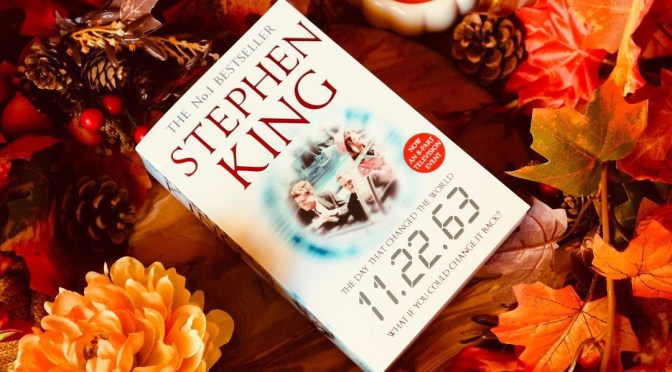
Book Review: 11/22/63 by Stephen King
If you’ve scrolled through my Instagram then I don’t need to be the first to tell you that I’ve read a fair few books – from romances and thrillers, to murder mysteries, fantasy, and children’s fiction. I’m a book lover, and I will never turn down a recommendation. But there is no other book I have read that has affected me like this one.
Before this, I had never read a Stephen King novel. I’m not a fan of horror, so most of his works don’t really appeal to me very much. So, when I said to my best friend, Isaac, that I wanted to start reading his work, he suggested that I begin with 11/22/63. And holy moly cannoli with a side of pepperoni, what a book to start with!
I have a confession: this is not a recent read. I actually read this five years ago, in 2019, but I think about it constantly. When someone asks me what my favourite book is, this is the one with which I reply. I am not a fan of historical fiction, but this is the exception. It combines history with fantasy and thriller, and is an exquisite piece of writing that I urge everybody to read.
I never ever thought I would be crying at a Stephen King novel. The words “crying” and “Stephen King” don’t usually fit in the same sentence unless they’re tears of fear and horror. But the ending of this book had me sobbing for forty-five minutes. I cried, re-read the ending, and then cried for another forty-five. The ending was so profoundly moving that it was overwhelming for me, and I never wanted it to end. It was beautiful and bittersweet – both heartbreaking and comforting, and I couldn’t have imagined anything better.
This novel is over 800 pages long – something which is probably intimidating to a lot of readers, especially if they have the “big book fear.” Tackling something so dense in length can feel overwhelming, like climbing a mountain and wondering if you’re ever going to reach the top, while also asking whether the payoff is going to be worth it. I myself will admit that I had the same thoughts and was apprehensive at the beginning. It was the first book over five hundred pages that I had ever tried to read, and my fear was that I was going to lose interest or I wouldn’t be able to make it to the end.
I’m not going to lie: the story is quite slow to begin with, and doesn’t really get started until around 200 pages in. There is so much detail, description, and backstory that it can be a lot to process. But once the story really starts, it’s an utter page turner. It took me two days to read the entire thing because I couldn’t put it down, and once I finished it, I wanted to re-read it all over again.
Of course, you’re probably asking whether all of the 800+ pages are necessary? The answer: yes. One hundred percent, yes. It is in my honest opinion that I don’t think the book would have been the same without them. Does it get a little bit repetitive at some points? Sometimes. After all, you’re reading about a time travelling English teacher journeying back to the same day in history over and over again, with a detail/action changed each time (both big, and small). But, it is this repetition that upholds the ending. It is this repetition – the feeling of having lived Jake and Sadie’s story over and over again with them, that allows for the emotional final pages. (And yes, I believe that this is Jake and Sadie’s story more than anything.)
Honestly, I can’t really say any more about this book without giving things away, and I really don’t want to spoil anything, as this is a book you have to read without knowing much about the plot or the characters. I wish I could forget everything I know about this book and read it again for the first time because it was a rollercoaster and a half.
And to those who are still hesitant about picking this up: don’t be. I promise it’s worth every moment.
This is a book that has irrevocably changed me, and it is a story that I will carry with me forever.
Favourite Quotes:
✨ ‘When all else fails, give up and go to the library.’
✨ ‘We never know which lives we influence, or when, and why.’
✨ ‘.. stupidity is one of the two things we see most clearly in retrospect. The other is missed chances.’
✨ ‘A person who doesn’t learn from the past is an idiot, in my estimation.’
✨ ‘But I believe in love, you know; love is a uniquely portable magic. I don’t think it’s in the stars, but I do believe that blood calls to blood and mind calls to mind and heart to heart.’
✨ ‘Life always turns on a dime. Sometimes towards us, but more often it spins away, flirting and flashing as it goes: so long, honey, it was good while it lasted, wasn’t it?’
✨ ‘Sometimes the things presented to us as choices aren’t choices at all.’
✨ ‘If you’ve ever been homesick, or felt exiled from all the things and people that once defined you, you’ll know how important welcoming words and friendly smiles can be.’
✨ ‘Even people capable of living in the past don’t really know what the future holds.’
✨ On the subject of love at first sight, I’m with the Beatles: I believe that it happens all the time.’
✨ ‘I saw something even more beautiful than a sense of humour: an appreciation for life’s essential absurdity.’
✨ ‘Things do happen for a reason, but do we like the reason? Rarely.’
✨ ‘Home is watching the moon rise over the open, sleeping land, and having someone you can call to the window, so you can look together.’
✨ ‘Resistance to change is proportional to how much the future might be altered by any given act.’
✨ ‘For most of us, I think it’s easier to admit doing wrong than being stupid.’
✨ ‘Sometimes life coughs up coincidences no writer of fiction would dare copy.’
✨ ‘Life’s simplest answers are often the easiest to overlook.’
✨ ‘Life’s too sweet to give up without a fight, don’t you think?’
✨ ‘History doesn’t repeat itself, but it harmonizes, and what it usually makes is the devil’s music.’
✨ ‘A person could see a lot without ever leaving his own living room. Especially if he had the right tools.’
✨ ‘You know how it’s going to end, but instead of spoiling things, that somehow increases your fascination. It’s like watching a kid run his electric train faster and faster and waiting for it to derail on one of the curves.’
✨ ‘Sarcastic people tend to be marshmallows underneath the armour.’
✨ ‘Like all sweet dreams, it will be brief… but brevity makes sweetness, doesn’t it? Yes, I think so. Because when the time is gone, you can never get it back.’
✨ ‘The multiple choices and possibilities of daily life are the music we dance to. They are like strings on a guitar. Strum them and you create a pleasing sound. A harmonic.’
✨ ‘Because the past isn’t just obdurate; it’s in harmony with both itself and the future.’

Double Standards
They tell you to be yourself
but what good is it
when they mock your health
and your wealth?
‘Stand out from the crowd!’ they scream
‘Do your own thing!’
But how do you do your own thing
when the thing you want to do
is be like everyone else?
‘Stand up,’ they say, ‘even if you’re standing alone’
but how can you,
when they are quick to break your bones
and shatter your spirit,
your dreams?
‘We must do what is right,’ they’ll say;
that it is our responsibility to speak for those who are marginalised
underrepresented
undervalued
unnoticed.
But those saying such words are the first to criticise us for not being authentic,
for being too white for black,
too straight for gay,
too rich for poor,
too young for old,
too uneducated to question what we’re told,
to not take things at face value,
because faces can mask the truth.
We are imposed with double standards
but what if double did not exist
and standards were simply
to stand
and fight for what is right
and what is true
without anybody
humiliating,
mocking,
condescending
or scolding you.
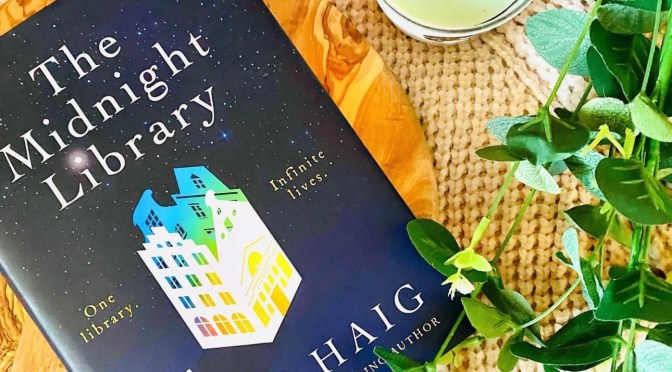
Book Review: The Midnight Library by Matt Haig
Where do I even begin? There are so many thoughts and feelings I have about this book that trying to condense them into a post is very difficult. But, I shall start by saying: I urge every human being on the planet to read this.
Nora, the protagonist, has depression. And, feeling as though she has nothing else to live for, she chooses to take her own life. But, between life and death, there is a library. The Midnight Library – where every book is a chance to live another life that you could have lived, had you made different choices.
This book is not to be taken lightly. It covers deep, sensitive subjects. As per the synopsis, suicide and depression are two major themes, so do not expect to open this book and expect it to be a ‘light’ read. It’s an easy read, yes. But you must be in the right frame of mind to enter this book.
With sensitive subjects, as a reader, you can only hope that the author handles them sensitively. You do not want them to make light of these, brushing them off as though they are not genuine issues or pretending that they don’t affect as many people as they do throughout the world. While I don’t think they needed to be handled like they’re fragile, walking on eggshells or never overtly stating they are what they are, I do believe they need to be handled with care. Perhaps it’s because Matt Haig has been in Nora’s shoes, coming close to taking his own life more than once (something which he is very open about on his Instagram), but he approaches such issues beautifully and really puts life into perspective. Some things we think matter most, do not matter at all. And, some things we think matter least, are actually the most important.
I adored the concept of this book. It was so well written and thought out, and each chapter connects seamlessly to the one before. It is a book that will make you think and wonder, but it will also make you feel.
You may be hesitant to pick it up because you think it will be gut-wrenching and emotional. And yes, it is. But it’s also full of hope. I closed the book feeling more positive than I had done in a long time, and had the overwhelming feeling that I wanted to start living – truly living – because ultimately, that is what this book is about. Yes, it’s about depression and suicide, and all the other things in between. But more importantly, it’s about wanting, and choosing, to live.
✨ ‘It is easy to mourn the lives we aren’t living. Easy to wish we’d developed other talents, said yes to different offers. Easy to wish we’d worked harder, loved better, handled our finances more astutely, been more popular, stayed in the band, gone to Australia, said yes to the coffee or done more bloody yoga. It takes no effort to miss the friends we didn’t make and the work we didn’t do, the people we didn’t go and the people we didn’t marry and the children we didn’t have. It is not difficult to see yourself through the lens of other people, and to wish you were all different kaleidoscopic versions of you they wanted you to be. It is easy to regret, and keep regretting, ad infinitum, until our time runs out. But it is not lives we regret not living that are the real problem. It is the regret itself. It’s the regret that makes us shrivel and wither and feel like our own and other people’s worst enemy. We can’t tell if any of those other versions would have been better or worse. Those lives are happening, it is true, but you are happening as well, and that is the happening we have to focus on.’
✨ ‘It is quite a revelation to discover that the place you wanted to escape to is the exact same place you escaped from. that the prison wasn’t the place, but the perspective.’
✨ ‘The only way to learn is to live.’
✨ ‘If you aim to be something you are not, you will always fail. Aim to be you. Aim to look and act and think like you. Aim to be the truest version of you. Embrace that you-ness. Endorse it. Love it. Work hard at it. And don’t give a second thought when people mock it or ridicule it. Most gossip is envy in disguise.’
✨ ‘Between life and death there is a library,’ she said. ‘And within that library, the shelves go on forever. Every book provides a chance to try another life you could have lived. To see how things would be if you had made other choices…. would you have done anything differe,t if you had the chance to undo your regrets?’
✨ ‘I don’t think your problem was stage fright. Or wedding fright. I think your problem was life fright.’
✨ “What do I do now?’ ‘You open the book and turn to the first page.’
✨ ‘Never underestimate the big importance of small things.’
✨ ‘Because a pawn is never just a pawn. A pawn is a queen-in-waiting. All you need to do is find a way to keep moving forward. One square after another. And you can get to the other side and unlock all kinds of power.’
✨ ‘Three simple words containing the power and potential of a multiverse. I AM ALIVE.’
✨ ‘A person was like a city. You couldn’t let a few less desirable parts put you off the whole. There may be bits you don’t like, a few dodgy side streets and suburbs, but the good stuff makes it worthwhile.’
✨ ’We only need to be one person. We only need to feel one existence. We don’t have to do everything in order to be everything, because we are already infinite. While we are alive we always contain a future of multifarious possibility.’
✨ You don’t have to understand life. You just have to live it.’
✨ ’You’re overthinking it.’ “I have anxiety. I have no other type of thinking available.’
✨ ’And that sadness is intrinsically part of the fabric of happiness. You can’t have one without the other. Of course, they come in different degrees and quantities. But there is no life where you can be in a state of sheer happiness for ever. And imagining there is just breeds more unhappiness in the life you’re in.’
✨ ’Sometimes just to say your own truth out loud is enough to find others like you.’
✨ ‘Of course, we can’t visit every place or meet every person or do every job, yet most of what we’d feel in any life is still available. We don’t have to play every game to know what winning feels like. We don’t have to hear every piece of music in the world to understand music. We don’t have to have tried every variety of grape from every vineyard to know the pleasure of wine. Love and laughter and fear and pain are universal currencies. We just have to close our eyes and savour the taste of the drink in front of us and listen to the song as it plays. We are as completely and utterly alive as we are in any other life and have access to the same emotional spectrum.’
✨ ‘The thing that looks the most ordinary might end up being the thing that leads you to victory.’
✨ ‘It was interesting, she mused to herself, how life sometimes simply gave you a whole new perspective by waiting around long enough for you to see it.’

NaNoWriMo 2023
Well, it’s official. I did not manage to complete NaNoWriMo this year, for the second year in a row.
Back in January, I did set myself the goal of writing a whole novel… which I did do, just not in the month of November. In fact, I’ve been working on it for the better part of a year and a half, and it’s almost finished, with just some tiny edits needed.
My second aim was then to have the final draft of the novel finished by November, which also didn’t happen. Work and other commitments got in the way, and it was just one of those things that never materialised. But that’s okay. It happens.
When it comes to something like NaNoWriMo, I think it’s very easy to use the term ‘failed’, as I originally included in the opening pargraph of this post, instead of the world ‘complete.’ But is it true? Have you actually failed simply because you haven’t completed something during a specific amount of time?
Well, firstly, it depends on the context. If in the context of an school test or exam that is being marked by somebody and awarded a grade, then yes, this is a very likely scenario.
But when it comes to challenges like NaNoWriMo and examining failure or success in terms of creativity and art… I think it depends how you define both of those things.
For me, I don’t believe the term ‘failing’ or ‘failure’ should be used when it comes to writing. So you haven’t written a specific word count during the time specific, or you’ve spent more time thinking than putting pen to paper. Both are important parts of the creative process, and feeling like there is some standard or goal that you have to acheive during a certain timeframe can really hinder the process of producing good, interesting, and exciting work. Of course, there are deadlines in the publishing industry which you have to meet… but when it comes to the starting-out writers, the finding-their-voices writers, or the ones who simply write for fun… failure should not exist.
If you’re writing in your spare time, you’re succeeding. If you’re writing full time, you’re succeeding. If you’ve only written ten words instead of ten thousand, you’re still succeeding. If you’ve gone back to the drawing board because something isn’t working in your narrative, you’re succeeding. If you’ve had to start the whole process over again because you hate what you’ve written, you’re succeeding. Every little step you take towards the end goal – of a finished product that you can be proud of, show off to the world, and tell people that you created that – is a step towards success.
As I said, it has taken me a year and a half to write the first draft of my book. I’m not a full time writer. I spend most of my time writing after work, or on the weekends, and sometimes in my lunch break at work if the inspiration strikes. But, I do not force it. I do not force myself to write something just because I feel like I have to get to a certain point in a specific number of days. My creativity doesn’t work like that, and if I try and write when I’m not excited about it, or I don’t have the ideas there and ready to go, then I know that what I am going to produce will not be an example of my best work.
That being said, if you know me, you’ll know that I am a perfectionist. You’ll also know that I can be pretty hard on myself when it comes to my own work. There are days when I’ll designate three hours for writing, but will instead spend those three staring at my screen, doodling in my notebook or watching TikToks that have no productive or inspirational value to my work. And it’s easy for me to penalise myself for this – to tell myself off for not getting anything done. But I’ve learnt that you have to learn to be okay with this, because it’s going to happen whether you like it or not. Some days you’re going to end up writing like your life depends on it because the ideas are so good, and you know exactly what you want to say. Other days, you’ll spend most of your time avoiding the task at hand and produce little to nothing of use to yourself.
As I sit here and write this, I’m tempted to make statements like ‘I’ll try harder next year,’ or ‘next year I will complete NaNoWriMo’… but I’m not going to do that. If I have an idea and end up writing it during the month of November, great. If I don’t… then who the hell cares!
I don’t know if I can speak for everybody, but I can certainly speak for myself when I say that I write for no other reason other than I love it. I’m not writing with the intention of making it to the top of the New York Times Bestseller list. I’m not writing with the intention of becoming a millionaire. I’m writing because I have something I want to say, a story I want to tell, and I want to tell it my way.
So the next time you feel like you’ve failed NaNoWriMo or another similiar challenge, try and remind yourself, that ultimately it doesn’t matter. Creativity is a process, not a deadline. You’ll create your best work when you feel inspired and free. And, on the days when it feels like a chore, sit back and remind yourself the very reason why you started creating art in the first place.
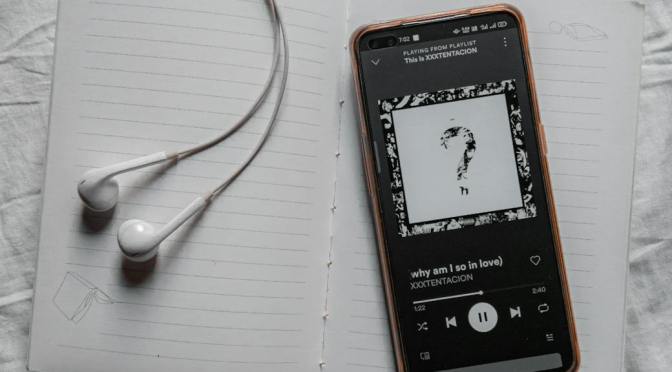
My Writing Playlists
Imagine – you’re sitting on your sofa watching your favourite television show. Something really intense has happened. Maybe it’s good. Maybe it’s bad. But, as the episode is drawing to a close and your favourite characters are making emotional, thought-provoking speeches, you hear the familiar sounds of the piano as a beautiful, intense ballad begins to play. You reach for a tissue as a tear slips down your cheek…
If you’ve ever seen Grey’s Anatomy or nearly any other TV drama or film in existence then you’ll know what I’m talking about.
You know the feeling… the feeling when you hear a particular song on your Spotify, in a shop, or even on another show, and you know exactly where it would fit. Whether it’s in a hook-up scene, a breakup, or a goodbye scene… you just know.
Often when I’m writing, I have those exact moments. I’m sure we all do it. We see our stories like a movie in our head, and we know exactly what songs would play in the background of each scene.
Though, I know when it comes to film writers are not the sole decision-makers on what music appears where, I do feel that it helps us to write those scenes; and we are as emotionally attached to our own characters as we are to those that others have created that we have watched week after week for years.
That is why I decided to create ‘Ultimate Writing Playlists’, so if I am stuck, or there is a particular feeling that I want to evoke during a scene but I just can’t get it right, then I can press play or shuffle and hope that inspiration will strike! It has become an extremely useful tool, and just allows me to visualise the scene more clearly while letting the ideas flow.
If you haven’t got writing playlists of your own, then I highly recommend doing so. Of course, you don’t have to have separate playlists for different moods – you could have all of your ‘writing’ songs in one playlist, but I prefer having everything separately because I hate having to scroll through a long list to find the particular song with the specific vibe that I am after. I also find it far more organised, and I can see exactly what songs I have and the recommendations that Spotify gives are more tailored and accurate than if all the songs from all the playlists were just bundled together.
‘Okay,’ you’re thinking, ‘but where do I begin?’
Well, my friends… allow me to introduce you to my six writing playlists. Whether you want to follow them and use them for your writing, or simply find inspiration to create your own lists, I have linked all of them below for you to scroll through and listen to your heart’s content – each with a brief description above, noting the kind of songs in each and the sort of scenes I imagine them in.
Playlists:
Intros: Songs that I envision in opening scenes to a film/show that set the tone for the show – e.g, when the camera pans over the city. These could also serve as transition songs between scenes.
Badass Moments: When the character is about to be/being a badass. Goes hand in hand with some badass dialogue.
Powerful: Coupled with Badass Moments, but are a little less ‘badassy’ in their vibe and instead a little more ‘I’m strong and powerful’
Hot & Steamy: I think this is self-explanatory…
Emotional: The songs for the deep conversations, where the character loses somebody they love, where they’re reunited with someone for the first time in decades, where they’re contemplating their futures, someone proposes and scenes end on a happy note… a.k.a all the ballads, and songs that will make you cry both tears of sadness and tears of joy. (Could also title this: every single song that would work in Grey’s Anatomy.)
Miscellanous: Songs that don’t have any definitive category – they could fit in multiple places but I’m not yet sure which exact playlist to designate them to.
I hope that you find these helpful – I know I do. And of course, if you end up making your own writing playlists or there are songs you’ve heard that you think I might like to add to these, then please drop me a comment as you can never have too much inspiration to draw from!

Writing: Some Questions To Consider
I know that for most of us, writing can often feel like a chore. It can feel like we have to have to sit down and write something otherwise we cannot call ourselves writers. Or, we think that we have somehow failed if we write nothing at all, or have not achieved the amount we had wished to write in a given period of time.
But, as most writers know, and I’m sure you are aware if you’re reading this, that sometimes we just lack inspiration. The metaphorical land where all of our inspiration lives has run out of food and water and is just sitting barren in our minds.
Or perhaps, we have inspiration for something – an idea for a script or a book that we desperately want and feel the need to write, but we have no direction as to where it is going to go, or how we are physically going to craft it into something readable.
If you are sitting there reading this, and you’re struggling with one or all of these problems, fear not. I have gathered together the following questions, to hopefully ignite the spark of inspiration once again, to turn those writing dreams into realities.
(These questions should be used as a foundation to build the world that you’re trying to create, and understand what it is that you’re hoping to achieve by writing a particular piece.)
All ideas are only as good as the characters that drive them, and all good ideas need to be dramatic.
- What is the story?
- What is the central dramatic action in your idea?
- Do you have a compelling enough journey for the audience and character to go on?
- If it’s a series or a serial, do you have enough story/stories to keep it going over a number of episodes or weeks?
Creating a coherent world is crucial.
- What are the rules of your story universe?
- What do and don’t we need to know/see?
Less is often more. The writer needs to know all the rules and background, but the audience only needs enough to stay hooked without being confused.
- What kind of story is it?
- Are you using a recognisable genre, such as thriller or romantic comedy?
- If you are inspired or influenced by an archetypal story of old, what is it that’s different about your idea?
You need to bring fresh perspectives to familiar tales, worlds, subjects and genres.
- What is the tone and feel of the story?
- Are they consistent and coherent? There is nothing more frustrating than a slasher movie that suddenly turns into a rom-com or vice versa.
Sometimes clashing genres can work if they’re handled intelligently.
And the emotional response you are trying to aim for is just as important.
- What physical reaction are you looking for? Something so poignant it makes the audience cry? Something funny it makes their sides hurt from laughing too much?
You need to know why this idea now is important.
- Is it something that keeps you up at night and has really got under your skin?
- What is it about?
- What is the theme?
- What are you trying to explore?
- What are you hoping to communicate?
Don’t write anything you don’t care about just to be expedient, because it will only ever be competent at best.
- Is it an idea that will strike a real chord with an audience?
- Who do you think will want to see it?
If you have a burning desire to write, then it’s more likely to grab our attention.
I hope that these questions have proved useful to you, and have allowed you to break through the brick wall that some call writer’s block. And I can’t wait to read your masterpiece!
 thebecksedit.co.uk