So, it’s officially been over a week since NCIS: Tony and Ziva premiered, and truth be told, I’m still processing. I’ve had every single episode on repeat multiple times since 4th September, so much so that I have almost every single scene fully etched into my brain. I’ve watched all four episodes at least six or seven times already because I just can’t get enough – give me a few weeks or so and I’ll very likely be able to recite them all from memory.
As a long time Tiva fan, I had high hopes for this show, as I am sure most of us did, and it’s safe to say that it has already surpassed every expectation. It is far more than I could have ever wanted and wished for, and there are still six episodes to go. Four episodes in and this show is knocking my socks off in ways I couldn’t have imagined. There’s plenty of romance, epic action sequences – car chases, fights and even self-driving killer automobiles (no, I’m not kidding!), and the humour is absolutely spot-on with some of the best one-liners I have ever heard in a show. With quotes like “Does a babushka wear a headscarf?” and “We have friends and family at this wedding. They’re pathetic and fragile,” I have lost count of how many times I’ve cackled out loud, and I find myself grinning ear-to-ear with every episode.
Before the show premiered, I was unsure as to what to expect going into it. With Tony and Ziva being transported into an entirely new setting, it was easy to worry that the chemistry and magic that made them so brilliant on the mothership wouldn’t be the same. But there’s no reason to fear. Their chemistry is undeniable and better in a million and one ways. Everything that made them exciting to watch on the mothership is ever present and in full force, and their spark is sizzling hotter than ever.
I absolutely adore the fact that this show has broken the classic NCIS formula of episodic procedural, and instead allows for a deeper exploration into the relationship between these two characters; something which fans were pleading to have for decades. The flashbacks execute the ‘filling in the gaps’ perfectly – allowing us to see their life as a couple after Ziva reunites with Tony and Tali in Paris, and they slowly reveal what happened with their relationship (and the reason why it broke down), until we find them where they are today: on the run.
You’re probably asking: well, just how different is it to the mothership? The answer: very. The ghastly tangerine walls of the Navy Yard squad room have been replaced with the most beautiful European backdrops, which only serve to enhance the beautiful storytelling and exceptional writing. It’s true, the show is more romantic spy thriller than crime drama, but it is in the best of ways. There is something in this show for absolutely everyone, whether you’re a long time fan or a newcomer being introduced to these characters for the very first time (and if you are brand new, don’t worry – there’s an incredible montage at the beginning of episode 1 to bring you up to speed with the intricate history of these characters.)
If you’re a lifelong ‘Tiva’ lover as they are so eloquently named and the original show stopped feeling like your NCIS after they left (as I read in one review), then this show is without a doubt, 100% for you. Tony and Ziva are still Tony and Ziva, but are supported by a wonderful ensemble of new characters that are so easy to fall in love with. It’s action-packed, romantic and charmingly persuasive, and it truly feels like they’ve captured lightning in a bottle.
[I’ll also be breaking down every individual episode with my thoughts – as when I my brain starts functioning again!]
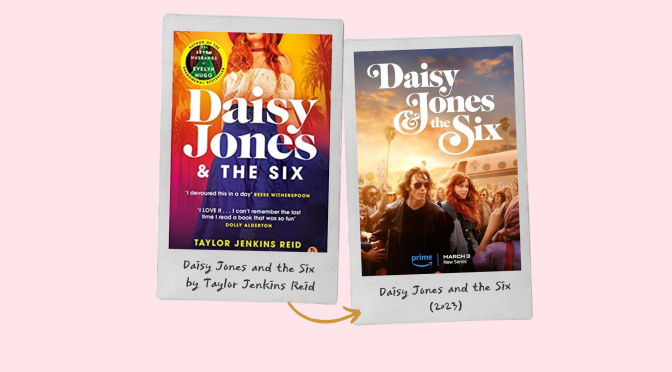
When the news broke that Daisy Jones and the Six was going to be made into a miniseries, I couldn’t wait. While the book was not my favourite, I was excited at the prospect of the adaptation. As the novel is written as an interview with the members after the band’s breakup, documenting their journey from the beginning, to their success, and their downfall, I envisioned that the whole story would be brought to life on screen in the way that a book cannot do. Being able to physically hear the dialogue of these characters if they were being interviewed would make it feel so real that it would be impossible to remember that they’re fictional.
I was expecting to be blown away, and yet, I got two episodes into the series and I found myself not liking it at all.
Often people say that reading a book before watching the film/series can be somewhat of a curse. Readers tend to build up an image of what things look like in their head, and many times what they picture – in terms of characters and settings – never make it onto the big screen. Which, I found was the case with Daisy Jones.
Firstly, I think the casting directors did an excellent job choosing Riley Keough for the role, because she perfectly captures the chaotic mess that is Daisy , and I don’t think I could have selected anybody better for the part. Riley was exactly how I pictured Daisy to look, with her flaming red hair, and exquisite features, even before the adaptation was announced. However, when it comes to other characters – Billy Dunn, Camila, etc. there was just something that didn’t quite hit the mark for me. Of course, I have nothing against the actors chosen for these roles – and I think Sam Claflin is a brilliant actor in his own right, but I imagined Billy with a Kurt Cobain look/vibe and he didn’t scream Billy to me. And while I wasn’t disappointed with Suki Waterhouse, she just wasn’t the Karen I had imagined in my head.
But, truthfully, I don’t think the casting was the problem for me, as even if the characters don’t look exactly as I imagine, I can usually get on board with their performances, especially if they’re good ones.
In fact, I think the whole thing was just way too slow. I know from reading the book that it isn’t the most fast-paced narrative, but literally nothing happens in the first two episodes of the series. I kept watching, and waiting, and yet, I got to the end of each and found myself disappointed. In the book, Daisy and the band meet relatively quickly into the story, and yet, at the end of the second installment their paths still hadn’t crossed. While I think background is important with stories set in previous eras as historical context is important, there was just way too much in these episodes and not enough plot pushing the story forward. I wanted more and wanted something to keep me interested, but my intrigue faded rather fast, hence why I finished the second episode and made it no further.
But, I have to admit that the soundtrack is FIRE. “…Regret Me” and “Look At Us Now (Honeycomb)” are two of my absolute favorites, and I adore the fact that they released an album alongside the adaptation, as it really immerses you in the story. I was surprised by how good Sam Claflin is as a singer, and Riley Keough too, though I wasn’t too surprised considering her grandfather was Elvis Presley… music is basically in her genes. Even if you haven’t seen the series or read the book, I highly recommend listening to ‘Aurora’ on Spotify. If you like 70s alternative indie/rock/folk then you’ll love the songs included on the album!
Perhaps it’s a crazy idea, but I feel like this would have made an excellent adaptation in the form of a radio drama or podcast. The mixture of the band interviews and the music would have been brilliant to listen to, without the constraints or needing to include all of the other information like in an audio book, straight from the page.
I have had many people tell me to stick with it because apparently it gets better, but I feel like unless the story is a thriller with massive twists and turns and an excellent payoff, then each episode up until the ‘good bit’ or the part of Daisy Jones that I’m waiting for, feels wasted until that moment. Maybe I’ll try and revisit this again in the future once I get through my lengthy list of other adaptations waiting for me, but for now, the overall series is only getting 2 and a half stars from me.
If you’ve scrolled through my Instagram then I don’t need to be the first to tell you that I’ve read a fair few books – from romances and thrillers, to murder mysteries, fantasy, and children’s fiction. I’m a book lover, and I will never turn down a recommendation. But there is no other book I have read that has affected me like this one.
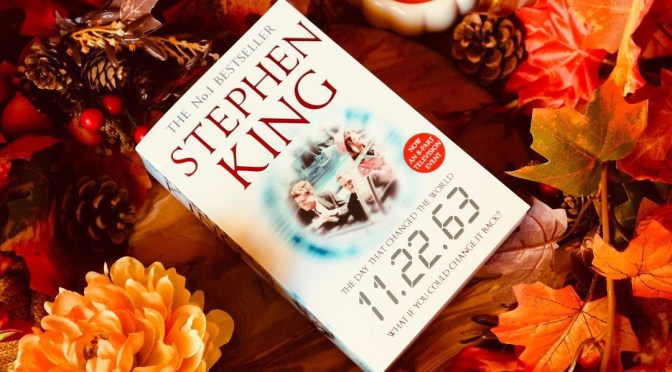
Before this, I had never read a Stephen King novel. I’m not a fan of horror, so most of his works don’t really appeal to me very much. So, when I said to my best friend, Isaac, that I wanted to start reading his work, he suggested that I begin with 11/22/63. And holy moly cannoli with a side of pepperoni, what a book to start with!
I have a confession: this is not a recent read. I actually read this five years ago, in 2019, but I think about it constantly. When someone asks me what my favourite book is, this is the one with which I reply. I am not a fan of historical fiction, but this is the exception. It combines history with fantasy and thriller, and is an exquisite piece of writing that I urge everybody to read.
I never ever thought I would be crying at a Stephen King novel. The words “crying” and “Stephen King” don’t usually fit in the same sentence unless they’re tears of fear and horror. But the ending of this book had me sobbing for forty-five minutes. I cried, re-read the ending, and then cried for another forty-five. The ending was so profoundly moving that it was overwhelming for me, and I never wanted it to end. It was beautiful and bittersweet – both heartbreaking and comforting, and I couldn’t have imagined anything better.
This novel is over 800 pages long – something which is probably intimidating to a lot of readers, especially if they have the “big book fear.” Tackling something so dense in length can feel overwhelming, like climbing a mountain and wondering if you’re ever going to reach the top, while also asking whether the payoff is going to be worth it. I myself will admit that I had the same thoughts and was apprehensive at the beginning. It was the first book over five hundred pages that I had ever tried to read, and my fear was that I was going to lose interest or I wouldn’t be able to make it to the end.
I’m not going to lie: the story is quite slow to begin with, and doesn’t really get started until around 200 pages in. There is so much detail, description, and backstory that it can be a lot to process. But once the story really starts, it’s an utter page turner. It took me two days to read the entire thing because I couldn’t put it down, and once I finished it, I wanted to re-read it all over again.
Of course, you’re probably asking whether all of the 800+ pages are necessary? The answer: yes. One hundred percent, yes. It is in my honest opinion that I don’t think the book would have been the same without them. Does it get a little bit repetitive at some points? Sometimes. After all, you’re reading about a time travelling English teacher journeying back to the same day in history over and over again, with a detail/action changed each time (both big, and small). But, it is this repetition that upholds the ending. It is this repetition – the feeling of having lived Jake and Sadie’s story over and over again with them, that allows for the emotional final pages. (And yes, I believe that this is Jake and Sadie’s story more than anything.)
Honestly, I can’t really say any more about this book without giving things away, and I really don’t want to spoil anything, as this is a book you have to read without knowing much about the plot or the characters. I wish I could forget everything I know about this book and read it again for the first time because it was a rollercoaster and a half.
And to those who are still hesitant about picking this up: don’t be. I promise it’s worth every moment.
This is a book that has irrevocably changed me, and it is a story that I will carry with me forever.
Favourite Quotes:
✨ ‘When all else fails, give up and go to the library.’
✨ ‘We never know which lives we influence, or when, and why.’
✨ ‘.. stupidity is one of the two things we see most clearly in retrospect. The other is missed chances.’
✨ ‘A person who doesn’t learn from the past is an idiot, in my estimation.’
✨ ‘But I believe in love, you know; love is a uniquely portable magic. I don’t think it’s in the stars, but I do believe that blood calls to blood and mind calls to mind and heart to heart.’
✨ ‘Life always turns on a dime. Sometimes towards us, but more often it spins away, flirting and flashing as it goes: so long, honey, it was good while it lasted, wasn’t it?’
✨ ‘Sometimes the things presented to us as choices aren’t choices at all.’
✨ ‘If you’ve ever been homesick, or felt exiled from all the things and people that once defined you, you’ll know how important welcoming words and friendly smiles can be.’
✨ ‘Even people capable of living in the past don’t really know what the future holds.’
✨ On the subject of love at first sight, I’m with the Beatles: I believe that it happens all the time.’
✨ ‘I saw something even more beautiful than a sense of humour: an appreciation for life’s essential absurdity.’
✨ ‘Things do happen for a reason, but do we like the reason? Rarely.’
✨ ‘Home is watching the moon rise over the open, sleeping land, and having someone you can call to the window, so you can look together.’
✨ ‘Resistance to change is proportional to how much the future might be altered by any given act.’
✨ ‘For most of us, I think it’s easier to admit doing wrong than being stupid.’
✨ ‘Sometimes life coughs up coincidences no writer of fiction would dare copy.’
✨ ‘Life’s simplest answers are often the easiest to overlook.’
✨ ‘Life’s too sweet to give up without a fight, don’t you think?’
✨ ‘History doesn’t repeat itself, but it harmonizes, and what it usually makes is the devil’s music.’
✨ ‘A person could see a lot without ever leaving his own living room. Especially if he had the right tools.’
✨ ‘You know how it’s going to end, but instead of spoiling things, that somehow increases your fascination. It’s like watching a kid run his electric train faster and faster and waiting for it to derail on one of the curves.’
✨ ‘Sarcastic people tend to be marshmallows underneath the armour.’
✨ ‘Like all sweet dreams, it will be brief… but brevity makes sweetness, doesn’t it? Yes, I think so. Because when the time is gone, you can never get it back.’
✨ ‘The multiple choices and possibilities of daily life are the music we dance to. They are like strings on a guitar. Strum them and you create a pleasing sound. A harmonic.’
✨ ‘Because the past isn’t just obdurate; it’s in harmony with both itself and the future.’
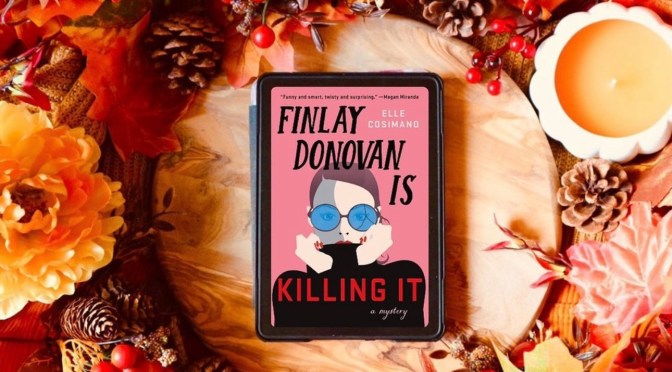
When author Finlay Donovan is discussing the plot of her new suspense novel with her agent over lunch, she’s mistaken for a contract killer, and inadvertently accepts an offer to dispose of a problem husband in order to make ends meet… but, Finlay soon discovers that crime in real life is a lot more difficult that it’s fictional counterpart, as she becomes entangled in a real-life murder investigation.
First things first, I absolutely adored the plot of this novel! It was a genius piece of writing in terms of how Finlay ends up in her less-than-ideal situation. It really is a prime example of how context in a conversation is everything, and how easy it is to misconstrue one thing for something else.
Don’t get me wrong… this book is in no way realistic. It’s over-the-top, and the things that Finlay and Vero get away with would never happen. But then, we’re here for the entertainment, not for the realism, and the absurd dramatics that are incorporated within this book are really what makes it fun to read!
I’m really not going to dive into any plot details because this is a book where you need to discover all of the twists and turns for yourself, but this book is super twisty and I never saw half of them coming! I haven’t gasped so much in a long time; and just when you think you know what’s coming, more information is thrown into the mix which entirely changed your perspective and theories!
The relationship between Finlay and her nanny, Vero, is one we all need. They make a wonderful pair, and are the perfect partners-in-crime… literally. I could feel their bond through the pages, and I just liked them both as characters (which is another one of the reasons why I think this book works so well.)
However, two not so likeable characters were Stephen and Teresa… but especially Stephen. I was so hoping that the two of them would get their comeuppance (do they – well, read and find out!). Stephen is literally the most toxic man in existence (and he’s not even real!), and I haven’t found myself so infuriated with a character in a long time. He had no respect or faith in Finlay and every time he made an appearance I wanted to punch his lights out (or at least hoped Finlay would!)
But, one of my favourite moments has to be towards the end of the book when Finlay and Vero go back for ***. This whole scene was such a page turner and I was on the edge of my seat the entire time. In fact, night turned into early morning because I was up until 2am reading as I had to know what happened.
And as for the ending… WHAT? This book ends on an epic cliffhanger, and I made me eager to read the next in the series!
I really think this book would make the most perfect TV adaptation, eand I really hope it happens because I can’t even tell you how excited I would be to see this series on screen. It gives both Pretty Little Liars mixed with Criminal Minds vibes and you know what… I’m totally here for it.
If you’re looking for a light mystery with comedic thrill, then add this one to your list friends, because I can guarantee that it won’t disappoint!
Favourite Quotes:
✨ ‘It’s a widely known fact that most moms are ready to kill someone by eight thirty A.M. on any given morning. On the particular morning of Tuesday, October eighth, I was ready by seven forty-five. If you’ve never had to wrestle a two-year-old slathered in maple syrup into a diaper while your four-year-old decides to give herself a haircut in time for preschool, all while trying to track down the whereabouts of your missing nanny as you sop up coffee grounds from an overflowing pot because in your sleep-deprived fog you forgot to put in the filter, let me spell it out for you.’
✨ ‘My Google search history alone was probably enough to put me on a government watch list. I wrote suspense novels about murders like this. I’d searched every possible way to kill someone. With every conceivable kind of weapon.’
✨ ‘Iris Smiled, endorphins loosening the stern lines of her face. She actually looked like she was enjoying this. The woman was a masochist.’
✨ ‘Easy for her to say. She was twenty-two and had never had children. She could probably hold it until menopause.’
✨ ‘Let us not attribute to malice and cruelty what may be referred to less criminal motives.’ I make it a point never to assume the worst about people.’
✨ ‘Unfortunately, the man’s made of Teflon. Nothing sticks. He should’ve been locked up a dozen times, but there isn’t a judge in the state with the balls to convict him. Even if we could, he has friends that can make almost anyone disappear . . . new name, new passport, and wipe them off the map as if they’d never existed.’
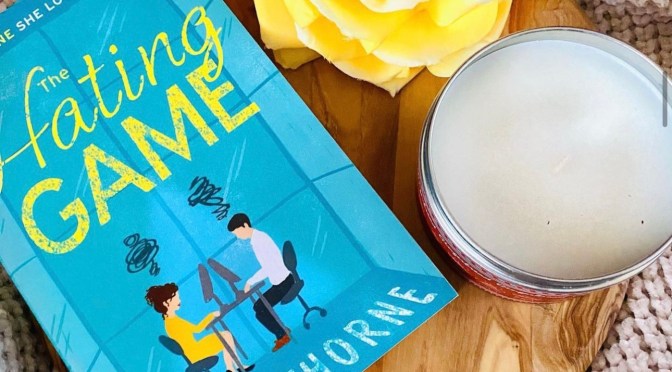
Enemies to lovers novels are like marmite – either you love them or you hate them. A lot of people find them super cheesy and unrealistic, but for me, I am an absolute sucker for them. And this, my friends, is perhaps my favourite enemies to lovers story that I have ever read. A bold statement, but true.
I posted about this book on my Instagram back in 2021 as it was my number one book that I read in 2020, and four years later it still sits firmly in my top 10 books of all time. There are very few books which I devour so quickly, or capture my attention so much that I can’t put them down, but this folks and friends, was one of them. I loved everything about it. It was beautifully witty, hilarious, and I found myself physically laughing from cover to cover.
One of the things that I liked most about this book is that it’s written in the first person, from the point of view of the main protagonist, Lucy, which really connects the reader with the character. The way she describes her love/hate relationship with Joshua is so real and expertly crafted that you become so immersed in their love story that it becomes entirely possible to forget that these two human beings only exist on paper. From the very minute you begin reading you are begging, pleading, and yearning for these two characters to realise their love for one another.
Though, I will admit that this novel is a slow burn. Like… a really slow burn to the point where you’re physically itching with anticipation. But the payoff is so good and makes it all worth it. The love/hate relationship/game between Lucy and Josh is one of those romantic archetypes which we love to see but don’t dare admit, and something which can be incredibly difficult for writers to achieve successfully – but Sally Thorne executes it perfectly.
But, perhaps my favourite thing about this book is that it never actually states where the story is taking place. When I started reading I assumed that it was New York City because it had that particular feel, but in actual fact the location is never stated. I think that is what makes this story so wonderful because ultimately it could be set in any city, in any corner of the world; and it is down to the reader to use their imagination about where that might be – perhaps someone near them!
I think it is very rare to have nothing bad to say about a book – not even a small criticism – but personally, with my preferences, I am struggling to find things that I didn’t like. I don’t think I will ever be able to find the right amount of words to be able to describe how much I loved this book, but I think about it often.
Note: Yes, I have also seen the movie; yes, I loved it; but no, I have yet to write a post about it. I’m thinking about writing a book vs film comparison when I get the time, but I think I need to rewatch the film again before I do so!
Favourite Quotes:
✨ ‘Books were, and always would be, something a little magic, and something to respect.’
✨ ‘Watching you pretend to hate the nickname is the best part of my day.’
✨ ‘I have a theory. Hating someone feels disturbingly similar to being in love with them. I’ve had a lot of time to compare love and hate, and these are my observations. Love and hate are visceral. Your stomach twists at the thought of that person. The heart in your chest beats heavy and bright, nearly visible through your flesh and clothes. Your appetite and sleep are shredded. Every interaction spikes your blood with adrenaline and you’re in the brink of fight or flight. Your body is barely under your control. You’re consumed and it scares you. Both love and hate are mirror versions of the same game – and you have to win. Why? Your heart and your ego. Trust me, I should know.’
✨ ‘I want to know what’s going on in your brain. I want to juice your head like a lemon.’
✨ ‘All I want to do is kiss you until I fall asleep. I want to slide in between your sheets, and find out what goes on inside your head and underneath your clothes. I want to make a fool of myself over you.’
✨ ‘I love strawberries. I’m so lovesick, I eat them constantly. Can I nickname you Shortcake? It’ll be a dead giveaway that I love you’
✨ ‘Maybe the only way to truly unite people is through battle and pain. Confrontation and competition. Maybe surviving something is the point.’
✨ ‘Maybe the only way to truly unite people is through battle and pain. Confrontation and competition. Maybe surviving something is the point.’
✨ ‘Maybe the only way to truly unite people is through battle and pain. Confrontation and competition. Maybe surviving something is the point.’
✨ ‘Maybe the only way to truly unite people is through battle and pain. Confrontation and competition. Maybe surviving something is the point.’
✨ ‘Brute, raw masculinity contrasted with gentleness is the most attractive thing on earth.’
✨ ‘You look like a hot virginal dork who’s been defiled in the backseat of my car.’
✨ ‘You love him. You love him. You always have. More than you’ve ever hated him. Every day, staring at this man, knowing every color and expression and nuance. Every game you’ve ever played has been to engage with him. Talk to him. Feel his eyes on you. To try to make him notice you.’
✨ ‘I always thought you’d live underground somewhere, near the earth’s core.’ / ‘Uncle Satan didn’t have any apartments available in my price range.’
Have you ever watched your favourite action and adventure films and yearned for the ability to transport yourself inside – to scale walls, jump out of helicopters, and commit heists alongside the protagonists? Every time I watch National Treasure a part of me is envious that I am not a member of team Ben Gates, cracking codes and riddles, and stealing the Declaration of Independence, because even though it’s risky, it looks like a hell of a lot of fun!
That being said, I’m not sure I’d do very well. I hate spiders, and most other creepy crawlies. I hate tombs and crypts and dark spaces, because there’s just something about them that freaks me out. And while I spend my time editing and solving puzzles at work, I’m not sure I have the knowledge or the intellect to be able to solve the clues that Ben Gates is presented with!
But, sometimes it’s still nice to have a go, even if you think you might fail.
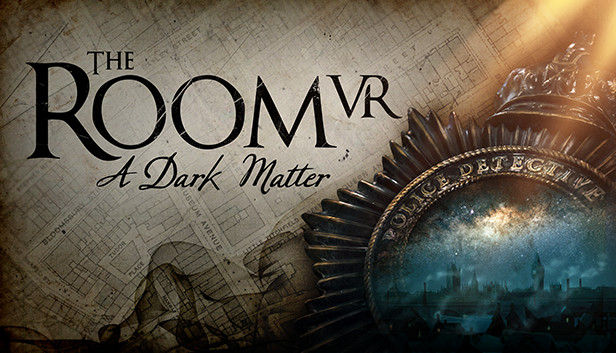
I’ll admit that I’m new to the world of Virtual Reality. I only purchased my Oculus Quest headset back in June, and the majority of games that I’ve played up until now have been popular things like Fruit Ninja and Beat Saber. But when TheRoom: A Dark Matter appeared in my recommended games list, of course I had to give it a go – not just for enjoyment purposes, but because the inner adventurer inside of me was screaming with glee at the idea of being able to take on the brainteasers and puzzles myself from the comfort of my own home, without the fear of falling down rickety and crumbling two-thousand-year-old stairs… though, this is virtual reality, so I suppose you never know!
Set in London in 1908, The Room: A Dark Matter follows a detective (you) conducting an investigation into the strange disappearance of an esteemed Egyptologist – Dr Rupert Montgomery – and the unusual assistance he receives from The Craftsman. From exploring cryptic locations (literally), to examining mysterious gadgets and artifacts, you’re led through a multi-level escape room which combines historical and fantasy elements to completely blur the line between reality and illusion.
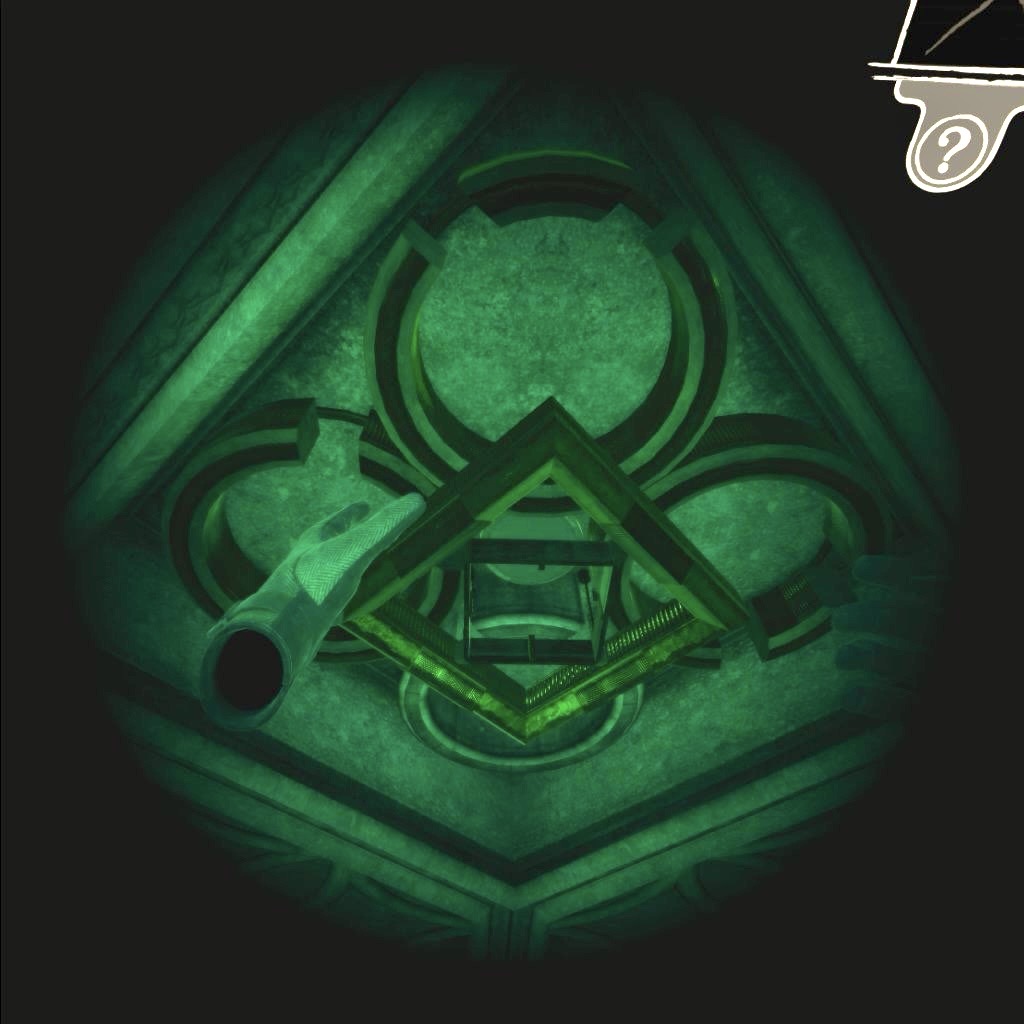
One of the things I was immediately impressed by was how immersive the game is. I didn’t enter it with any specific expectations as I am still a novice to the world of VR games, but if I had, I am sure that it would have surpassed them. Much like its predecessors (available on smartphones and tablets, but not VR), you’re required to fiddle with buttons and dials, slot things into their correct places, and solve some rather complex things using magical spectacles to see invisible items and challenges (like night vision, but cooler!)
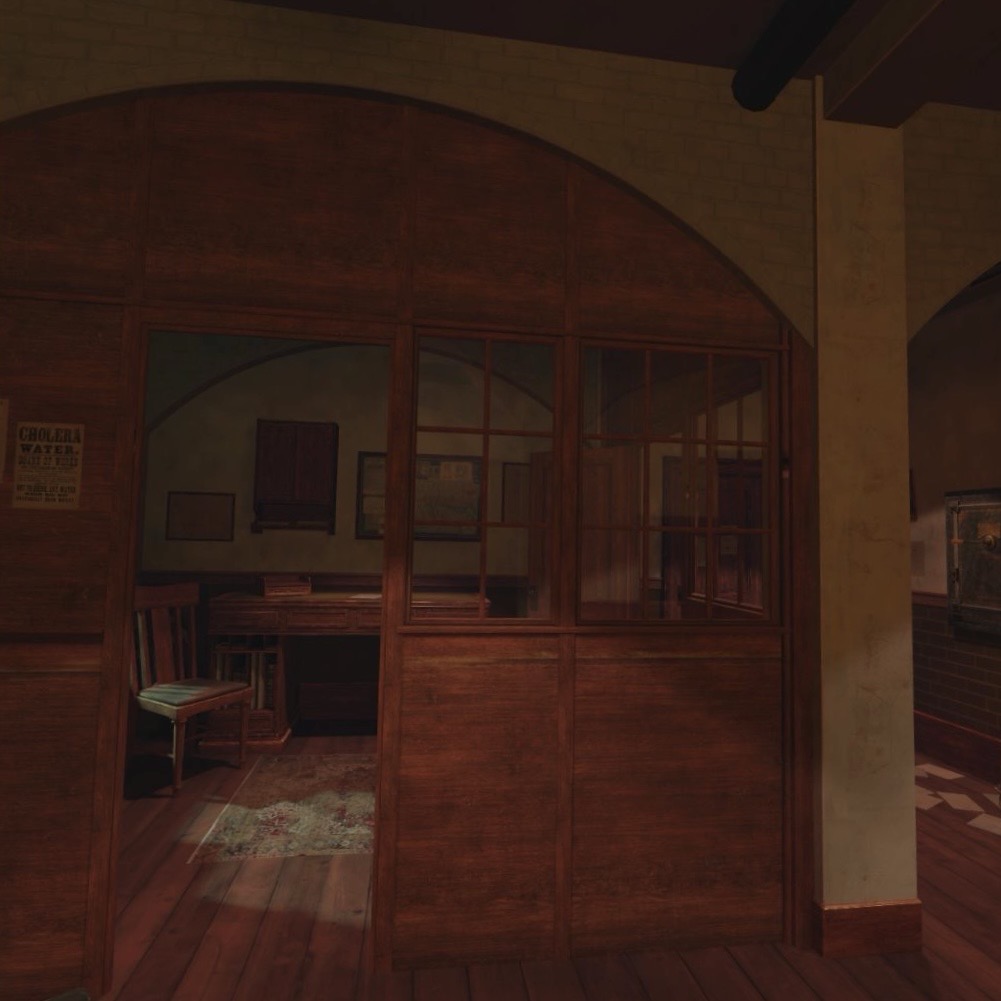
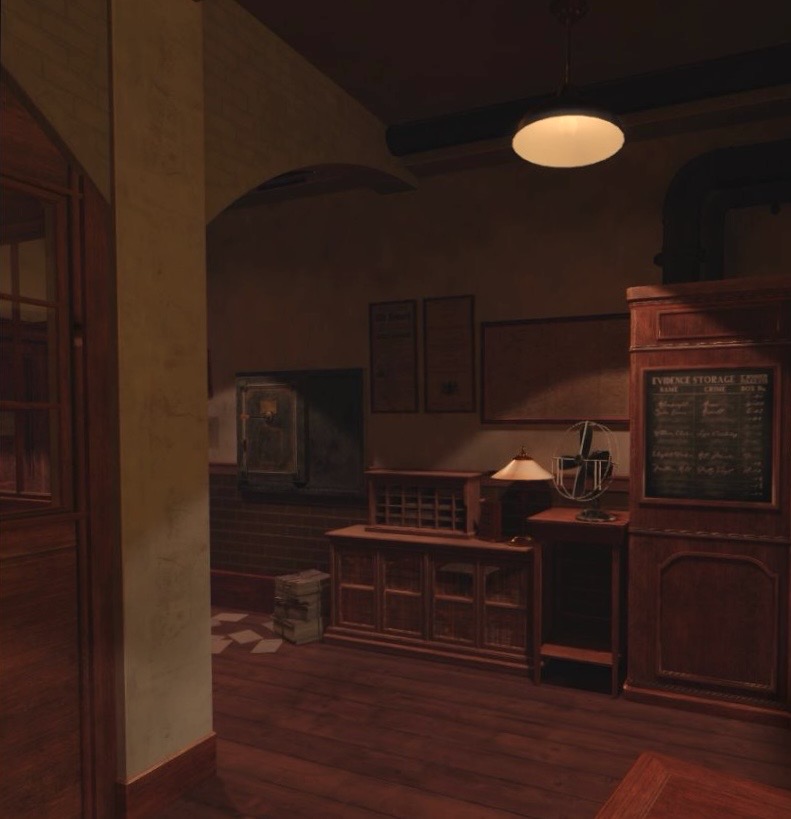
The game begins in the Police Station – essentially a tutorial room for you to learn the controls of the game. I have to admit that beginning the game isn’t as straightforward as you think, as it’s not automatically obvious which buttons and handles you need to push to set things in motion. Perhaps it’s because I went into the game knowing that I would be required to solve a lot of puzzles, but I kept overlooking the most obvious thing in front of me. I spent roughly an hour searching throughout the room, pushing and pulling almost everything, and gazing longingly at the screen hoping it would magically begin the story for me. Alas, I caved and resorted to a walkthrough guide to lead me in the right direction. (Bad, I know, but I was getting frustrated at not being able to work it out! Also, I don’t think walkthrough guides count as cheating because ultimately it’s what they’re there for… I just use them as a little extra assistance when necessary!).
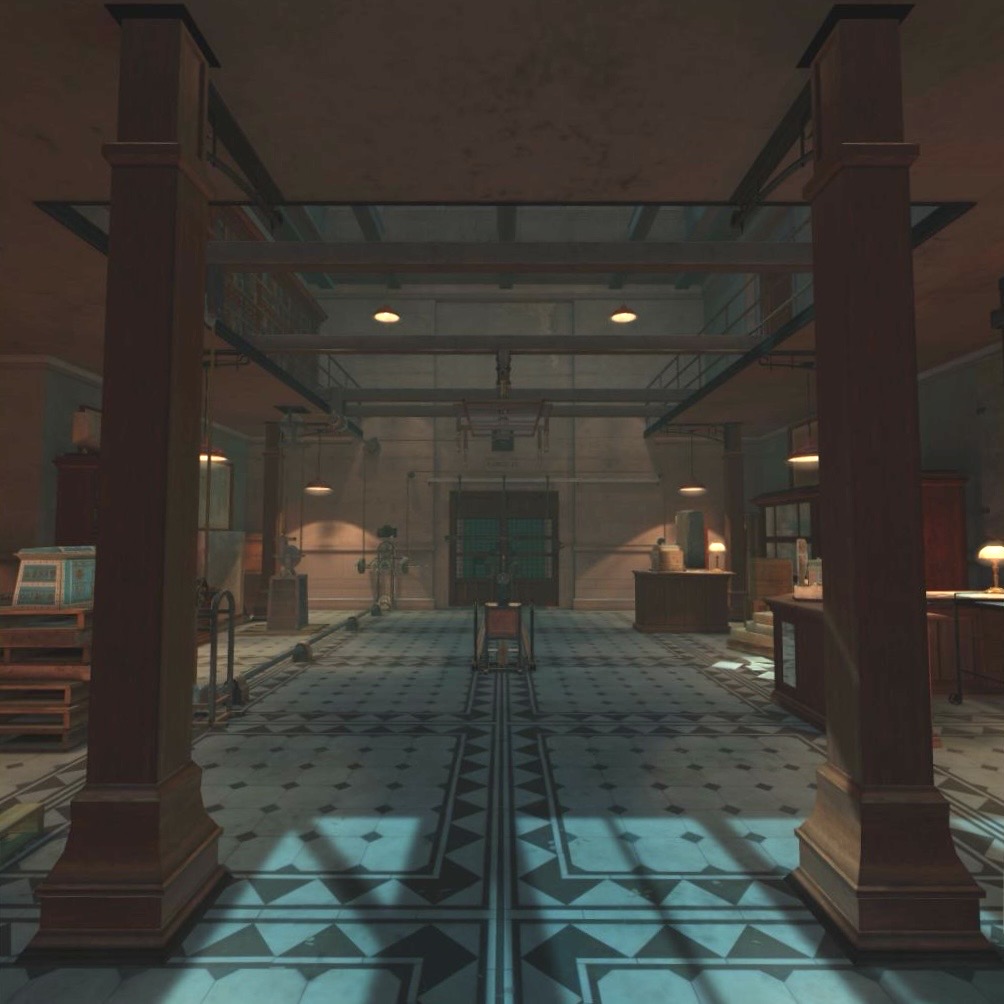
Enter: the depths of the British Archaeological Institute, where all the fascinating artifacts are stored. You’ll need to work through puzzles related to amulets and hieroglyphics, as well as examining a menacing-looking sarcophagus (which utterly creeped me out!). Personally, though the puzzles in this level were still challenging, I think it was perhaps the easiest level of the game, as they got progressively harder and more thought-provoking throughout each level. Also, though I doubt the real storage room of the British Museum (which I figure this is inspired by) looks anything like what you see in the game, I hope that it’s less spine-chilling as I felt physically anxious throughout the entirety of this level. It was utterly spooky!
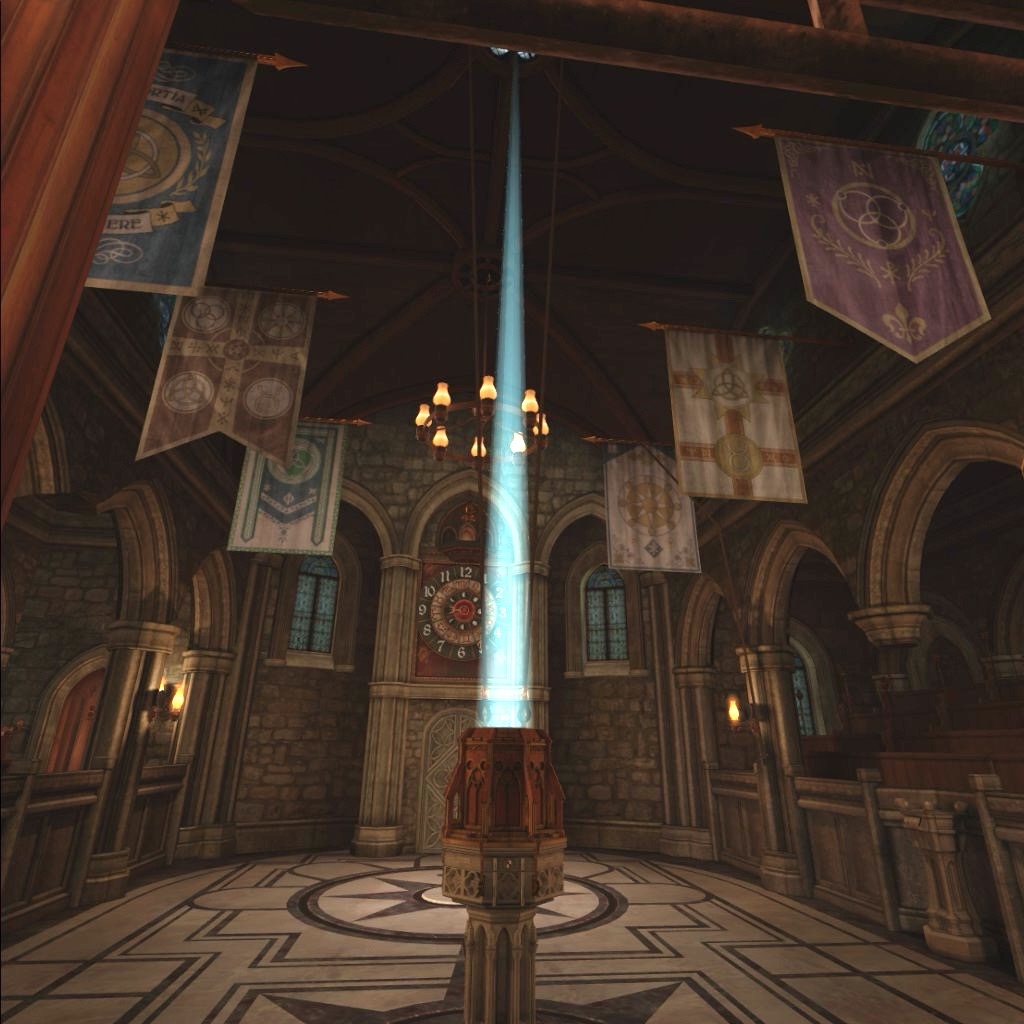
However, I think this is what sets The Room: A Dark Matter apart from its predecessors. It is awe-inspiring compared to the mobile/tablet-only games. It’s the fact that you’re there, and you’re feeling everything accordingly. It lives up to its name of virtual reality as it’s very easy to forget that what you’re experiencing is not tangible, but merely a product of your brain and the controls in your hand working in unison to provide a unique experience that feels undeniably authentic. You end up searching throughout rooms, looking on or under things, or trying to see a part of an object that is not physically accessible to you because everything feels real. There were occasions where I would stumble and stagger trying to rest my arms on a virtual desk, or I would almost drop the controllers trying to put them down on a virtual chair. I audibly gasped upon entering The Chapel because it felt exactly how it would if I had been looking at the real thing in person. Sure, it’s impressive viewing it through a mobile screen, but in the world of VR, it’s hard not to become enamoured with your surroundings. Not only that, but a few of the puzzles that you’ll be asked to solve necessitate that you do so at a great height – and you’re fully convinced you’ll stumble and fall off the edge of the platform… even though you know that in real life you’ll simply end up landing on a nice, fluffy carpet.
The developers have really thought about how to make it feel like you’re inside the action and how to bring puzzles closer to people… literally. There are many moments during the game where you’ll have to venture inside objects to solve them, sometimes from the inside, or perhaps using the knowledge you gain in the wider room, and vice versa. The items are exactly as they were when you were looking at them from the outside, but suddenly you have seemingly shrunk down to a minuscule-sized human, marvelling at the now Brobdingnagian scale of the object around you. The best examples of this re during the second level in The Chapel, where you’ll have to travel inside an organ, the bell tower, and many other items.
Though, while most people probably think about VR games being a solo escapade, it might be surprising to know (if you’re new to the craze like me), that many VR headsets can actually mirror to a tablet or TV screen, so others can see exactly what you’re seeing in the game! This meant I could get my mum and aunt involved in the action too!
There were many puzzles which were utterly difficult to complete, even for someone like me who spends their day surrounded by them. Because the puzzles you’re presented with in the game do not rely on existing knowledge in the way that things such as crosswords do, but instead use your problem-solving skills, attention to detail, observational awareness, and common sense to their advantage, sometimes no matter how many times I tried to crack them on my own, I just couldn’t find the right solutions. This is not because I didn’t have the capability of deciphering them or because they were impossible, but it’s because they were simply not as straightforward to me as they may be to other people looking at them. Thus, the three of us teamed up to make solving this escape room game a collaborative effort. They would shout out things they could see or pose questions to me, directing me to artifacts and clues I might have missed. I would also commentate my puzzle-solving thoughts out loud while it was my turn, and it was fantastic to be able to have input from them in real-time, as they could perhaps see things differently on the tablet than I could through the headset.
Solving this escape room jointly instead of solo was also extremely convenient, as I’ll admit that the atmosphere was rather creepy. Sometimes you’ll get distracted from cracking a code or puzzle because you’ll hear whispers from inside the museum stores, hear the ominous chime of a bell from The Chapel, or the muffled cackle of a witch from her hut. And while observers can hear the sounds too, the immersive nature of the game means that if you’re wearing the headset, the sounds echo in your ears as if you’re physically there, and it’s very easy for forget that you’re not. In fact, there was a moment while solving a puzzle relating to the Egyptian sarcophagus at the museum where I yelled ‘I’m scared!’ because I felt the physical anticipation that something was going to jump out at me like they do in haunted houses at Halloween. Luckily, my aunt came to the rescue and offered to solve it for me because she’s better with creepy atmospheres than I am… but even she will admit that she still found it unnerving.
However, much like other games in the medium of VR, there are some drawbacks. A few of the puzzles require fiddly work, but as much as you would like to use your own two (real) hands to get it done, you are limited by the use of the controller and its capabilities within the game; as well as some of the puzzles and rooms ending up blurry if your headset is not adjusted correctly. Often, this will make you feel like you’re trying to solve the puzzles while half asleep and drunk, and it can be frustrating when you know exactly what you need to do to crack it, but just can’t.
Physical comfort is also an issue. You’ll frequently find yourself wanting to complete a puzzle or room as you’re so involved in the experience and you don’t want it to end. But, of course, you are wearing a headset, which can be straining both on your head and your eyes, so often you’ll end up (grudgingly) leaving a puzzle half completed to take a break or end the session. There is also nowhere inside the game to make notes, so unless you write them down somewhere – i.e on a notepad, which would distract from the VR element, then you’re relying on your memory when you return to the game at a later date.
Though, it’s important to note that most of these are things which can be overlooked, or do not present much of a hassle for the overall experience. What it sometimes lacks in user-friendliness, it completely makes up for with the spectacular feeling of being in these whimsical places.
I absolutely adored this escape room. It took the three of us three months to complete this game in its entirety, solving it for three to four hours every Saturday, (of course if you’re playing it every day, it will probably take you far less time than this!), and I have to say that I was extremely disappointed when we accomplished it, because I wanted it to continue forever. The combination of the atmospheric setting and the cryptic challenges is one-of-a-kind, and I have yet to find anything that feels remotely similar which encapsulates the excitement and anticipation, or the type of puzzles I encountered throughout the game.
Ultimately, if you’re a a puzzle lover like me and have the ability to procure a VR headset, then this game is an absolute must. I cannot wait to see what Fireproof Games release next in the Virtual Reality world, because you can absolutely guarantee that I’ll be playing it – especially if it’s anything like this one!
I always believe that the first book in a series is the most important, because if you’re not completely hooked by the first, then you are unlikely to read the rest. The first book is the foundation upon which the following are built, allowing for stories and characters to develop. Can you imagine a series like Harry Potter or Lord of the Rings without the first in the series?
I’ll admit that this is not the type of book I usually pick up. With crime novels, I’m extremely fussy. I like murder mysteries being told in a specific way, otherwise I find they don’t capture my attention. I don’t like it when a novel takes too long to get to the action (ie. when I have to wait 200 pages for someone to be killed), or when the story is good but the detectives investigating the murder are so unlikeable that I can’t continue. So, when this was recommended to me, I wasn’t sure as to what I was going to make of it. But, wanting to read more detective fiction, I decided that all I could do was give it a go…
And holy cannoli with a side of pepperoni! This book is an absolute page-turner! Eating? Goodbye. Sleeping? Don’t be ridiculous—I have a book to read!
My primary reservation was that it was going to be too cliche or predictable; that the story was going to be easy to guess, and thus become boring. But, folks and friends, this novel is anything but! I literally had no idea who did it until it was revealed towards the very end!
I have to admit that I’m usually not a fan of stories that contain dual timelines. They’re often messy, details get forgotten, and sometimes they can completely veer off on tangents that have absolutely no relevance to the plot or characters whatsoever. And to make it doubly difficult – the murder in the present connected to the murder in the past? Well, that sounds like a recipe for disaster, doesn’t it?
But folks and friends, this book is exquisite. The two narratives – one set in war-time and the other set in present day, interlink perfectly with one another; the breadcrumbs you’re fed throughout are all connected at the end; and the mystery gets tied up in a nice little bow. It’s like a modern day Agatha Christie novel that reminds us that in order to understand the present, we must first understand the past.
Of course, I cannot write this review without mentioning our two main characters – Bryant and May. Loveable octogenarians with weird quirks and a friendship that’s more like a married couple… what’s not to like? Also, their banter was hilarious and had me laughing from the beginning to the very end—especially with the quote about the fork in the toaster! I am interested in seeing and exploring how their relationship changes in future books, and I hope they keep the same level of humour.
Ultimately, if you’re looking to start a new detective fiction series that has octogenarian shenanigans, hilarity, suspense, and thrill, then I cannot recommend this book enough!
Favourite quotes:
✨ ‘Plastic carrier bags floated around the traffic lights at the end of the Strand like predatory jellyfish.’
✨ ‘It was a violent place in which to discover a purpose. It was a good place to forge a friendship.’
✨ ‘The world will need sceptics after the war is over. Too many people are ready to believe anything they’re told.’
✨ ‘Throughout history, human nature remains unchanged. The world’s oldest questions are still being asked. Medea, Oedipus, we’re not adding anything that the Greeks didn’t already know.’
✨ ‘We’re the police, we don’t thump people.’
✨ ‘The city survived in fragments, as though it had been painted on glass and the glass had shattered.’
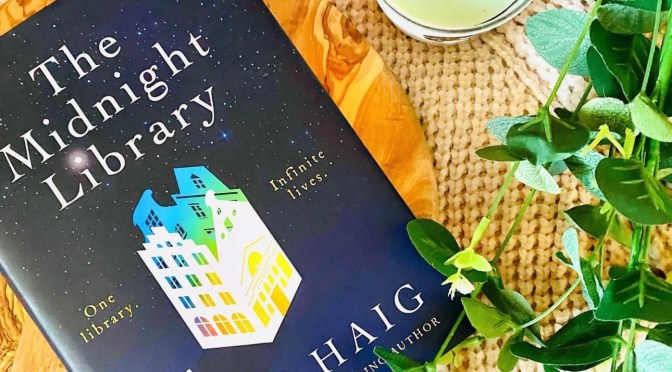
Where do I even begin? There are so many thoughts and feelings I have about this book that trying to condense them into a post is very difficult. But, I shall start by saying: I urge every human being on the planet to read this.
Nora, the protagonist, has depression. And, feeling as though she has nothing else to live for, she chooses to take her own life. But, between life and death, there is a library. The Midnight Library – where every book is a chance to live another life that you could have lived, had you made different choices.
This book is not to be taken lightly. It covers deep, sensitive subjects. As per the synopsis, suicide and depression are two major themes, so do not expect to open this book and expect it to be a ‘light’ read. It’s an easy read, yes. But you must be in the right frame of mind to enter this book.
With sensitive subjects, as a reader, you can only hope that the author handles them sensitively. You do not want them to make light of these, brushing them off as though they are not genuine issues or pretending that they don’t affect as many people as they do throughout the world. While I don’t think they needed to be handled like they’re fragile, walking on eggshells or never overtly stating they are what they are, I do believe they need to be handled with care. Perhaps it’s because Matt Haig has been in Nora’s shoes, coming close to taking his own life more than once (something which he is very open about on his Instagram), but he approaches such issues beautifully and really puts life into perspective. Some things we think matter most, do not matter at all. And, some things we think matter least, are actually the most important.
I adored the concept of this book. It was so well written and thought out, and each chapter connects seamlessly to the one before. It is a book that will make you think and wonder, but it will also make you feel.
You may be hesitant to pick it up because you think it will be gut-wrenching and emotional. And yes, it is. But it’s also full of hope. I closed the book feeling more positive than I had done in a long time, and had the overwhelming feeling that I wanted to start living – truly living – because ultimately, that is what this book is about. Yes, it’s about depression and suicide, and all the other things in between. But more importantly, it’s about wanting, and choosing, to live.
✨ ‘It is easy to mourn the lives we aren’t living. Easy to wish we’d developed other talents, said yes to different offers. Easy to wish we’d worked harder, loved better, handled our finances more astutely, been more popular, stayed in the band, gone to Australia, said yes to the coffee or done more bloody yoga. It takes no effort to miss the friends we didn’t make and the work we didn’t do, the people we didn’t go and the people we didn’t marry and the children we didn’t have. It is not difficult to see yourself through the lens of other people, and to wish you were all different kaleidoscopic versions of you they wanted you to be. It is easy to regret, and keep regretting, ad infinitum, until our time runs out. But it is not lives we regret not living that are the real problem. It is the regret itself. It’s the regret that makes us shrivel and wither and feel like our own and other people’s worst enemy. We can’t tell if any of those other versions would have been better or worse. Those lives are happening, it is true, but you are happening as well, and that is the happening we have to focus on.’
✨ ‘It is quite a revelation to discover that the place you wanted to escape to is the exact same place you escaped from. that the prison wasn’t the place, but the perspective.’
✨ ‘The only way to learn is to live.’
✨ ‘If you aim to be something you are not, you will always fail. Aim to be you. Aim to look and act and think like you. Aim to be the truest version of you. Embrace that you-ness. Endorse it. Love it. Work hard at it. And don’t give a second thought when people mock it or ridicule it. Most gossip is envy in disguise.’
✨ ‘Between life and death there is a library,’ she said. ‘And within that library, the shelves go on forever. Every book provides a chance to try another life you could have lived. To see how things would be if you had made other choices…. would you have done anything differe,t if you had the chance to undo your regrets?’
✨ ‘I don’t think your problem was stage fright. Or wedding fright. I think your problem was life fright.’
✨ “What do I do now?’ ‘You open the book and turn to the first page.’
✨ ‘Never underestimate the big importance of small things.’
✨ ‘Because a pawn is never just a pawn. A pawn is a queen-in-waiting. All you need to do is find a way to keep moving forward. One square after another. And you can get to the other side and unlock all kinds of power.’
✨ ‘Three simple words containing the power and potential of a multiverse. I AM ALIVE.’
✨ ‘A person was like a city. You couldn’t let a few less desirable parts put you off the whole. There may be bits you don’t like, a few dodgy side streets and suburbs, but the good stuff makes it worthwhile.’
✨ ’We only need to be one person. We only need to feel one existence. We don’t have to do everything in order to be everything, because we are already infinite. While we are alive we always contain a future of multifarious possibility.’
✨ You don’t have to understand life. You just have to live it.’
✨ ’You’re overthinking it.’ “I have anxiety. I have no other type of thinking available.’
✨ ’And that sadness is intrinsically part of the fabric of happiness. You can’t have one without the other. Of course, they come in different degrees and quantities. But there is no life where you can be in a state of sheer happiness for ever. And imagining there is just breeds more unhappiness in the life you’re in.’
✨ ’Sometimes just to say your own truth out loud is enough to find others like you.’
✨ ‘Of course, we can’t visit every place or meet every person or do every job, yet most of what we’d feel in any life is still available. We don’t have to play every game to know what winning feels like. We don’t have to hear every piece of music in the world to understand music. We don’t have to have tried every variety of grape from every vineyard to know the pleasure of wine. Love and laughter and fear and pain are universal currencies. We just have to close our eyes and savour the taste of the drink in front of us and listen to the song as it plays. We are as completely and utterly alive as we are in any other life and have access to the same emotional spectrum.’
✨ ‘The thing that looks the most ordinary might end up being the thing that leads you to victory.’
✨ ‘It was interesting, she mused to herself, how life sometimes simply gave you a whole new perspective by waiting around long enough for you to see it.’
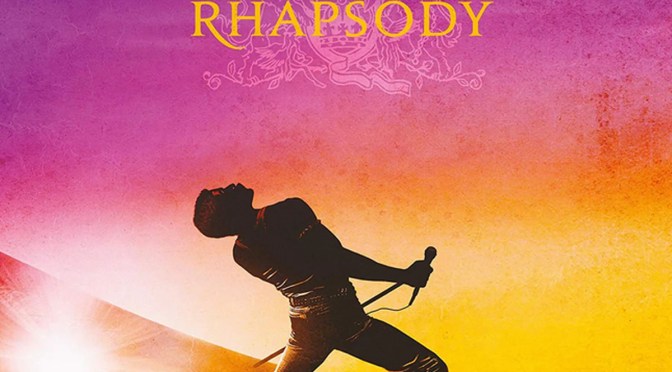
When I first heard about this film, I expected it to be very similar to other modern biopics like Jobs (2013), Saving Mr Banks (2013), or The Theory of Everything (2014), focusing on the extraordinary tale of one person and their contribution to the world as we know it. I expected to leave the film amazed at the incredible visuals, the uncanny likeness to Freddie Mercury, and the clever use of music – and at a film that tells us more about an incredible man, whose life battling AIDS was very, very private.
Yet, I walked out of the film disappointed. That’s not to say that the film wasn’t good. There were moments that I thought were brilliant, but I’m not sure I would purposely go back and watch it again. For most of it, I felt like I was watching an extended music video. The film lacked in story, and the music was certainly overused.
One of the brilliant things about movies and television is how they can make you really feel something. The combination of a particular image with a specific piano score can evoke one, or multiple feelings such as happiness, sadness, or nostalgia.
A perfect example of this is in Saving Mr Banks:
The instantly recognizable piano score of Chim Chim Cheree, combined with the ‘Winds in the East’ speech, is one of the best examples of how the creative direction and musical score can work in unison to evoke such feelings.
The score is stripped back to be just a piano playing the melody of one of the most notable songs of the Mary Poppins film. The lack of other musical instruments, added riffs and accompaniments, allow the score to be more impactful, creating a beautiful opening and ending to the film, that leaves you teary-eyed and emotional, as you remember your own childhood and the things that you miss.
For Bohemian Rhapsody, a movie that documents the life of one of Britain’s most iconic and legendary performers of all time, I expected the film to do something similar. To use creative direction and music to touch the emotions of the audience, to not only remember that man that the world lost but to honour him.
Instead, it was as if the director was attempting to fill the lack of movement in the script with as many Queen songs as possible, in the space of two hours. The majority of the movie is about Queen and their pathway to fame. Nearly every other scene has the band in the recording studio and documents them writing songs in a way that is nowhere near realistic.
Anybody who has ever written anything creative – songs, poetry, fiction, etc. will know that you don’t just have an idea for something, write it down, and that’s that. You work for months, sometimes years, on one project, until you have it exactly the way you imagine it. Writers know that the majority of writing is re-writing. You hate one line, so you change it. And then you hate that, so you change it again. And you keep changing things until you create something so completely different from the idea that you started with, that you end up with something that you love.
But for Queen, in the film, writing songs is as easy as blurting out lyrics. Whatever they say in the moment becomes the final song. There is no changing of lyrics. There are no rewrites. There was no “I hate this melody”, “I don’t think that works”, or “Let’s start this from the very beginning.” They simply churn out albums like a popcorn machine pops kernels.
However, just after Freddie is diagnosed with AIDS he is staring at himself in the mirror, as he examines what is left of himself, knowing that he is going to die from the disease someday, if not very soon. As he stares at himself, a stripped-down version of Who Wants To Live Forever (those specific lyrics) starts playing in the background. This combination of him looking at himself, knowing that his time is limited, and the lyrics and melody of the song, brought a tear to my eye and goosebumps to my skin; and is one of the only moments in this film that has resonated with me, long after the credits rolled.
For a film set within the 1970s and 80s – decades which are known for their promiscuity, such as heavy drug-taking, drinking, and sex, I was expecting there to be multiple, and possibly graphic, sex scenes. Yet, for a film that documents the edgy years of modern society, the edgiest parts of the film are comprised of the drug taking at parties, drinking (which features quite heavily throughout), smoking, and the use of strong language; and several racial slurs. Needless to say, I was pleasantly surprised.
Albeit, one of the most astonishing things about this movie is Rami Malek and his incredible likeness to Freddie Mercury. In a movie that is mediocre for what it is, Malek is an absolute star. Throughout the film, he delivers golden nuggets of one-liners such as “I pity your wife if she thinks that six minutes is forever” (when referring to the song Bohemian Rhapsody), which not only makes the audience laugh but captures the charming, lavish persona that was Mercury.
Yet, throughout the film, there is an overwhelming sense from the audience, that they long to discover who Freddie Mercury was as a human being, not just as a performer. I expected the film to boldly go where no filmmakers have ever gone before, and explore in more depth Freddie’s personal life, such as his closeted sexuality, his hedonism, and his off-stage persona. In a generation where film, television, and media are openly discussing subjects which were previously considered taboo, the film could have been a groundbreaking opportunity for its creators to have generated awareness and educated audiences on HIV and AIDS, as well as put into perspective just how far medical research and treatment has come for these diseases over the last thirty years. Yet, the film merely alludes to the fact that Freddie has AIDS when the audience sees him talking to a doctor in the hospital and sees other sick men with the disease. But not once, are the words “You have AIDS” ever spoken.
Though, despite this missed opportunity, Malek’s performance as Freddie really comes to life, during the final scene of the film, where Queen is performing at Live Aid in 1985. Every movement that Rami Malek makes, every step, every turn of his head, and every facial expression is uncannily similar to that of Freddie Mercury, and it is clear that Malek spent countless hours studying everything about the legendary performer.
The film lacks in multiple aspects, for the most part perhaps because of the change in director halfway through production, the lack of story in the script, or the overuse of music. More could have been done with the musical score and creative direction to evoke an atmosphere and create moments throughout the film that resonated with a nostalgic, emotional audience; and the filmmakers missed an opportunity to create a platform for the discussion of sexually transmitted diseases. However in what is an average film at best, Rami Malek’s uncanny performance as Freddie Mercury is exquisite, and it is almost impossible to envision anybody else fulfilling the role like he does – particularly in the final moments, as he performs on stage as Freddie during Live Aid 1985, which is by far the most brilliant and powerful moment of the whole movie.
Release Date: 24 October 2018 Director(s): Bryan Singer, Dexter Fletcher Distributed by: 20th Century Fox Run Time: 2 hours 14 minutes Starring: Rami Malek, Lucy Boynton, Gwilym Lee, Ben Hardy, Joe Mazzello, Aidan Gillen, Tom Hollander, Mike Myers








 thebecksedit.co.uk