
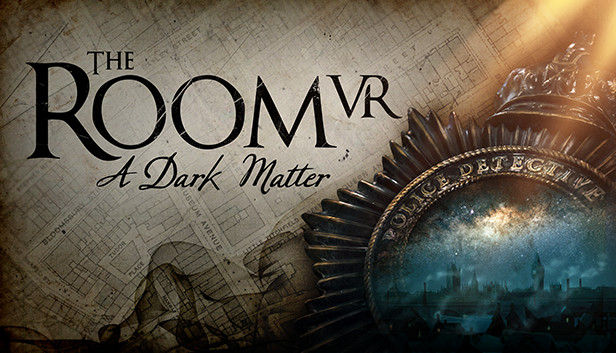
Developer: Fireproof Games.
Have you ever watched your favourite action and adventure films and yearned for the ability to transport yourself inside – to scale walls, jump out of helicopters, and commit heists alongside the protagonists? Every time I watch National Treasure a part of me is envious that I am not a member of team Ben Gates, cracking codes and riddles, and stealing the Declaration of Independence, because even though it’s risky, it looks like a hell of a lot of fun!
That being said, I’m not sure I’d do very well. I hate spiders, and most other creepy crawlies. I hate tombs and crypts and dark spaces, because there’s just something about them that freaks me out. And while I spend my time editing and solving puzzles at work, I’m not sure I have the knowledge or the intellect to be able to solve the clues that Ben Gates is presented with!
But, sometimes it’s still nice to have a go, even if you think you might fail.
I’ll admit that I’m new to the world of Virtual Reality. I only purchased my Oculus Quest headset back in June, and the majority of games that I’ve played up until now have been popular things like Fruit Ninja and Beat Saber. But when The Room: A Dark Matter appeared in my recommended games list, of course I had to give it a go – not just for enjoyment purposes, but because the inner adventurer inside of me was screaming with glee at the idea of being able to take on the brainteasers and puzzles myself from the comfort of my own home, without the fear of falling down rickety and crumbling two-thousand-year-old stairs… though, this is virtual reality, so I suppose you never know!
Set in London in 1908, The Room: A Dark Matter follows a detective (you) conducting an investigation into the strange disappearance of an esteemed Egyptologist – Dr Rupert Montgomery – and the unusual assistance he receives from The Craftsman. From exploring cryptic locations (literally), to examining mysterious gadgets and artifacts, you’re led through a multi-level escape room which combines historical and fantasy elements to completely blur the line between reality and illusion.
One of the things I was immediately impressed by was how immersive the game is. I didn’t enter it with any specific expectations as I am still a novice to the world of VR games, but if I had, I am sure that it would have surpassed them. Much like its predecessors (available on smartphones and tablets, but not VR), you’re required to fiddle with buttons and dials, slot things into their correct places, and solve some rather complex things using magical spectacles to see invisible items and challenges (like night vision, but cooler!)

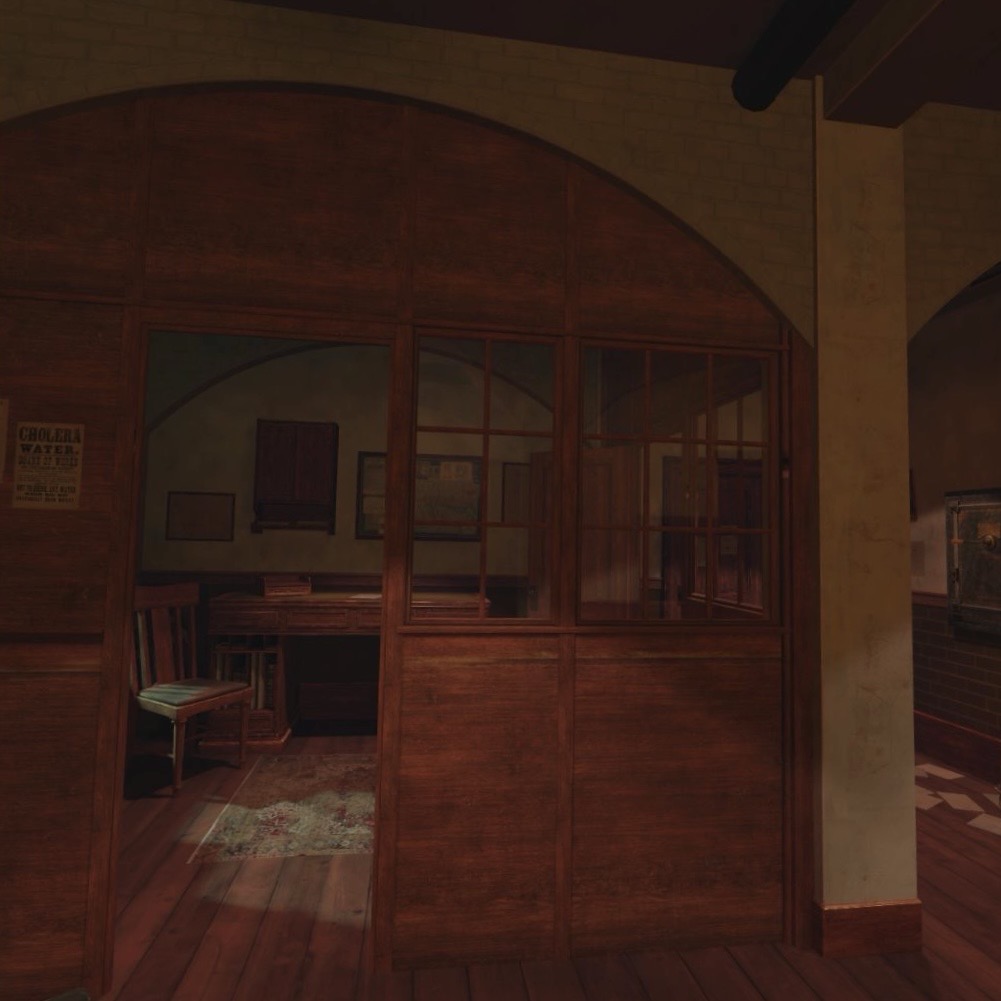
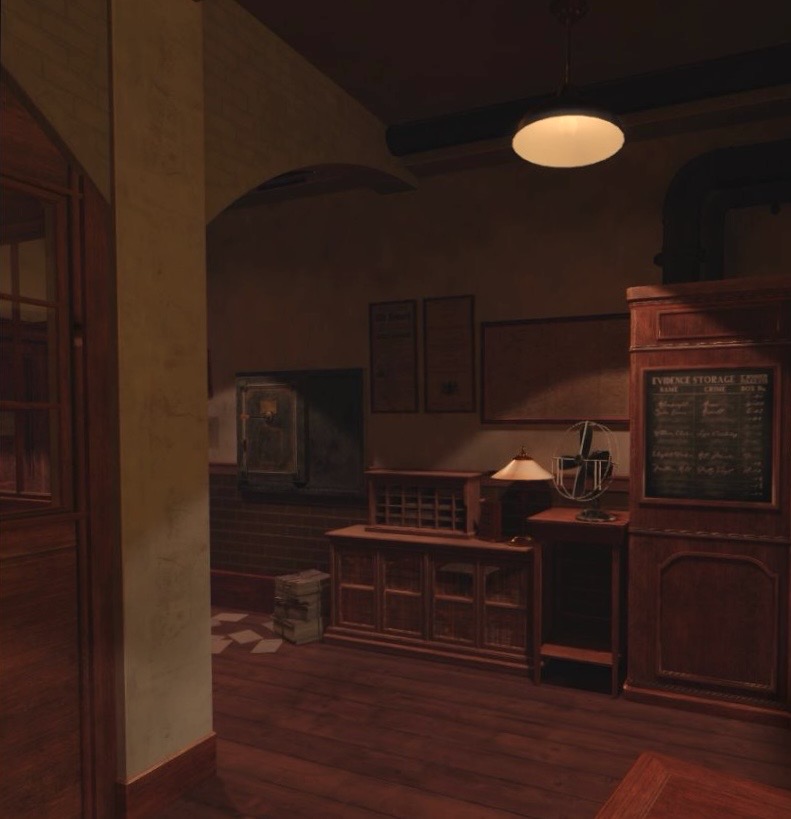
The game begins in the Police Station – essentially a tutorial room for you to learn the controls of the game. I have to admit that beginning the game isn’t as straightforward as you think, as it’s not automatically obvious which buttons and handles you need to push to set things in motion. Perhaps it’s because I went into the game knowing that I would be required to solve a lot of puzzles, but I kept overlooking the most obvious thing in front of me. I spent roughly an hour searching throughout the room, pushing and pulling almost everything, and gazing longingly at the screen hoping it would magically begin the story for me. Alas, I caved and resorted to a walkthrough guide to lead me in the right direction. (Bad, I know, but I was getting frustrated at not being able to work it out! Also, I don’t think walkthrough guides count as cheating because ultimately it’s what they’re there for… I just use them as a little extra assistance when necessary!).
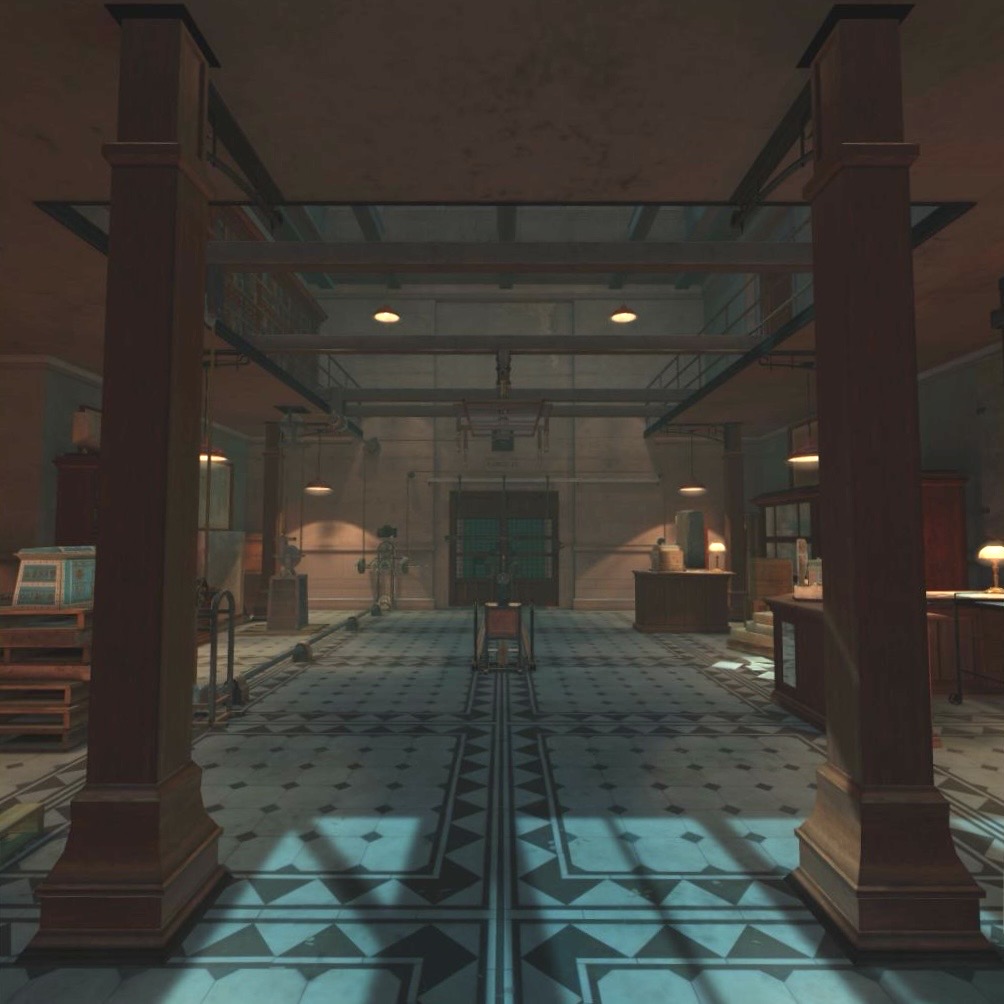
Enter: the depths of the British Archaeological Institute, where all the fascinating artifacts are stored. You’ll need to work through puzzles related to amulets and hieroglyphics, as well as examining a menacing-looking sarcophagus (which utterly creeped me out!). Personally, though the puzzles in this level were still challenging, I think it was perhaps the easiest level of the game, as they got progressively harder and more thought-provoking throughout each level. Also, though I doubt the real storage room of the British Museum (which I figure this is inspired by) looks anything like what you see in the game, I hope that it’s less spine-chilling as I felt physically anxious throughout the entirety of this level. It was utterly spooky!


However, I think this is what sets The Room: A Dark Matter apart from its predecessors. It is awe-inspiring compared to the mobile/tablet-only games. It’s the fact that you’re there, and you’re feeling everything accordingly. It lives up to its name of virtual reality as it’s very easy to forget that what you’re experiencing is not tangible, but merely a product of your brain and the controls in your hand working in unison to provide a unique experience that feels undeniably authentic. You end up searching throughout rooms, looking on or under things, or trying to see a part of an object that is not physically accessible to you because everything feels real. There were occasions where I would stumble and stagger trying to rest my arms on a virtual desk, or I would almost drop the controllers trying to put them down on a virtual chair. I audibly gasped upon entering The Chapel because it felt exactly how it would if I had been looking at the real thing in person. Sure, it’s impressive viewing it through a mobile screen, but in the world of VR, it’s hard not to become enamoured with your surroundings. Not only that, but a few of the puzzles that you’ll be asked to solve necessitate that you do so at a great height – and you’re fully convinced you’ll stumble and fall off the edge of the platform… even though you know that in real life you’ll simply end up landing on a nice, fluffy carpet.
The developers have really thought about how to make it feel like you’re inside the action and how to bring puzzles closer to people… literally. There are many moments during the game where you’ll have to venture inside objects to solve them, sometimes from the inside, or perhaps using the knowledge you gain in the wider room, and vice versa. The items are exactly as they were when you were looking at them from the outside, but suddenly you have seemingly shrunk down to a minuscule-sized human, marvelling at the now Brobdingnagian scale of the object around you. The best examples of this re during the second level in The Chapel, where you’ll have to travel inside an organ, the bell tower, and many other items.
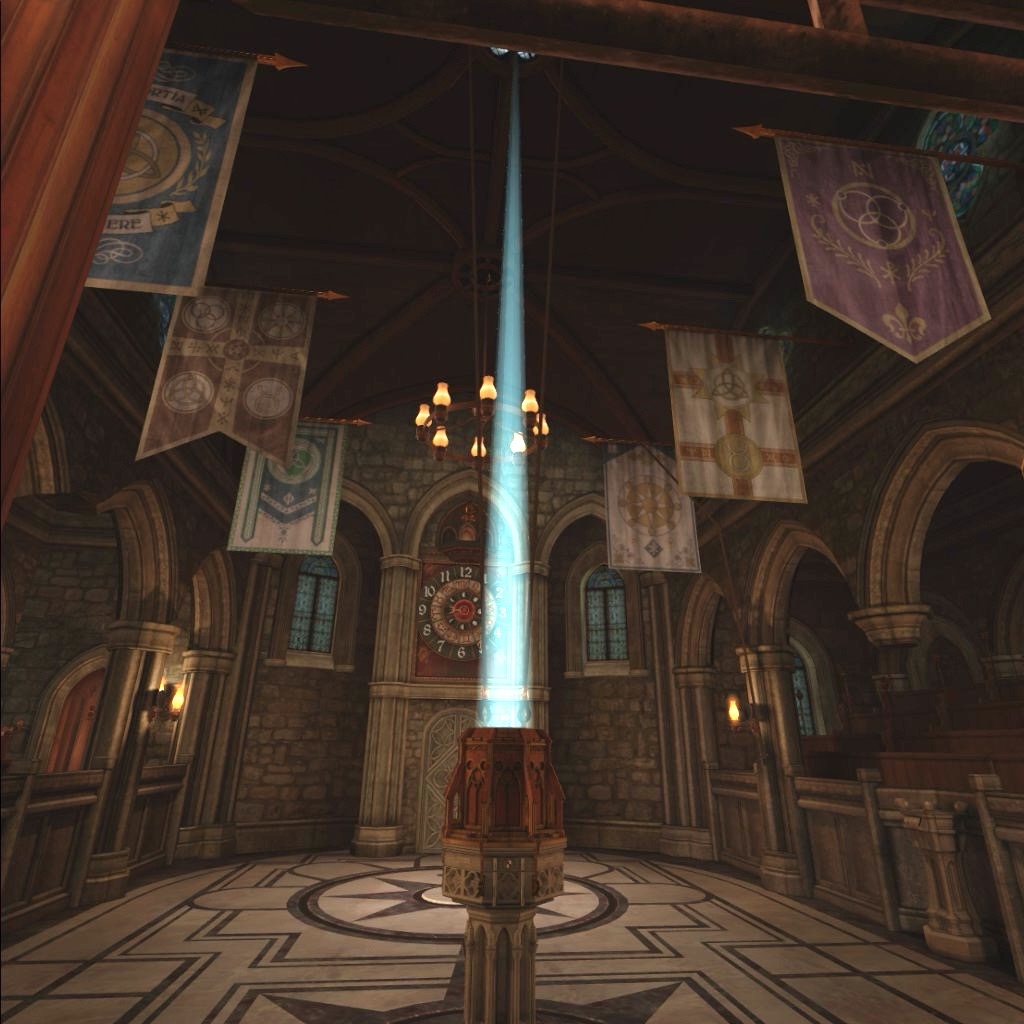

Though, while most people probably think about VR games being a solo escapade, it might be surprising to know (if you’re new to the craze like me), that many VR headsets can actually mirror to a tablet or TV screen, so others can see exactly what you’re seeing in the game! This meant I could get my mum and aunt involved in the action too!
There were many puzzles which were utterly difficult to complete, even for someone like me who spends their day surrounded by them. Because the puzzles you’re presented with in the game do not rely on existing knowledge in the way that things such as crosswords do, but instead use your problem-solving skills, attention to detail, observational awareness, and common sense to their advantage, sometimes no matter how many times I tried to crack them on my own, I just couldn’t find the right solutions. This is not because I didn’t have the capability of deciphering them or because they were impossible, but it’s because they were simply not as straightforward to me as they may be to other people looking at them. Thus, the three of us teamed up to make solving this escape room game a collaborative effort. They would shout out things they could see or pose questions to me, directing me to artifacts and clues I might have missed. I would also commentate my puzzle-solving thoughts out loud while it was my turn, and it was fantastic to be able to have input from them in real-time, as they could perhaps see things differently on the tablet than I could through the headset.
Solving this escape room jointly instead of solo was also extremely convenient, as I’ll admit that the atmosphere was rather creepy. Sometimes you’ll get distracted from cracking a code or puzzle because you’ll hear whispers from inside the museum stores, hear the ominous chime of a bell from The Chapel, or the muffled cackle of a witch from her hut. And while observers can hear the sounds too, the immersive nature of the game means that if you’re wearing the headset, the sounds echo in your ears as if you’re physically there, and it’s very easy for forget that you’re not. In fact, there was a moment while solving a puzzle relating to the Egyptian sarcophagus at the museum where I yelled ‘I’m scared!’ because I felt the physical anticipation that something was going to jump out at me like they do in haunted houses at Halloween. Luckily, my aunt came to the rescue and offered to solve it for me because she’s better with creepy atmospheres than I am… but even she will admit that she still found it unnerving.
However, much like other games in the medium of VR, there are some drawbacks. A few of the puzzles require fiddly work, but as much as you would like to use your own two (real) hands to get it done, you are limited by the use of the controller and its capabilities within the game; as well as some of the puzzles and rooms ending up blurry if your headset is not adjusted correctly. Often, this will make you feel like you’re trying to solve the puzzles while half asleep and drunk, and it can be frustrating when you know exactly what you need to do to crack it, but just can’t.
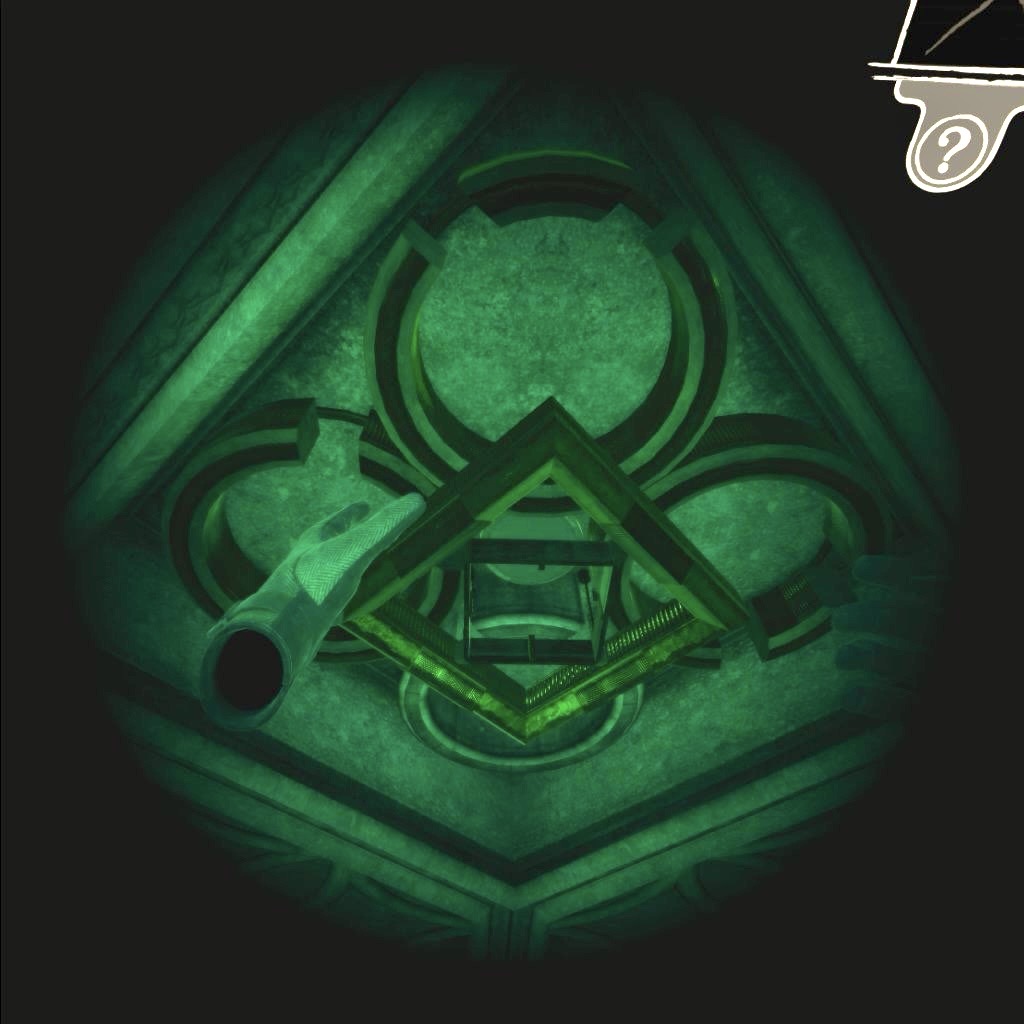

Physical comfort is also an issue. You’ll frequently find yourself wanting to complete a puzzle or room as you’re so involved in the experience and you don’t want it to end. But, of course, you are wearing a headset, which can be straining both on your head and your eyes, so often you’ll end up (grudgingly) leaving a puzzle half completed to take a break or end the session. There is also nowhere inside the game to make notes, so unless you write them down somewhere – i.e on a notepad, which would distract from the VR element, then you’re relying on your memory when you return to the game at a later date.
Though, it’s important to note that most of these are things which can be overlooked, or do not present much of a hassle for the overall experience. What it sometimes lacks in user-friendliness, it completely makes up for with the spectacular feeling of being in these whimsical places.
I absolutely adored this escape room. It took the three of us three months to complete this game in its entirety, solving it for three to four hours every Saturday, (of course if you’re playing it every day, it will probably take you far less time than this!), and I have to say that I was extremely disappointed when we accomplished it, because I wanted it to continue forever. The combination of the atmospheric setting and the cryptic challenges is one-of-a-kind, and I have yet to find anything that feels remotely similar which encapsulates the excitement and anticipation, or the type of puzzles I encountered throughout the game.
Ultimately, if you’re a a puzzle lover like me and have the ability to procure a VR headset, then this game is an absolute must. I cannot wait to see what Fireproof Games release next in the Virtual Reality world, because you can absolutely guarantee that I’ll be playing it – especially if it’s anything like this one!
Photos: Fireproof Games
 thebecksedit.co.uk