Category Archives: Books and Literature

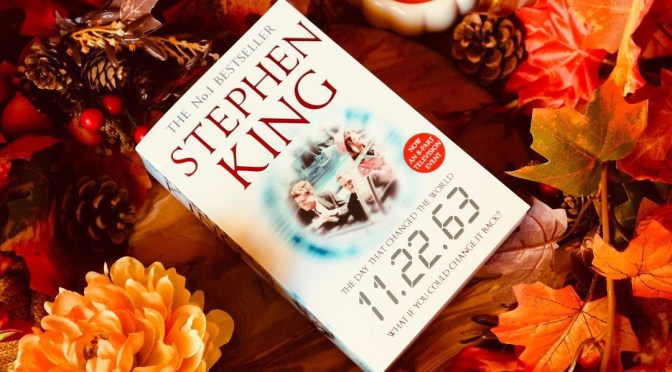
Book Review: 11/22/63 by Stephen King

Rating: 10 out of 10.

If you’ve scrolled through my Instagram then I don’t need to be the first to tell you that I’ve read a fair few books – from romances and thrillers, to murder mysteries, fantasy, and children’s fiction. I’m a book lover, and I will never turn down a recommendation. But there is no other book I have read that has affected me like this one.

Before this, I had never read a Stephen King novel. I’m not a fan of horror, so most of his works don’t really appeal to me very much. So, when I said to my best friend, Isaac, that I wanted to start reading his work, he suggested that I begin with 11/22/63. And holy moly cannoli with a side of pepperoni, what a book to start with!

I have a confession: this is not a recent read. I actually read this five years ago, in 2019, but I think about it constantly. When someone asks me what my favourite book is, this is the one with which I reply. I am not a fan of historical fiction, but this is the exception. It combines history with fantasy and thriller, and is an exquisite piece of writing that I urge everybody to read.

I never ever thought I would be crying at a Stephen King novel. The words “crying” and “Stephen King” don’t usually fit in the same sentence unless they’re tears of fear and horror. But the ending of this book had me sobbing for forty-five minutes. I cried, re-read the ending, and then cried for another forty-five. The ending was so profoundly moving that it was overwhelming for me, and I never wanted it to end. It was beautiful and bittersweet – both heartbreaking and comforting, and I couldn’t have imagined anything better.

This novel is over 800 pages long – something which is probably intimidating to a lot of readers, especially if they have the “big book fear.” Tackling something so dense in length can feel overwhelming, like climbing a mountain and wondering if you’re ever going to reach the top, while also asking whether the payoff is going to be worth it. I myself will admit that I had the same thoughts and was apprehensive at the beginning. It was the first book over five hundred pages that I had ever tried to read, and my fear was that I was going to lose interest or I wouldn’t be able to make it to the end.

I’m not going to lie: the story is quite slow to begin with, and doesn’t really get started until around 200 pages in. There is so much detail, description, and backstory that it can be a lot to process. But once the story really starts, it’s an utter page turner. It took me two days to read the entire thing because I couldn’t put it down, and once I finished it, I wanted to re-read it all over again.

Of course, you’re probably asking whether all of the 800+ pages are necessary? The answer: yes. One hundred percent, yes. It is in my honest opinion that I don’t think the book would have been the same without them. Does it get a little bit repetitive at some points? Sometimes. After all, you’re reading about a time travelling English teacher journeying back to the same day in history over and over again, with a detail/action changed each time (both big, and small). But, it is this repetition that upholds the ending. It is this repetition – the feeling of having lived Jake and Sadie’s story over and over again with them, that allows for the emotional final pages. (And yes, I believe that this is Jake and Sadie’s story more than anything.)

Honestly, I can’t really say any more about this book without giving things away, and I really don’t want to spoil anything, as this is a book you have to read without knowing much about the plot or the characters. I wish I could forget everything I know about this book and read it again for the first time because it was a rollercoaster and a half.

And to those who are still hesitant about picking this up: don’t be. I promise it’s worth every moment.

This is a book that has irrevocably changed me, and it is a story that I will carry with me forever.


Favourite Quotes:

‘When all else fails, give up and go to the library.’

‘We never know which lives we influence, or when, and why.’

‘.. stupidity is one of the two things we see most clearly in retrospect. The other is missed chances.’

‘A person who doesn’t learn from the past is an idiot, in my estimation.’

‘But I believe in love, you know; love is a uniquely portable magic. I don’t think it’s in the stars, but I do believe that blood calls to blood and mind calls to mind and heart to heart.’

‘Life always turns on a dime. Sometimes towards us, but more often it spins away, flirting and flashing as it goes: so long, honey, it was good while it lasted, wasn’t it?’

‘Sometimes the things presented to us as choices aren’t choices at all.’

‘If you’ve ever been homesick, or felt exiled from all the things and people that once defined you, you’ll know how important welcoming words and friendly smiles can be.’

‘Even people capable of living in the past don’t really know what the future holds.’

On the subject of love at first sight, I’m with the Beatles: I believe that it happens all the time.’

‘I saw something even more beautiful than a sense of humour: an appreciation for life’s essential absurdity.’

‘Things do happen for a reason, but do we like the reason? Rarely.’

‘Home is watching the moon rise over the open, sleeping land, and having someone you can call to the window, so you can look together.’

‘Resistance to change is proportional to how much the future might be altered by any given act.’

‘For most of us, I think it’s easier to admit doing wrong than being stupid.’

‘Sometimes life coughs up coincidences no writer of fiction would dare copy.’

‘Life’s simplest answers are often the easiest to overlook.’

‘Life’s too sweet to give up without a fight, don’t you think?’

‘History doesn’t repeat itself, but it harmonizes, and what it usually makes is the devil’s music.’

‘A person could see a lot without ever leaving his own living room. Especially if he had the right tools.’

‘You know how it’s going to end, but instead of spoiling things, that somehow increases your fascination. It’s like watching a kid run his electric train faster and faster and waiting for it to derail on one of the curves.’

‘Sarcastic people tend to be marshmallows underneath the armour.’

‘Like all sweet dreams, it will be brief… but brevity makes sweetness, doesn’t it? Yes, I think so. Because when the time is gone, you can never get it back.’

‘The multiple choices and possibilities of daily life are the music we dance to. They are like strings on a guitar. Strum them and you create a pleasing sound. A harmonic.’

‘Because the past isn’t just obdurate; it’s in harmony with both itself and the future.’

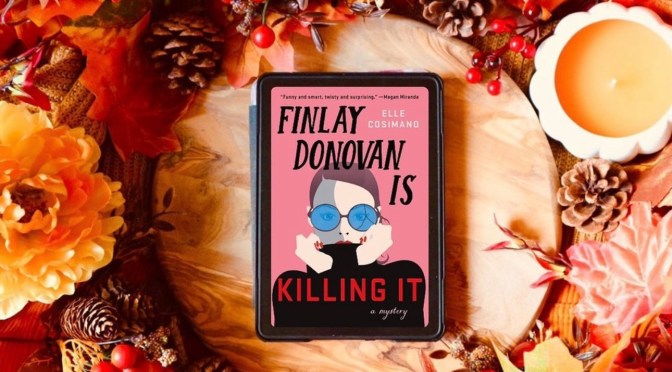
Book Review: Finlay Donovan is Killing It by Elle Cosimano

Rating: 5 out of 5.

When author Finlay Donovan is discussing the plot of her new suspense novel with her agent over lunch, she’s mistaken for a contract killer, and inadvertently accepts an offer to dispose of a problem husband in order to make ends meet… but, Finlay soon discovers that crime in real life is a lot more difficult that it’s fictional counterpart, as she becomes entangled in a real-life murder investigation.

First things first, I absolutely adored the plot of this novel! It was a genius piece of writing in terms of how Finlay ends up in her less-than-ideal situation. It really is a prime example of how context in a conversation is everything, and how easy it is to misconstrue one thing for something else.

Don’t get me wrong… this book is in no way realistic. It’s over-the-top, and the things that Finlay and Vero get away with would never happen. But then, we’re here for the entertainment, not for the realism, and the absurd dramatics that are incorporated within this book are really what makes it fun to read!

I’m really not going to dive into any plot details because this is a book where you need to discover all of the twists and turns for yourself, but this book is super twisty and I never saw half of them coming! I haven’t gasped so much in a long time; and just when you think you know what’s coming, more information is thrown into the mix which entirely changed your perspective and theories!

The relationship between Finlay and her nanny, Vero, is one we all need. They make a wonderful pair, and are the perfect partners-in-crime… literally. I could feel their bond through the pages, and I just liked them both as characters (which is another one of the reasons why I think this book works so well.)

However, two not so likeable characters were Stephen and Teresa… but especially Stephen. I was so hoping that the two of them would get their comeuppance (do they – well, read and find out!). Stephen is literally the most toxic man in existence (and he’s not even real!), and I haven’t found myself so infuriated with a character in a long time. He had no respect or faith in Finlay and every time he made an appearance I wanted to punch his lights out (or at least hoped Finlay would!)

But, one of my favourite moments has to be towards the end of the book when Finlay and Vero go back for ***. This whole scene was such a page turner and I was on the edge of my seat the entire time. In fact, night turned into early morning because I was up until 2am reading as I had to know what happened.

And as for the ending… WHAT? This book ends on an epic cliffhanger, and I made me eager to read the next in the series!

I really think this book would make the most perfect TV adaptation, eand I really hope it happens because I can’t even tell you how excited I would be to see this series on screen. It gives both Pretty Little Liars mixed with Criminal Minds vibes and you know what… I’m totally here for it.

If you’re looking for a light mystery with comedic thrill, then add this one to your list friends, because I can guarantee that it won’t disappoint!


Favourite Quotes:

‘It’s a widely known fact that most moms are ready to kill someone by eight thirty A.M. on any given morning. On the particular morning of Tuesday, October eighth, I was ready by seven forty-five. If you’ve never had to wrestle a two-year-old slathered in maple syrup into a diaper while your four-year-old decides to give herself a haircut in time for preschool, all while trying to track down the whereabouts of your missing nanny as you sop up coffee grounds from an overflowing pot because in your sleep-deprived fog you forgot to put in the filter, let me spell it out for you.’

‘My Google search history alone was probably enough to put me on a government watch list. I wrote suspense novels about murders like this. I’d searched every possible way to kill someone. With every conceivable kind of weapon.’

‘Iris Smiled, endorphins loosening the stern lines of her face. She actually looked like she was enjoying this. The woman was a masochist.’

‘Easy for her to say. She was twenty-two and had never had children. She could probably hold it until menopause.’

‘Let us not attribute to malice and cruelty what may be referred to less criminal motives.’ I make it a point never to assume the worst about people.’

‘Unfortunately, the man’s made of Teflon. Nothing sticks. He should’ve been locked up a dozen times, but there isn’t a judge in the state with the balls to convict him. Even if we could, he has friends that can make almost anyone disappear . . . new name, new passport, and wipe them off the map as if they’d never existed.’

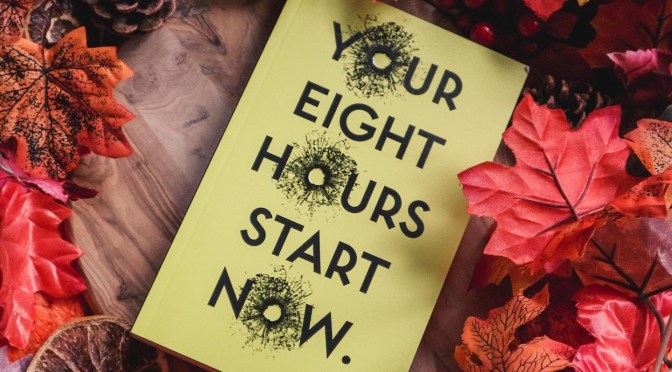
Book Review: Five Survive by Holly Jackson

Rating: 5 out of 5.

With the release of The Reappearance of Rachel Price this year, I thought it only right that I should post about the last Holly Jackson book I read, because holy cannoli with a side of pepperoni – what a thrilling, suspenseful and amazing novel it was!

I absolutely loved the first book in A Good Girls Guide to Murder and though I haven’t read the sequels (yet), I knew from the moment this book was announced that I most definitely had to read it! Thus, imagine my excitement and glee when I found an early proof copy on the free bookshelves at work, and got to devour this before it’s official publication!

Boy, oh boy, Holly Jackson has done it again. I can’t even begin to explain how good this book was. From the very start to the very end, I was on the edge of my seat – heart pounding, and palms sweating! Holly Jackson knows how to write thrillers, and I think this is one of the best I’ve ever read.

I’ll admit that it is a little slow to begin with as it’s mostly setting the scene for the rest of the story… but once it picked up the pace it sucked me in like a black hole, and I even stayed up reading until 3am because I couldn’t put it down! For me, the best kind of thrillers are the ones where the narrator is always unreliable, or you consistently question the validity of each and every thing that a character says or does, and I think that is why this thriller works particularly well and is so addictive. There wasn’t a single moment where I was able to predict what was going to happen throughout this novel, and I gasped in shock many, many times.

This novel sees an ensemble of six teenagers on their way to spring break, confined in an RV, and before they know it they’ve broken down in the middle of nowhere with bullets flying at them left right and centre. Why? That’s up to the six of them to figure out… but the only thing that’s for certain: one of them knows. But, which one?

Holly’s writing is the perfect example of giving the audience just enough to keep them engaged with the story, but not giving away too much that it spoils everything. Though written in the third person, she writes such unreliable narratives for each of the six characters, and you as a reader are constantly questioning their motives and dialogue… and perhaps that is where the brilliance of this book lies.

If you’re a fan of twisty thrillers that will have you neglecting food, sleep, and every other daily task so you can finish reading, then this will be one for you!


Favourite Quotes:

✨ ‘One sniper. One gun. One red dot. And one liar.’

✨  ‘This was the absolute worst way to die. Mid-squat-pissing behind a tree while Maddy’s axe-murderer charged at her from the front.’

✨  ‘What are you, the tequila guardian?’ He pointed at her. ‘Right, because I’m Mexican?’

✨  ‘Simon scoffed. ‘Sure, just a misunderstanding. There’s a sniper out there with a high-powered rifle and a laser sight who’s decided to use us as target practice. But yeah, just a misunderstanding.’

✨  ‘Oh, come on,’ Simon interjected. ‘This is turning into Lord of the Fucking Flies. We’re going to end up killing each other, forget about the sniper.’

✨  ‘For god’s sake, Simon, enough with The Office references.’

Book Review: Bad Men by Julie Mae Cohen

Rating: 7 out of 10.

Saffy has a secret: A secret she is deeply ashamed of. It’s not the fact that she’s a serial killer in her free time. In fact, she’s quite proud of that. After all, she’s only killing bad men. She’s making the world a better place.

No, her secret is far worse than that. She has a messy, inexplicable, uncontrollable crush. So, while she’s busy plotting her next murder, she also has the much harder task of figuring out how to get a boyfriend.

but, if there’s one thing Safft knows, it’s how to get her man…

So, I was kindly sent a proof copy by Zaffre Books before it’s release, and I kid you not when I say that it ruined all other books in 2023 for me. I completely binged it in a day or two because it has all the makings of an exceptional thriller and I could not put it down. Literally. I would try and focus at work, but honestly all I could think about was reading this book until I finished it.

I’m not usually one for annotating my books as I’m too much of a perfectionist and they would have to be annotated exactly right, but I found that I couldn’t help it with this one. There were so many great lines, so many thoughts bumbling around in my head as I was reading, and so many shocking twists, that I felt it only appropriate to note down my reactions as they happened – and that happened to be in the margins of the book, because where else could I put them?

This book is an utter rollercoaster. One second I am laughing from the sickeningly dark humour, and the next I am on the edge of my seat because it’s suspenseful and tense! I have never read a book that is able to execute this so exquisitely. I often find that most thrillers tend to focus on the thrill aspect of the book and forget about the subtle tension that you’re able to create – something which this novel does so well through Saffy’s character. It is rare that I have such visceral reactions to a book, but my heart was pounding, my stomach was twisting, and I audibly gasped more than once!

As for Saffy, I sit on the edge of loving her and also being utterly disturbed – something which I still have yet to make up my mind about months later. The line between vigilante and psychopath is so blurred that the two become almost indistinguishable, and I feel it’s almost inappropriate to say that you like or love her as a character because of her actions. , I would situate Saffy in the circle of morally grey characters like Dexter Morgan from Dexter… I mean, she’s practically his female counterpart so I guess that would make sense. Does the fact that she’s doing the wrong thing for the right reasons make it wrong?

But her (very) dark humour – to the point where it’s impossible to tell whether she’s joking or not – is so endearing that a part of you can’t help but feel some twisted connection or kinship to her while reading. You don’t want to like her… but you just do. Perhaps it’s because you’re constantly questioning things and wondering whether her actions are in fact justified – is it okay that she’s a serial killer, simply because she’s killing only the bad men who deserve it? Do they deserve it? What does it say about me as a reader if I’m on her side? Does that make me as sick and deranged as her? Is she deranged, or is she a vigilante on a warpath for justice? Do I sympathise and empathise with her on some level?

I’m always in awe of anybody who can write from the perspective of a serial killer. It’s such an intricate mindset to get into that I feel its hard to make it feel real… but somehow Julie managed this perfectly. As I reader, I firmly believe that Saffy is out there right now, just living it and killing it…

In between the edge of my seat action, the thrill of will Saffy/won’t Saffy get caught, the dark humour that had me both unnerved and amused, and the little trail of the Agatha Christie-like breadcrumbs that Julie leaves scattered throughout for us to collect up like the end, I became utterly invested in this book.

It is not surprising that this book had made it to the #1 spot of my 2023 reads because I have recommended it to every single person I know. The book is is currently making its rounds through my family and friends, and so far (from those who have read it), they have all said the same thing: it’s thrilling, sickly humourous, and they absolutely loved every moment of it… so if that’s not motivation for you to pick this up, then I don’t know what is!


Usually this is the space where I would include favourite quotes, but with this book I feel like it would give away too much of the story and the spark that makes this book special… so I’ll simply include a list of some of my other favourite thrillers/crime novels/murder mysteries!

Sadie by Courteney Summers

Finlay Donovan is Killing It by Elle Cosimano (Finlay Donovan #1)

Survive the Night by Riley Sager

Five Survive by Holly Jackson

And Then There Were None by Agatha Christie

The Appeal by Janice Hallett

The Sun Down Motel by Simone St James

Full Dark House by Christopher Fowler (Bryant & May #1)

Book Review: Sadie by Courtney Summers

Rating: 5 out of 5.

Sadie hasn’t had an easy life. Growing up on her own, she has been raising her sister Mattie in a small, isolated own, and trying her best to provide them both with a normal life and keep their heads above water. But when Mattie is found dead, Sadie’s entire world comes crumbling down. Sadie is determined to bring her sister’s killer to justice and hits the road following a few meagre clues to find them.

When West McCray – a radio personality working a segment about small, forgotten towns in America, overhearts Sadie’s story at a local gas station, he becomes obsessed with finding the missing girl. He starts his own podcast as he tracks Sadie’s journey, trying to figure out what happened, and hoping to find her before it’s too late.

My oh my. It’s hard to know where to begin with this book but I guess I should start by saying that this is unlike any young adult mystery/drama/thriller I have ever read before. The premise of this books was so intriguing, and I absolutely loved the way it was executed. This is a raw, emotional, incredibly dark book, but brilliantly written. The opening line of this book is exquisite, and nothing had never captured my attention and drew me in quite like it. In fact, I think it is one of the best opening lines I have ever read.

I have to admit that I partially listened to to the audiobook version while reading this, mostly for the podcast sections, and I have to say: woah. I didn’t expect it to change the atmosphere so much, but the audiobook is so well done that it’s like it tricked my brain into thinking that I was listening to a real true crime podcast, instead of simply listening to a work of fiction. It completely elevates the experience and I struggled to remember that these characters whose stories were being told weren’t actually real people.

This book presents itself like a puzzle, with Sadie leaving clues as to her whereabouts and what really happened to Mattie, and it is down to the audience, and the podcast presenters, to try and piece it all together to uncover the answers. If you’re a reader who likes a lot of twists and turns, and are a fan of the whodunits, then this might be a good book for you as it will certainly keep you guessing throughout.

As for the ending – I both loved it and I hated it. It’s very ambiguous depending on how you read it, but I can say with certainty that it left me wanting more. I would love for there to be a sequel to this book, bu then again, the ending also left me really satisfied that I feel prolonging or extending the story with another would ruin the suspense, thrill, and mystery of this one.

However, I must say that as much as I rave about this novel, it is not to be taken lightly. In fact, if you are thinking of reading this I would suggest using something like Storygraph or google to research all of the possible trigger and content warnings beforehand, because there are a lot of deep and sensitive things that are explored within this book. It covers themes such as pedophilia, sexual abuse, drug abuse, and murder, not to mention depression, possible suicide, and other mental health conditions. It is a heavy book and not for the feint-hearted. I urge you to open it with caution, in the right headspace, and be prepared that what you’ll read may be difficult at times. But, for those worried – they are not sensationalised. They are real, and brutal, and dark.

I think it would be crass and insensitive of me to say that this was a book that I enjoyed reading because of the content matter inside it. As I have said, a lot of the content inside is not pleasurable or comfortable to read at times, but they are all wrapped up within the mystery – which is written so well.

Ultimately this is a raw, dark, emotional, and brilliant book with a gripping story, and if you think you can read it and have the opportunity to do so, then I would highly recommend (with the audiobook for extra atmosphere!).


Usually this section would be reserved for my favourite quotes, but that too feels inappropriate, so I shall simply leave a few links to some of my favourite true crime podcasts on Spotify which I find utterly interesting.

Crime Junkie by Audiochuck

Conspiracy Theories by Spotify Studios

The Trial of Lucy Letby by Daily Mail

Serial Killers by Spotify Studios

I Could Murder a Podcast by I Could Murder a Podcast

Small Town Murder by James Pietragallo and Jimmie Whisman.

Book Review: When in Rome by Sarah Adams

Rating: 5 out of 5.

If you’ve seen my Instagram account, you’ll know how much I love a Sarah Adams book. However, this might just be my favourite book she’s ever written. I managed to read this entirely in one day because I could not put it down! It’s totally binge-worthy and I just want to dive right back into it all over again.

When in Rome is such an enchanting story and the whole time I was reading I couldn’t stop thinking about how it reminded me of Gilmore Girls – small town, romance, comedy, drama… this book is everything. Mabel also exudes Miss Patty vibes and I chuckled out loud more than once at her shenanigans! She didn’t miss a thing, but I love the fact that she acted all innocent and pretend not to know what was going on – I could literally envision her and Noah’s conversation in my mind, and I was beaming the whole time.

And, if it hasn’t been put out there yet, then allow me to say that Noah and Amelia are the 2020s version of Luke and Lorelai. Their banter, and Noah’s grumpy ruggedness was absolutely perfect, and I had love hearts in my eyes the whole time while I was reading about them. Of course, there was less will they/won’t they going on because unlike GG, there were only three hundred odd pages rather than a few seasons… but it will still deliciously wonderful!

I think I have said that about every book of Sarah’s, but I will most likely continue to say it for every book she writes: my favourite thing about her writing is how she writes comedy. I have yet to come across a book that does it as well as she does. I have laughed out loud at every single one – sometimes to the point where my stomach hurts – because she has such an immense talent with the most perfect comedic timing. Honestly, if she ever decides to stop writing books (I hope she doesn’t), I really hope she’d venture into the world of Hallmark movies and write sweet and hilarious romcoms, because I think she would be exquisite at it.

Of course, there are so many other things to love about this book tooe, like the homage to Audrey Hepburn, with whom Amelia is obsessed with! I have to admit that I haven’t seen any of her films (bad, I know, but I will rectify soon!), though I am vaguely familiar with Breakfast at Tiffanys (I mean, even if you haven’t seen it, the post is simply so iconic that you just know!). When in Rome particularly draws inspiration from Hepburn’s film Roman Holiday – considered to be one of the most romantic films of all time – with Amelia constantly asking herself ‘What Would Audrey Do’ in the context of the film to negate her decisions. I mean, that’s the main character energy we all need, right?

Ultimately, if you love Gilmore Girls and you love reading romance books that will have you swooning, then buckle up folks and friends, because this is probably the perfect book for you. It’s like the literary version of Stars Hollow, and every page felt like a giant, comforting hug. You want to nestle into the cosy vibes, and simply live there forever – at least, I do, anyway.


Favourite Quotes:

‘I think we’ll get hurt a lot in this life, but maybe it’s worth it because sometimes we will experience really amazing things, too. Maybe not everything will end in hurt. But we’ll never know if we don’t try.’

‘Sometimes a woman is just worn out and needs a break, you know?’ […] ‘That doesn’t prove you’re week or neglectful. It proves to all the women standing by and watching you pave the road to success that it’s okay to say no. It’s okay to shut your door every now and then and put up a sa sign that says ‘busy taking care of me today.’

‘Care is reckless because it doesn’t come with the seat belt that selfishness offers. Care has so much to lose, and almost always ends in heartbreak.’

‘Sometimes people decide not to like me for the most arbitrary reasons. SOmetimes it’s just because I’m famous, and successful people make them uncomfortable. Sometimes it’s because I voted differently than them. And sometimes it’s because I frowned outside their favourite yogurt shop and now they want to cancel me forever because they think I’m against yogurt.’

‘I’ll tell you what makes me madder than a hornet. When people tell other people how they should feel.’

‘Have you never loved something just for what it means to you?’

‘If you don’t intend to walk her down the aisle, then don’t go dipping your toes in her pond.’

‘To me, you’re Amelia. Maker of shitty pancakes and a smile that rivals the sun. All I want is you.’

‘I will memorize him if it’s the last thing I do. I will carry the feel of his smile in my pocket for the rest of my life.’

‘Unfortunately, I’m also forbidden from cupcakes, any sort of exhilarating activity, or blinking without Susan’s consent.’

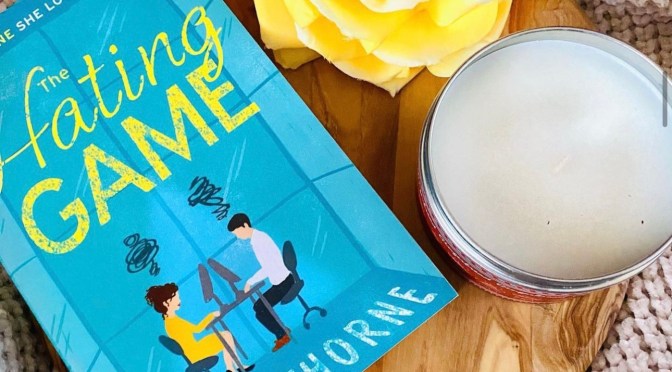
Book Review: The Hating Game by Sally Thorne

Rating: 5 out of 5.

Enemies to lovers novels are like marmite – either you love them or you hate them. A lot of people find them super cheesy and unrealistic, but for me, I am an absolute sucker for them. And this, my friends, is perhaps my favourite enemies to lovers story that I have ever read. A bold statement, but true.

I posted about this book on my Instagram back in 2021 as it was my number one book that I read in 2020, and four years later it still sits firmly in my top 10 books of all time. There are very few books which I devour so quickly, or capture my attention so much that I can’t put them down, but this folks and friends, was one of them. I loved everything about it. It was beautifully witty, hilarious, and I found myself physically laughing from cover to cover.

One of the things that I liked most about this book is that it’s written in the first person, from the point of view of the main protagonist, Lucy, which really connects the reader with the character. The way she describes her love/hate relationship with Joshua is so real and expertly crafted that you become so immersed in their love story that it becomes entirely possible to forget that these two human beings only exist on paper. From the very minute you begin reading you are begging, pleading, and yearning for these two characters to realise their love for one another.

Though, I will admit that this novel is a slow burn. Like… a really slow burn to the point where you’re physically itching with anticipation. But the payoff is so good and makes it all worth it. The love/hate relationship/game between Lucy and Josh is one of those romantic archetypes which we love to see but don’t dare admit, and something which can be incredibly difficult for writers to achieve successfully – but Sally Thorne executes it perfectly.

But, perhaps my favourite thing about this book is that it never actually states where the story is taking place. When I started reading I assumed that it was New York City because it had that particular feel, but in actual fact the location is never stated. I think that is what makes this story so wonderful because ultimately it could be set in any city, in any corner of the world; and it is down to the reader to use their imagination about where that might be – perhaps someone near them!

I think it is very rare to have nothing bad to say about a book – not even a small criticism – but personally, with my preferences, I am struggling to find things that I didn’t like. I don’t think I will ever be able to find the right amount of words to be able to describe how much I loved this book, but I think about it often.

Note: Yes, I have also seen the movie; yes, I loved it; but no, I have yet to write a post about it. I’m thinking about writing a book vs film comparison when I get the time, but I think I need to rewatch the film again before I do so!


Favourite Quotes:

‘Books were, and always would be, something a little magic, and something to respect.’

‘Watching you pretend to hate the nickname is the best part of my day.’

‘I have a theory. Hating someone feels disturbingly similar to being in love with them. I’ve had a lot of time to compare love and hate, and these are my observations. Love and hate are visceral. Your stomach twists at the thought of that person. The heart in your chest beats heavy and bright, nearly visible through your flesh and clothes. Your appetite and sleep are shredded. Every interaction spikes your blood with adrenaline and you’re in the brink of fight or flight. Your body is barely under your control. You’re consumed and it scares you. Both love and hate are mirror versions of the same game – and you have to win. Why? Your heart and your ego. Trust me, I should know.’

‘I want to know what’s going on in your brain. I want to juice your head like a lemon.’

‘All I want to do is kiss you until I fall asleep. I want to slide in between your sheets, and find out what goes on inside your head and underneath your clothes. I want to make a fool of myself over you.’

‘I love strawberries. I’m so lovesick, I eat them constantly. Can I nickname you Shortcake? It’ll be a dead giveaway that I love you’

‘Maybe the only way to truly unite people is through battle and pain. Confrontation and competition. Maybe surviving something is the point.’

‘Maybe the only way to truly unite people is through battle and pain. Confrontation and competition. Maybe surviving something is the point.’

‘Maybe the only way to truly unite people is through battle and pain. Confrontation and competition. Maybe surviving something is the point.’

‘Maybe the only way to truly unite people is through battle and pain. Confrontation and competition. Maybe surviving something is the point.’

‘Brute, raw masculinity contrasted with gentleness is the most attractive thing on earth.’

‘You look like a hot virginal dork who’s been defiled in the backseat of my car.’

‘You love him. You love him. You always have. More than you’ve ever hated him. Every day, staring at this man, knowing every color and expression and nuance. Every game you’ve ever played has been to engage with him. Talk to him. Feel his eyes on you. To try to make him notice you.’

‘I always thought you’d live underground somewhere, near the earth’s core.’ / ‘Uncle Satan didn’t have any apartments available in my price range.’

My Most Anticipated 2024 Book Releases

It’s no secret to anybody that I’m a big old bookworm! From murder mysteries and thrillers to romances and fantasy – plonk a tome down in front of me, and I’m a happy little munchkin!

And, 2024 brings some brand new books to the market – from stories that I haven’t yet explored such as The Concierge, to continuations of character stories in a series like Finlay Donovan Rolls the Dice… there are so many books that I am eagerly anticipating this year, which I thought I would share with you – just in case any of you are anticipating them too! Let’s anticipate them together!

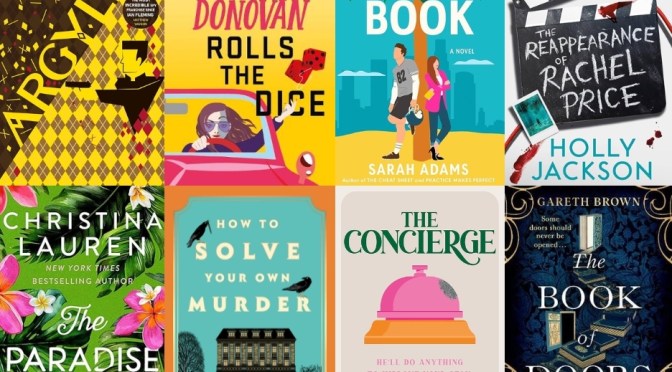
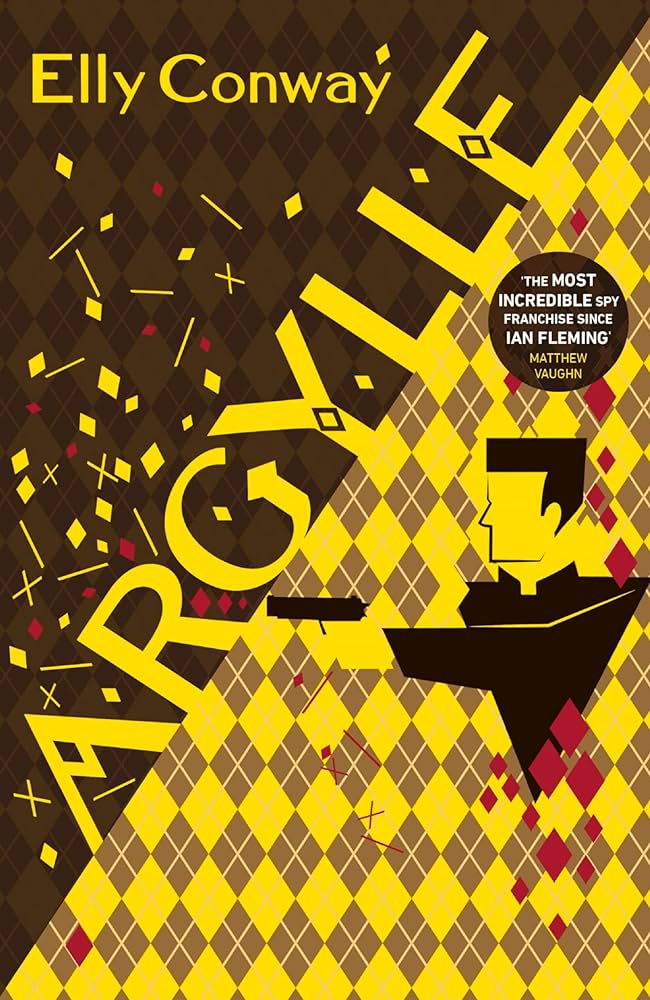
Argylle by Elly Conway

If you’ve been on TikTok over the last few months, hopefully this book comes as no surprise to you. With speculation that it’s written by Taylor Swift (something which I have yet to make my mind up on), this is perhaps the most anticipated book of the year for readers and non-readers alike. With its companion film – Argylle – also being released this year, this spy novel is one which I am ready to unravel – TS easter eggs (if there are any) and all!

Though, I’m not the biggest fan of spy novels I am still very excited to dive into this book, mainly because I’m curious as to whether all the hype surrounding it is worth it. I think that regardless of whether it is written by Taylor or not, it’s going to be a twisty, suspenseful thriller – and I also look forward to making my own judgments about the film too!

Finlay Donovan Rolls the Dice by Elle Cosmiano

Finlay Donovan Rolls the Dice is the fourth book in the series, and I am literally bursting at the seams to read this one, ever since I finished the third installment in September.

The series follows an author, Finlay Donovan, who finds herself in a sticky situation when she is mistaken for a contract killer. It’s witty, twisty, and suspenseful and has become one of my favourite series of all time.

I absolutely fly through these books because they’re the kind of easy reading page turners you need when you’re sick of reading everything else! Every single book is better than the previous, and I cannot wait to see where Finlay and Vero’s journey takes them next, because I’m almost certain it’s going to be packed full of dead bodies, thrills, car chases, and cliffhangers!

The Rule Book by Sarah Adams

If you’ve seen my Instagram then this book, too, will not come as a surprise to you. Sarah Adams is one of my favourite authors ever, and I absolutely adore her books. They’re light, fluffy, romantic fun and I could honestly rave about them until the cows come home. She knows how to write banter, and she knows how to write men that women fall in love with, and boy do I fall for her characters.

One of my favourite things though are that her books are never standalones – as in characters from her other books in the same universes will often appear – but they can also stand alone as single narratives should you wish them to be!

I also have to mention that I recently sent her some friendship bracelets all the way from the UK, (because YES, she’s a Swiftie!!!) and she confirmed that we’re basically besties now…

The Reappearance of Rachel Price by Holly Jackson

18-year-old Bel has lived her whole life in the shadow of her mom’s mysterious disappearance. Sixteen years ago, Rachel Price vanished and young Bel was the only witness. Rachel is gone, presumed dead. The case is dragged up from the past when the Price family agree to a true crime documentary.

Holly Jackson knows how to write suspenseful YA thrillers. After reading A Good Girl’s Guide to Murder I picked up Five Survive and I binged it in a single day! (I kid you not when I say that I was up until 3am reading because I had to know how it finished!)

So, when she announced this book, I was practically giddy with glee! I know that if it’s anything like her other thrillers than I am going to absolutely devour it…

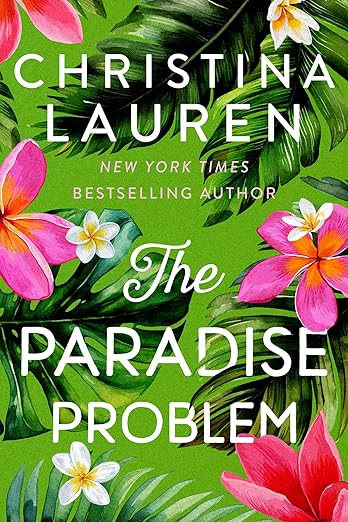
The Paradise Problem by Christina Lauren

And yet another book that will probably not surprise anybody – The Paradise Problem by Christina Lauren.

I absolutely adore books by this duo. In fact, The Unhoneymooners is probably one of my favourite romance novels of all time – reminding me of a cross between The Proposal and Just Go With It. They know how to write witty and hilarious novels that are also intertwined with tender, heartfelt, and emotional moments, and I can honestly say that I will read anything and everything they write.

I didn’t even need to read the blurb of this book to put it on this list, because the minute I found it, it was automatically going to be on here anyway.

And also, this cover is beautiful….

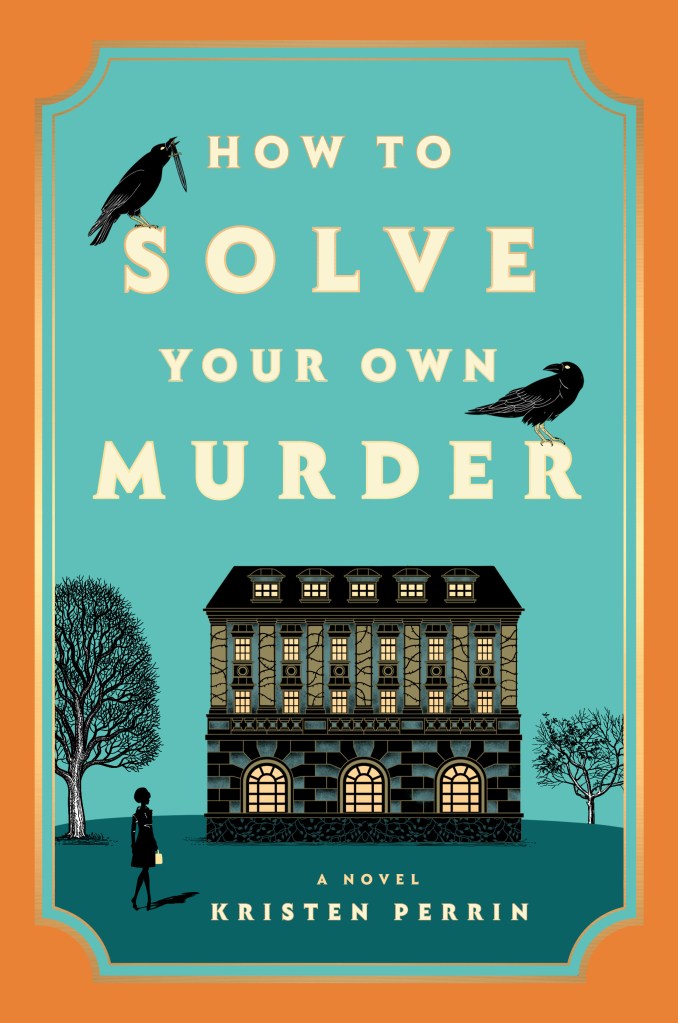
How To Solve Your Own Murder by Kristen Perrin

Are we sensing a little bit of a theme with this list?

Frances spends a lifetime trying to solve a crime that hasn’t happened yet, compiling dirt on every person who crosses her path in an effort to prevent her own demise. For decades, no one takes Frances seriously, until nearly sixty years later, when Frances is found murdered, like she always said she would be.

I mean… what a blurb!!! I want to read this book already! I love murder mysteries because to me they’re like puzzles, and I love attempting to piece all of the parts together before the answer is revealed.

I think this is going to be a super interesting and suspenseful read, and I can’t wait to get my hands on it and write a review!

The Concierge by Abby Corson

Oh look… another murder mystery…

The peaceful setting of Cavengreen Hotel has been shattered by a shocking murder. Hector Harrow, the hotel’s concierge, has been accused and is determined to clear his name. Hector enlists the aid of Helen, a retired publisher, to document the shocking crime that has unfolded, with the intention of publishing a truthful account.

A murder mystery, a hotel, and shocking (and hilarious) shenanigans…. what’s not to love?

I hope this book is as good and well-written as it sounds because I love stories of suspected guilty parties trying to clear their own names… seeing things through their eyes makes for such good mystery and suspense… and I feel like Hector has seen everything.

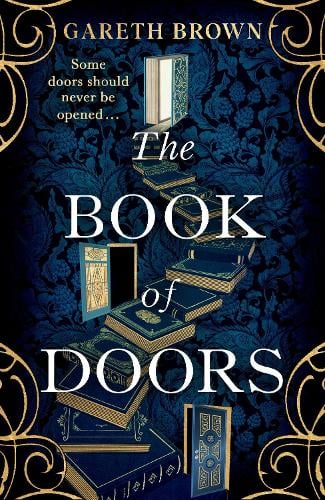
The Book of Doors by Gareth Brown

A debut novel full of magic, adventure, and romance, The Book of Doors opens up a thrilling world of contemporary fantasy for readers of The Midnight LibraryThe Invisible Life of Addie LarueThe Night Circus, and any modern story that mixes the wonder of the unknown with just a tinge of darkness.

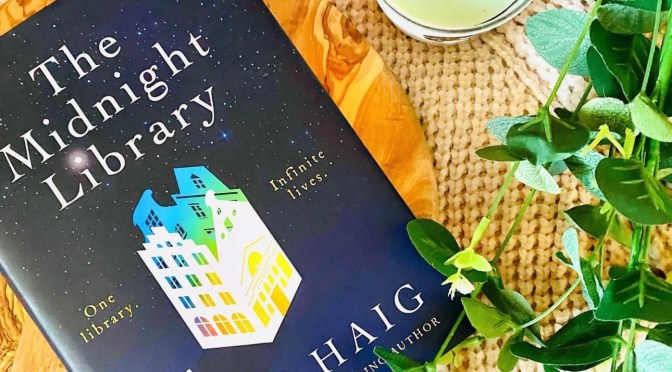
Well, doesn’t this sound like something you want to read? I read The Midnight Library and loved it (find my review here), so I’m very excited to see what I make of this one! If feel like it might be somewhat similar to The Portable Door – a film that I watched last year and really enjoyed, so I hope that it gives off similar vibes! I’m also hoping for a few twists and turns… and if the cover is anything to go by then my wish might come true!

Of course, this is not an extensive list as if I were to list all of the books I’m anticipating this year, this post would take you three hours to read. But, these are ones that are currently on my radar – and I’m sure there are many more that haven’t been announced, or which I have yet to discover.

What are your most anticipated releases of this year – anything notable or worth recommending? Are any of these books on it, or are you going to add any of these to your list?

Book Review: The Sun is also a Star by Nicola Yoon

Rating: 3 out of 5.

This book was… okay. It was a quick read, but if I’m being totally honest, I wasn’t blown away by it.

I feel like the best stories are ones where you can suspend your disbelief enough to make it feel realistic – in the way that millions of children reading Harry Potter for the first time fully believe that their Hogwarts letter will be arriving on their doorstep the moment they turn eleven. The same also goes for stories not set in fantasy worlds. When the narrative of a fiction book removes you from the story just enough to look at the characters from an outside perspective, but also not so much that it feels like they’re fiction – that’s the sweet spot. And perhaps it’s because the action in this book takes place over the course of a single day, but I just found it to be too unrealistic and unbelievable that it didn’t resonate with me as much as I would have liked it to.

That being said, I liked the fact that this book has short chapters – some only one or two pages long. It makes for a quicker pace, both physically reading and with the action, and I think for this story it is definitely necessary to prevent it fizzling out. I also managed to read this book in a single day because the writing is easy to follow and not overly complicated.

I also enjoyed the dual perspectives of Daniel and Natasha. The two led nicely in to one another eg. if Daniel was describing Natasha walking into a shop then Natasha’s perspective would pick up directly from the moment that she enters. It was very seamless in transition, and worked well with the overall plot.

Moreover, I also quite liked the ending. It was certainly unexpected for me as I was utterly convinced that she was going to get what she wanted and those last few pages took me by surprise.

I feel like I know a book is really good (worthy of at least four or five stars), when:
 a) I cry at the ending.
 b) Go on thinking about the book for days after I’ve finished it.
 c) Tell everybody I know to read it.

Unfortunately, while this book is a lovely, heartwarming story, it just didn’t impact me very much. However, as this written with young adults in mind, I am not the target audience (as I’m closer to 30 than 20!), and perhaps it might resonate more with a different audience.


Favourite quotes:

✨ ‘Maybe part of falling in love with someone else is also falling in love with yourself.’

✨ ‘We are capable of big lives. A big history. Why settle? Why choose the practical thing, the mundane thing? We are born to dream and make the things we dream about.’

✨ ‘According to multiverse theory, every version of our past and future histories exist, just in an alternate universe. For every event at the quantum level, the current universe splits into multiple universes. This means that for every choice you make, an infinite number of universes exist in which you made a different choice. In this way we get to live multiple lives.’

✨ ‘I don’t believe in love.’ ‘It’s not a religion,’ he says. ‘It exists whether you believe in it or not.’

✨ ‘Sometimes your world shakes so hard, it’s difficult to imagine that everyone else isn’t feeling it too.’

✨ ‘The sun is also a star, and it’s our most important one. That alone should be worth a poem or two.’

✨ ‘Growing up and seeing your parent’s flaws is like losing your religion. I don’t believe in God anymore. I don’t believe in my father either.’

✨ ‘Thing about falling is you don’t have any control on your way down.’

✨ ‘People just want to believe. Otherwise they would have to admit that life is just a random series of good and bad things that happen until one day you die.’

✨ ‘We have big, beautiful brains. We invent things that fly. We write poetry. You probably hate poetry, but it’s hard to argue with ‘Shall I compare thee to a summer’s day? Thou art more lovely and more temperate’ in terms of sheer beauty. We are capable of big lives. A big history. Why settle? Why choose the practical thing, the mundane thing? We are born to dream and make the things we dream about.’

✨ I think all the good parts of us are connected on some level. The part that shares the last double chocolate chip cookie or donates to charity or gives a dollar to a street musician or becomes a candy striper or cries at Apple commercials or says I love you or I forgive you. I think that’s God. God is the connection of the very best parts of us.

✨ ’Observable fact: People aren’t logical.’

✨ ‘People spend their whole lives looking for love. Poems and songs and entire novels are written about it. But how can you trust something that can end as suddenly as it begins?’

✨ ‘You’re just looking for someone to save you. Save yourself.’

✨ ‘Human beings are not reasonable creatures. Instead of being ruled by logic, we are ruled by emotions. The world would be a happier place if the opposite were true.’

✨ ‘It is better to see life as it is, not as you wish it to be.’

✨ ‘Names are powerful things. They act as an identity marker and a kind of map, locating you in time and geography. More than that, they can be a compass.’

✨ ‘Life is just a series of dumb decisions and indecisions and coincidences that we choose to ascribe meaning to.’

✨ ‘But he’s no planet, just the final fading light of an already dead star.’

✨ ‘Tragedy is funny.’ / ‘Are we in a tragedy?’ he asks, smiling broadly now’ / ‘Of course. Isn’t that what life is? We all die at the end.’

✨ ‘Love always changes everything.’

✨ ‘I think we’re all connected, everyone on Earth.’

✨ ‘Because everything looks like chaos up close. Daniel thinks it’s a matter of scale. If you pull back far enough and wait for long enough, then order emerges. Maybe their universe is just taking longer to form.’

Book Review: Full Dark House by Christopher Fowler

Rating: 5 out of 5.

Series: Bryant & May
Book in series: #1


I always believe that the first book in a series is the most important, because if you’re not completely hooked by the first, then you are unlikely to read the rest. The first book is the foundation upon which the following are built, allowing for stories and characters to develop. Can you imagine a series like Harry Potter or Lord of the Rings without the first in the series?

I’ll admit that this is not the type of book I usually pick up. With crime novels, I’m extremely fussy. I like murder mysteries being told in a specific way, otherwise I find they don’t capture my attention. I don’t like it when a novel takes too long to get to the action (ie. when I have to wait 200 pages for someone to be killed), or when the story is good but the detectives investigating the murder are so unlikeable that I can’t continue. So, when this was recommended to me, I wasn’t sure as to what I was going to make of it. But, wanting to read more detective fiction, I decided that all I could do was give it a go…

And holy cannoli with a side of pepperoni! This book is an absolute page-turner! Eating? Goodbye. Sleeping? Don’t be ridiculous—I have a book to read!

My primary reservation was that it was going to be too cliche or predictable; that the story was going to be easy to guess, and thus become boring. But, folks and friends, this novel is anything but! I literally had no idea who did it until it was revealed towards the very end!

I have to admit that I’m usually not a fan of stories that contain dual timelines. They’re often messy, details get forgotten, and sometimes they can completely veer off on tangents that have absolutely no relevance to the plot or characters whatsoever. And to make it doubly difficult – the murder in the present connected to the murder in the past? Well, that sounds like a recipe for disaster, doesn’t it?

But folks and friends, this book is exquisite. The two narratives – one set in war-time and the other set in present day, interlink perfectly with one another; the breadcrumbs you’re fed throughout are all connected at the end; and the mystery gets tied up in a nice little bow. It’s like a modern day Agatha Christie novel that reminds us that in order to understand the present, we must first understand the past.

Of course, I cannot write this review without mentioning our two main characters – Bryant and May. Loveable octogenarians with weird quirks and a friendship that’s more like a married couple… what’s not to like? Also, their banter was hilarious and had me laughing from the beginning to the very end—especially with the quote about the fork in the toaster! I am interested in seeing and exploring how their relationship changes in future books, and I hope they keep the same level of humour.

Ultimately, if you’re looking to start a new detective fiction series that has octogenarian shenanigans, hilarity, suspense, and thrill, then I cannot recommend this book enough!


Favourite quotes:

‘Plastic carrier bags floated around the traffic lights at the end of the Strand like predatory jellyfish.’

✨ ‘It was a violent place in which to discover a purpose. It was a good place to forge a friendship.’

✨ ‘The world will need sceptics after the war is over. Too many people are ready to believe anything they’re told.’

✨ ‘Throughout history, human nature remains unchanged. The world’s oldest questions are still being asked. Medea, Oedipus, we’re not adding anything that the Greeks didn’t already know.’

✨ ‘We’re the police, we don’t thump people.’

✨ ‘The city survived in fragments, as though it had been painted on glass and the glass had shattered.’

Book Review: The Midnight Library by Matt Haig

Rating: 5 out of 5.

Where do I even begin? There are so many thoughts and feelings I have about this book that trying to condense them into a post is very difficult. But, I shall start by saying: I urge every human being on the planet to read this.

Nora, the protagonist, has depression. And, feeling as though she has nothing else to live for, she chooses to take her own life. But, between life and death, there is a library. The Midnight Library – where every book is a chance to live another life that you could have lived, had you made different choices.

This book is not to be taken lightly. It covers deep, sensitive subjects. As per the synopsis, suicide and depression are two major themes, so do not expect to open this book and expect it to be a ‘light’ read. It’s an easy read, yes. But you must be in the right frame of mind to enter this book.

With sensitive subjects, as a reader, you can only hope that the author handles them sensitively. You do not want them to make light of these, brushing them off as though they are not genuine issues or pretending that they don’t affect as many people as they do throughout the world. While I don’t think they needed to be handled like they’re fragile, walking on eggshells or never overtly stating they are what they are, I do believe they need to be handled with care. Perhaps it’s because Matt Haig has been in Nora’s shoes, coming close to taking his own life more than once (something which he is very open about on his Instagram), but he approaches such issues beautifully and really puts life into perspective. Some things we think matter most, do not matter at all. And, some things we think matter least, are actually the most important.

I adored the concept of this book. It was so well written and thought out, and each chapter connects seamlessly to the one before. It is a book that will make you think and wonder, but it will also make you feel.

You may be hesitant to pick it up because you think it will be gut-wrenching and emotional. And yes, it is. But it’s also full of hope. I closed the book feeling more positive than I had done in a long time, and had the overwhelming feeling that I wanted to start living – truly living – because ultimately, that is what this book is about. Yes, it’s about depression and suicide, and all the other things in between. But more importantly, it’s about wanting, and choosing, to live.


✨ ‘It is easy to mourn the lives we aren’t living. Easy to wish we’d developed other talents, said yes to different offers. Easy to wish we’d worked harder, loved better, handled our finances more astutely, been more popular, stayed in the band, gone to Australia, said yes to the coffee or done more bloody yoga. It takes no effort to miss the friends we didn’t make and the work we didn’t do, the people we didn’t go and the people we didn’t marry and the children we didn’t have. It is not difficult to see yourself through the lens of other people, and to wish you were all different kaleidoscopic versions of you they wanted you to be. It is easy to regret, and keep regretting, ad infinitum, until our time runs out. But it is not lives we regret not living that are the real problem. It is the regret itself. It’s the regret that makes us shrivel and wither and feel like our own and other people’s worst enemy. We can’t tell if any of those other versions would have been better or worse. Those lives are happening, it is true, but you are happening as well, and that is the happening we have to focus on.’

‘It is quite a revelation to discover that the place you wanted to escape to is the exact same place you escaped from. that the prison wasn’t the place, but the perspective.’

✨ ‘The only way to learn is to live.’

✨ ‘If you aim to be something you are not, you will always fail. Aim to be you. Aim to look and act and think like you. Aim to be the truest version of you. Embrace that you-ness. Endorse it. Love it. Work hard at it. And don’t give a second thought when people mock it or ridicule it. Most gossip is envy in disguise.’

✨ ‘Between life and death there is a library,’ she said. ‘And within that library, the shelves go on forever. Every book provides a chance to try another life you could have lived. To see how things would be if you had made other choices…. would you have done anything differe,t if you had the chance to undo your regrets?’

✨ ‘I don’t think your problem was stage fright. Or wedding fright. I think your problem was life fright.’

✨ “What do I do now?’ ‘You open the book and turn to the first page.’

✨ ‘Never underestimate the big importance of small things.’

✨ ‘Because a pawn is never just a pawn. A pawn is a queen-in-waiting. All you need to do is find a way to keep moving forward. One square after another. And you can get to the other side and unlock all kinds of power.’

✨ ‘Three simple words containing the power and potential of a multiverse. I AM ALIVE.’

✨ ‘A person was like a city. You couldn’t let a few less desirable parts put you off the whole. There may be bits you don’t like, a few dodgy side streets and suburbs, but the good stuff makes it worthwhile.’

✨ ’We only need to be one person. We only need to feel one existence. We don’t have to do everything in order to be everything, because we are already infinite. While we are alive we always contain a future of multifarious possibility.’

✨ You don’t have to understand life. You just have to live it.’

✨ ’You’re overthinking it.’ “I have anxiety. I have no other type of thinking available.’

✨ ’And that sadness is intrinsically part of the fabric of happiness. You can’t have one without the other. Of course, they come in different degrees and quantities. But there is no life where you can be in a state of sheer happiness for ever. And imagining there is just breeds more unhappiness in the life you’re in.’

✨ ’Sometimes just to say your own truth out loud is enough to find others like you.’

‘Of course, we can’t visit every place or meet every person or do every job, yet most of what we’d feel in any life is still available. We don’t have to play every game to know what winning feels like. We don’t have to hear every piece of music in the world to understand music. We don’t have to have tried every variety of grape from every vineyard to know the pleasure of wine. Love and laughter and fear and pain are universal currencies. We just have to close our eyes and savour the taste of the drink in front of us and listen to the song as it plays. We are as completely and utterly alive as we are in any other life and have access to the same emotional spectrum.’

‘The thing that looks the most ordinary might end up being the thing that leads you to victory.’

‘It was interesting, she mused to herself, how life sometimes simply gave you a whole new perspective by waiting around long enough for you to see it.’

Save the Bookstores: Shop small, not Amazon.

Cheap books. We all love it when books are on sale, or there are amazing deals meaning we can consume more of what we love. But what is it actually costing us in the process, aside from saving a few pennies?

We all know that (most) books are fundamentally good for us. They allow us to be progressive, lending so much to the development of both individuals and society – to our morals, our understanding of the world around us, and our entertainment. They provide spaces to approach taboo topics, to have deep and meaningful discussions with our peers, and an escape from difficult situations.

If you’re a book lover, I also don’t need to remind you of the joy of walking into a bookstore and browsing for hours, flicking through pages, smelling the paper, or being drawn to an extremely pretty cover as you’re passing the shelves.

I recently read this post on medium.com, which reports that Amazon is on track to own 85% of the publishing/book market by 2025. This is absolutely astonishing and needless to say harmful to all of the well-established and indie bookstores that we know and love.

In 2021, Amazon’s profits from book sales reached $280 billion dollars, and every year their book-based profits increase by 8%. This doesn’t sound like much, does it? But what if I told you that 8 percent is equivalent $22.4 billion dollars? Scary, right?

Not only is this bad for the physical bookstores because their entire livelihood depends upon people purchasing books from them, but this is also catastrophic for authors.

As Andy Hunter writes in the article:

‘Authors and publishers need to worry. Once Amazon dominates 80% of the book market, who are authors working for? Authors will effectively be producing content for Amazon to sell on commission, and Amazon will have control over the terms.’

Of course, we’re also all aware that authors rely on their readers in order to make a living, as without readers their entire purpose becomes obsolete. However, it’s very easy to underestimate the power that bookstores have in growing an author’s fanbase and helping them to acquire new audiences. From book signings, Q&A events, interviews, and even the promotional tables such as ‘our bookseller’s favourites’ that you see when you enter the doors… all of it is essential to the author’s livelihood.

And, it is also vital to us as readers. How many events have you attended at a bookstore where you’ve made friends with somebody whilst waiting in line? How many times have you recommended a book to somebody else whilst you’re browsing the shelves? How many times have you been recommended a book by the booksellers because they think you might enjoy based on the pile of books that you’ve brought to their till?

Bookstores are crucial in shaping the communities of readers and non-readers alike.

‘Every bookstore is an activist for the importance of books in our culture; they are fertile grounds where all kinds of wild narratives are nurtured and grow.’

I will admit, that I am no saint. I have spent more than my fair share of pennies buying books on Amazon. It’s relatively easy to do when you have the app right there and you can get Prime delivery so the book will be on your doorstep the next day. It’s easy to do when they offer great deals or the prices are so cheap that you can’t believe how many books you can get –’you’d never get this many in a bookstore,’ you think to yourself. And you’re right. But in saving even just a tiny bit of money, you’re sacrificing your experience.

So, how can we save our beloved bookstores and everything they represent?

Shop small. Shop indie. Shop physically. Buy secondhand books. Thrift them from your local charity shops. Even purchasing them from your local supermarket makes a world of difference!

I’m not saying to boycott Amazon, because I know that most people have e-readers like a Kindle (I do!), and of course, Kindle is an Amazon-owned company, so I would be an utter hypocrite if I told you to avoid it completely. But where you can, when it comes to physical books, use Amazon as your last and final resort.

In order to help you, I have compiled a list of shops and websites that you can use as an alternative to Amazon! I have also included the websites for the physical bookshops if they have them (the exception being places like 66 books)
Bookshops:

Forbidden Planet

With its flagship store at the heart of Central London on Shaftesbury Avenue, the cult TV megastore sells not only merchandise from a million and one-hit television shows and films, but also carries an enormous selection of books!

If you’re looking for books that are specifically science-fiction, fantasy or horror, then this is 10/10 the place to shop! In fact, this is always my go-to before venturing to other places such as Waterstones.

Not only are the prices great in here because they tend to run quite a few offers but they also carry signed editions too!

Though, I will say that my favourite reason to venture to Forbidden Planet for some books is purely the fact that I’m a floppy paperback girl through and through, and the majority of the books on the shelves (if not hardbacks) are floppy paperbacks! (If you’re a reader, and I’m assuming you are, you’ll know how exciting and appealing this is!).

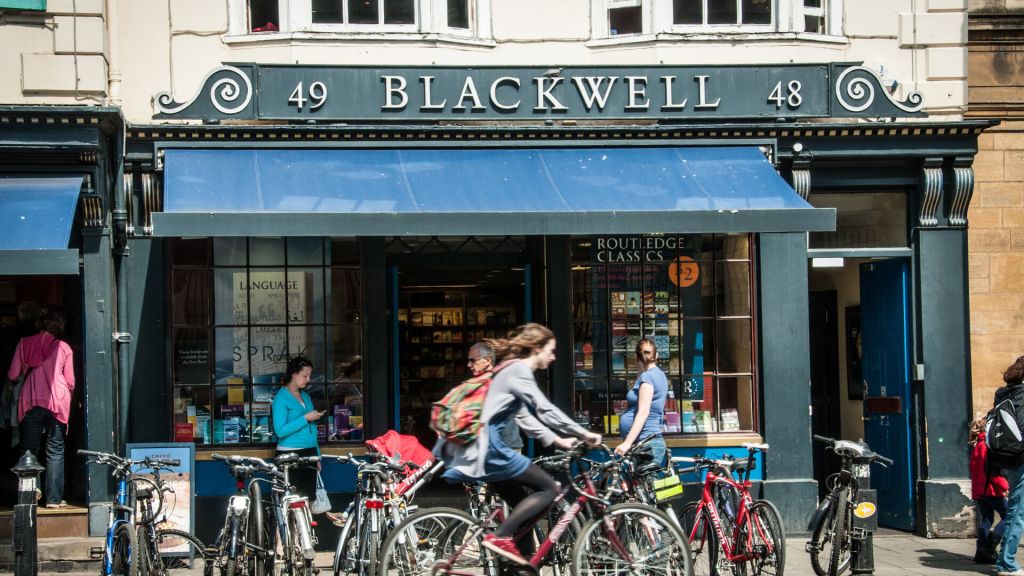
Blackwell’s

Photo: The Bookseller

Blackwell’s is an independent bookshop (now owned by Waterstones), offering a wide variety of books from mainstream fiction, to more indie publications that are perhaps harder to find. Its flagship store is located in Oxford, Oxfordshire, but there are also 17 other locations throughout the UK, including Cambridge, Edinburgh, Exeter and London.

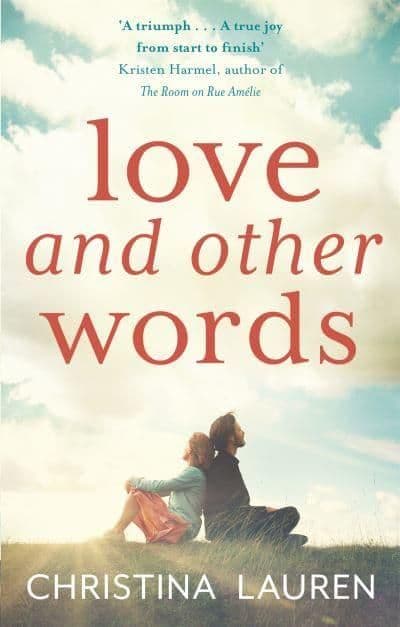
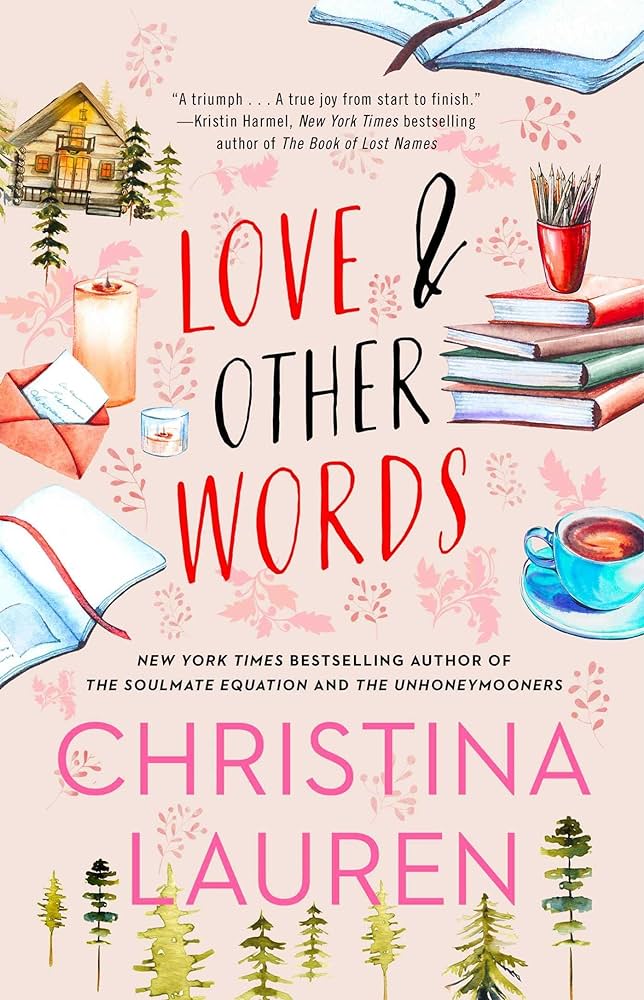
One of the things I love most about Blackwell’s is that they often stock international editions of books which is wonderful for a bibliophile like me if I’m looking for a specific (or very pretty) cover, that all of my international Bookstagram friends have (such as Love and Other Words by Christina Lauren).

Generic trade paperback cover.
Galley Books US cover.

It’s also handy because even though their prices are slightly higher than some other independent bookshops, it means that I don’t have to sell an organ in order to be able to afford the extortionate costs incurred from shipping the book from overseas.

Heffers

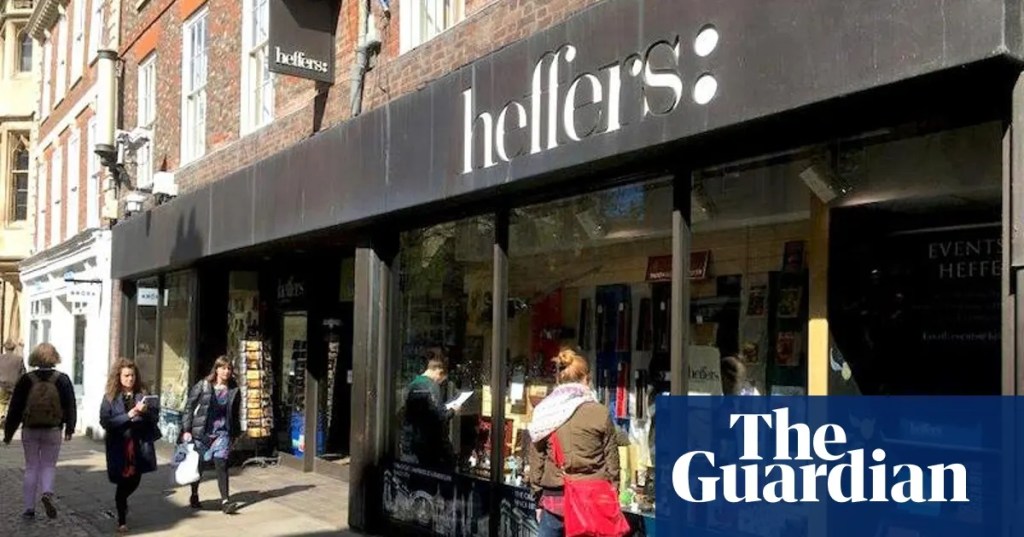
Photo: The Guardian

Heffers is an independent Blackwell’s-owned bookshop located in the heart of Cambridge. Interestingly, there is no online site for Heffers through which you can buy books, meaning that if you’re after a copy of something from this bookstore, then you’re going to have to venture out in person!

In some respects, I love and admire this because it’s all too easy to forget how wonderful in-person book shopping can be; but then again, with life sometimes being so chaotic and barely finding the time to do all of the things I need to do, let alone want to do, being able to purchase books with the click of a button and have them delivered straight to my doorstep is utterly convenient.

The Works

For me, The Works is always a top priority when it comes to finding books at bargain prices, and it seems like it’s hard not to find a store these days as they are seemingly popping up everywhere! Of course, it isn’t actually a bookstore, but a discount retailer, so alongside the wonderful reads lining the shelves, you’ll also find arts, crafts, and stationery supplies.

But, perhaps the major perk about shopping for books in the The Works is the 3 for £6 offer (used to be 3 for £5… bloody inflation!). A lot of the books included also tend to be popular reads circulating through BookTok – such as those by Colleen Hoover, Lauren Asher, and Hannah Grace. So, if you’re after something that it seems like everybody else is reading and you don’t want to spend a fortune on it, then The Works would be my top recommendation!

66 Book Club

66 Book Club (also known as 66 Books) is an independent book wholesaler operating out of Hemel Hempstead, Hertfordshire. It is only open to the general public for one weekend every month, but covers two floors, and you’ll find hundred upon hundreds of books at super cheap prices! Even allotting three hours to browse the books is not nearly enough time, because of the sheer magnitude of stock that they have – but it’s well worth a visit if you’re looking for some amazing, hot-off-the-press reads!

Oxfam Bookshops

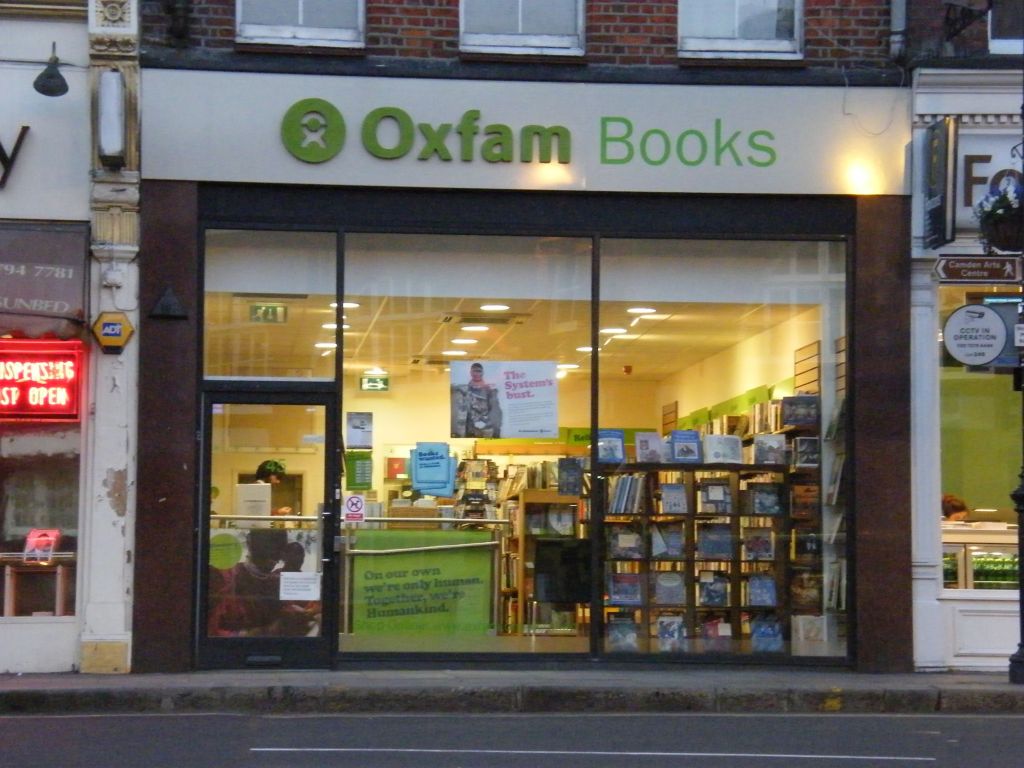
So, we all love a charity shop bargain, don’t we? While you can find books on the shelves in most regular bookstores, Oxfam has specifically opened branches dedicated to stocking books and music, which is why it’s one of my go-to places. It’s hard to tell what books you’ll find, as a lot of it is down to trends and the likes of individuals discarding what they no longer need or want. But, that’s not to say that you won’t find any current books. It really just depends on what bookstore you visit, and when. In my local Oxfam bookstore, there were dozens of Colleen Hoover books on the shelf, tucked in between authors that I was unfamiliar with, so it sometimes is simply a case of thoroughly scavenging the shelves to see if you can find what you’re after. And of course, as this is is a charity shop, most books will be priced between 50p and £1 (sometimes more), so you can know that your money is going to a worthwhile cause… not to mention feeling less guilty about adding two (or ten) more books to your shelf! 

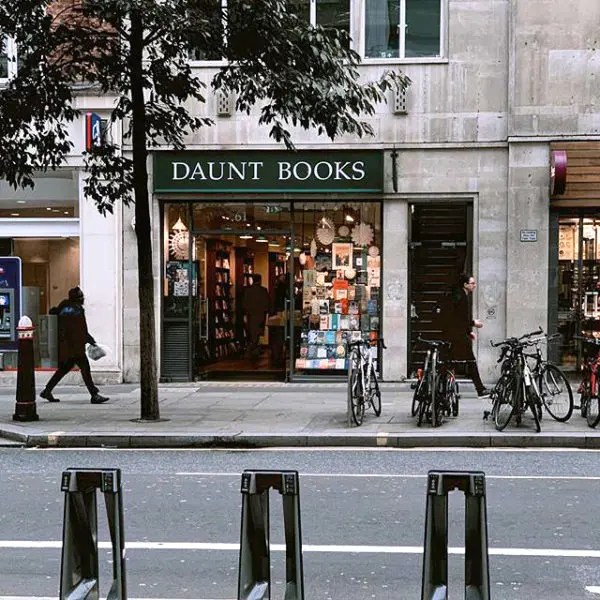
Daunt Books

If you’ve ever scrolled through Instagram, you’ll probably have seen this bookstore appear in your feed once or twice, and when you visit, it’s clear to see why. It’s perhaps one of the most aesthetically pleasing and beautiful bookstores I have ever seen, and if I had an infinite amount of time, I would spend it all browsing the shelves.

Though this is more of a high-end bookstore, and the prices can be a little steeper compared to chain bookstores like Waterstones or Foyles etc, it is certainly worth it if you’re looking for something in particular. One of the fantastic things about Daunt Books is that it tends to carry a lot of special and signed editions, so if you’re hunting down a present for somebody (or yourself) and you can’t seem to find what you’re looking for, this is certainly a good point of call.

And, to be honest, even if you don’t end up purchasing anything, the aesthetic and instagrammable interior is worth it on its own!

Online bookshopping:

Of course, we all know how convenient Amazon is. With Prime, you can order a book online and have it delivered the following day, or even the same evening if you’re lucky! And, you can do it all from the comfort of your sofa while binge watching your favourite show. There’s no need to spend hours in a painful queue, or even step outside at all (which is utterly wonderful when it comes to buying books as presents as Christmastime, because who needs that chaos?!)

So, for those of you who like the ease of shopping online and don’t feel like venturing into physical bookstores, here are some alternatives to Amazon where you can purchase your books online (and often even with better deals and discounts too!)

World of Books

Abe Books

Books4People

Wordery

AwesomeBooks

Monster Bookshop

Books2Door

ThriftBooks

Children’s Book Outlet


I know that the majority of this post is probably wishful thinking as Amazon is multi-billion conglomerate, and the ease of which you can purchase millions of items – including books – is appealing to everybody. People are not going to stop shopping on Amazon, no matter how much you tell them to and I think I would be a bit of a hypocrite if I stated that, because I continue to shop on Amazon on a frequent basis, especially if I need something urgently. Not to mention the discounts there are too good to turn down on days like Black Friday and Cyber Monday.

But this post is not about boycotting Amazon completely. It’s about trying to fuel us as book lovers and buyers to make the conscious decision to shop for books in the physical world – whether it be in Waterstones, Foyles, independent bookshops, or through thrifting secondhand. It’s about using Amazon as they very last resort if you cannot find what you’re looking for at a reasonable price and good quality elsewhere. It’s about preserving physical bookshopping so that the joy and nostalgia of walking into a store and smelling the pages, meeting others in the book community through events and signings, or seeing a title glimmering on the shelf that catches your eye, is felt by generations to come.

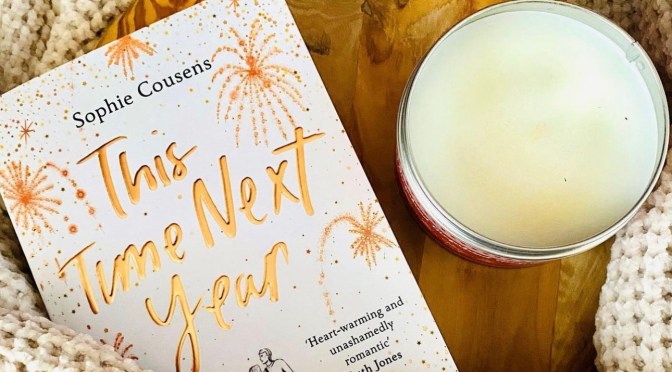
Book Review: This Time Next Year by Sophie Cousens

Rating: 5 out of 5.

This book… this book… I could rave about this book until the cows come home! I absolutely adored it.

I’ll admit that it took me a good few pages to get into, but once I completed the first chapter I was absolutely hooked – so much so that I read it in two days

I think there are some books that are just pure enjoyment, and if I could, I would bottle up the joy this book gave me and I would keep it forever. It had be laughing from start to finish and contains some of the best banter between two people that I have ever read – it was absolutely perfect and hilarious.

Minnie was such a well-rounded character. I definitely saw a lot of myself in her as she was constantly finding herself in awkward and uncomfortable situations, and I know exactly how that feels, as sometimes I am a walking, talking embarrassing moment waiting to happen! But, I thought that this just added to her quirkiness and loveability, and I only with that Minnie was a real person because I think I want to be her best friend.

When it comes to romance books I can be quite picky with the writing, as it’s very easy to over-explain, under-explain or simply make things ridiculously cheesy… but I needn’t have worried with this as the writing was so well done. The small details and breadcrumbs that Sophie Cousens leaves throughout are impeccable and I audibly gasped when the lightbulb moment happened in my brain regarding the brandy creme patisserie scenario! I did not see that coming whatsoever, and it was such an excellent twist! The romance was excellent, well thought out, and not cliche in the slightest.

I also love the fact that this story takes place in 2020, though an entirely different 2020 than the one all of us experienced. Somewhere in a parallel universe, where Covid never existed, Minnie and Quinn’s romance exists.

This was such a feed-good story from start to finish, and if you’re going to read anything over the festive season, then make it this.

Note: there is also apparently a film adaptation in the works for this book, so I am very excited to see what it’s like! I feel like the problem with adaptations is that what they bring to life on screen rarely looks like what I envisioned in my head, so I often find myself disappointed… but, I’m holding out hope that this film will be a good one – especially if it retains all of the wonderful humour and banter that makes this book so perfect!


Favourite lines:

✨ ‘If you lived in a city for long enough, Minnie thought, the streets and places where life happens fold inwards like paper, making space for new memories. Yet visiting old haunts and a long forgotten road was like stretching the concertina out again – the memories leap out, fresh as the day you folded them away.’

✨ ‘All you can hope for is to do more good than harm in this life.’

✨ Minnie let out an involuntary high-pitched noise. She clutched a hand over her mouth, turning the sound into a strangled sort of sneeze.’

✨ ‘No one’s too small to make a difference; just ask Greta Thunberg.’

✨ ‘Better to be hated for what you are, than loved for what you’re not.’
‘Profound,’ said Minnie. ‘Where did you read that – the back of a cereal packet?’

✨ ‘Life can’t just be about coupling up like yoghurts in a multi-pack.’

✨ ‘Don’t cry about something you wouldn’t cry about in five years time.’

✨ ‘Ah, Coco Nuts, we meet again. I see you have foiled my cunning plan to steal all the fruit in Fruitopolis.’

✨ ‘Be a good companion to yourself and you will never be lonely.’

✨ ‘She picked up a perfect red leaf from the ground, examining the intricate pattern of vessels mapping its thin surface. So beautiful, yet only created to last such a short time before its role on this planet was over, and it would decay into mulch. An unremarkable existence, and yet to look at it – how remarkable.’

✨ ‘Life is change – if nothing’s changing, you aren’t living.’

Book Review: The Bookish Life of Nina Hill by Abbi Waxman

Rating: 5 out of 5.

Well, where do I begin?

Have you ever read a book and felt as though the author is looking deep into your soul; that it’s as if the author picked up your entire being and wrote it onto the page?

Everything that Abbi described about Nina in this book, I felt reflected in my own personality – from the way she relates to books, to her feelings about people… it was as if I was reading about myself.

In fact, Nina and this book stuck with so intensely even after I finished reading it that it ended up inspiring my instagram handle, @thebookishlifeofbecks.

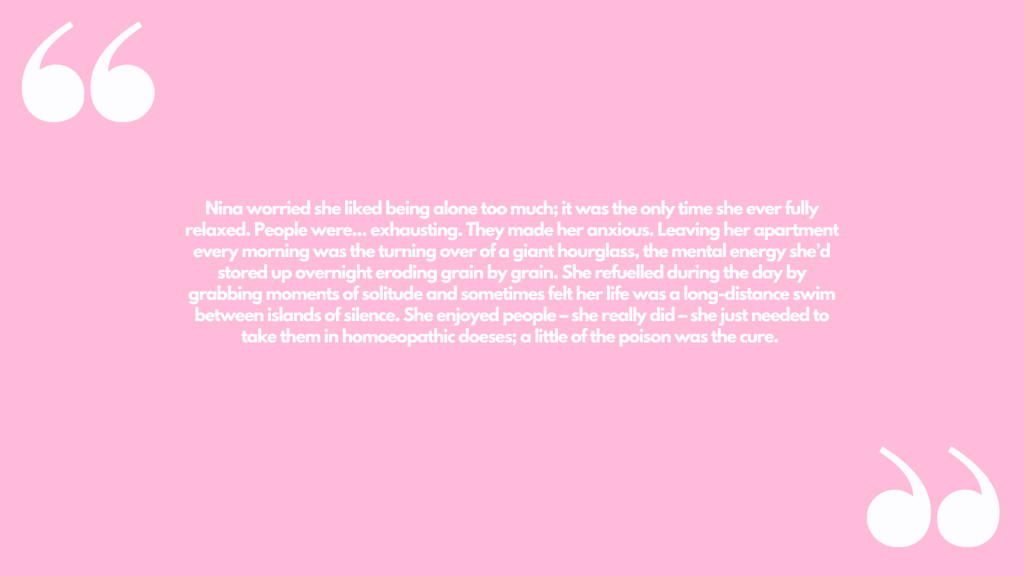
When I read this quote for the first time, it hit deeply. Ironically, as someone who loves words and writing, I have always found it difficult to express exactly how I feel about my own company and the company of others… and yet, this sums it up perfectly. While I love and crave being around people, often I find it mentally exhausting. I adore having conversations and there are topics which I could talk about for hours, but it is true that I feel the most calm when I am alone – where I don’t have to do or say anything, and I can simple be.

Am I guilty of doing this too? Yes. Yes I am. I will write down lists of books that I have already read in my reading journal, simply because I love the thrill and satisfaction that comes with crossing them off!

But aside from characters, the story itself was actually pretty great too! I loved how Nina was forced out of her comfort zone and realises that she actually had a lot more in common with her new found family than she initially believes. It’s certainly a book that emphasises the metaphor of ‘never judging books by their covers,’ as there could be something wonderful that you’re missing out on.

One of my other favourite things about this story was Lydia’s passive aggressiveness. Usually I don’t like characters like Lydia as I tend to find them annoying and too offputting to warm to, but I thought the development of her relationship with Nina was absolutely wonderful, and how they both warm to one another as they get to know each other better; and, how they both come to understand that they are more alike than either of them would care to admit.

But if you know me, I’m a sucker for romance, especially realistic romantic stories, and this was most definitely that. It felt really organic and natural and wasn’t overly ridiculous or cheesy in the way that a lot of YA romances tend to be. I think that a lot of bookish introverts like Nina are wary about entering relationships with people that do not read a lot of books because they’re worried about a lack of intellectual conversation and that they’ll get bored with their partner because of this; or people like Tom are wary that those women who are self-proclaimed bookworms are potential insufferable arrogant know-it-alls (we’re not)… but actually, this book does a wonderful job of highlighting the peaceful harmony of the two together and the beauty in a book lover/non-book lover romance.

Though, ultimately the thing that I adore most about this book is that it’s essentially a love letter for the quiet, nerdy introverts who believe that will love will never come their way because they’re too awkward, weird, average, or socially dysfunctional to find it. (I feel like this often). Because as Nina will tell you, if you open your mind and your heart to every possibility, you might just find your happily ever after.


Favourite lines:

✨ ‘It is like all good independent bookstores should be, owned and staffed by people who love books, read them, think about them, and sell them to other people who feel the same way. There is reading hour for little kids. There are visiting authors. There are free bookmarks. It’s really a paradise on earth, if paradise for you smells of paper and paste.’

✨ ‘It also meant she thought of books as medication and sanctuary and the source of all good things. Nothing yet had proven her wrong.’

✨ ‘In solitude she set goals and made them, challenged herself, took up hobbies and dropped them, and if she periodically cleaned off her bulletin board and stuck up new goals and plans and dates and budgets and bought a new planner in the middle of the year and started over, so what?’

✨ ‘Some people take energy; some people give energy… Occasionally you ✨get lucky and find someone whose energy balances your own and brings you into neutral.’

✨ ‘Nina had looked around and realized she would never run out of things to read, and that certainty filled her with peace and satisfaction. It didn’t matter what hit the fan; as long as there were unread books in the world, she would be fine.’

✨ ‘You talk when you cease to be at peace with your thoughts.’

✨ ‘If you’re not scared, you’re not brave.’

✨ ‘Being surrounded by books was the closest she’d ever gotten to feeling like the member of a gang. The books had her back, and the nonfiction, at least, was ready to fight if necessary.’

✨ Mystery readers were everywhere, voracious, highly partisan and passionate. They were among the store’s best customers, and unfailingly polite. In private they embraced a bloodthirsty desire for vengeance and the use of arcane poisons and sneaky sleuthing, but in public they were charming and generous. Romance readers tended to be fun and have strong opinions. Nonfiction readers asked a lot of questions and were easily amused. It was the serious novel folks and poetry fans you had to watch out for.’

✨ ‘Tomorrow would be better. At the very least, tomorrow would be different.’

✨ ‘Biology is not destiny. And love is not proportionate to shared DNA.’

✨ ‘You do realise it isn’t mandatory to live your life online, right? For thousands of years we managed to be miserable or joyful in private.’

✨ ‘Nothing. The first thing you should always do is nothing.’

✨ ‘Coming out of a book was always painful.’

✨ ‘Life will throw you curveballs, but it’s rare you can do much more than duck.’

✨ ‘I have lots of favourite books because I have lots of moods and I have a favourite book for every mood.’

✨ ‘Nina knew the double whammy: the emotion itself and the frustration of not being able to out it into words. She’d read somewhere that if you can’t put language around an experience or feeling, it’s because from your earliest childhood, before speech, when everything was inexplicable and overwhelming.’

✨ ‘Life tends towards chaos, sadly. I thought I had my life all planned out nicely, and then… everything changed completely. It’s all very well to have a plan — it’s a good idea — but you have to be able to walk away from it if you need to.’

✨ ‘Do you know the best feeling in the world? It’s reading a book, loving every second of it, then turning to the front and discovering that the writer wrote fourteen zillion others.’

✨ ‘In public, Nina was a quiet, reserved potion; in private she was an all-singing, all-dancing cavalcade of light and emotion. Unless she was a quivering ball of anxiety, because that was also a frequently selected option.’

✨ ‘He wasn’t a poet, but whatever. She wasn’t a competitive skier. It didn’t matter what they weren’t; it only mattered who they were.’

✨ ‘Anxiety is what kept us alive, back in the day. It helps us know when things are wrong, when situations are dangerous or people mean us harm. It’s just sometimes it gets ahead of itself, right?’

✨ ‘That’s one positive thing about texting; you can pause and consider your options, whereas in face-to-face conversation, a silence of three minutes would be weird.’

✨ ‘Maybe there is no real thing for anyone. Maybe all of us change depending on where we are and who we’re with.”

✨ ‘How many people do we encounter every day who might be related to us, or simply people who might have become the best friends we ever had, or our second spouses, or the agents of our destruction, if only we spent more than seconds with them?’

✨ ‘If I walked inot my kitchen at night and flicked on the light and saw a penis lying on the ground, I would definitely scream and hit it with a broom. At the very least, I would climb on a chair until it rolled away.’

✨ ‘It takes a lot of energy to be with other people. It’s easier to be myself when there’s no one else there.’

2021 Reading Wrap-Up

Reading Goal: 75

Total Books Read: 100

Total Pages Read: 32, 383

First Book: The Flat Share by Beth O’Leary

Last Book: Tinsel by Sibeal Pounder

Top Genres:

Contemporary (39 books)
Romance (32 books)
Young Adult (22 books)
Mystery (17 books)
Middle Grade (12 books)

Most Shelved Book: The Song of Achilles by Madeline Miller

Longest Book: A Discovery of Witches by Deborah Harkness (720 pages)

Shortest Book: So You Want To Build a Library by Lindsay Leslie (32 pages)

Highest Rated Book (with other users): The Seven Husbands of Evelyn Hugo by Taylor Jenkins Reid (4.54)


Book List:

January:

  1. The FlatShare by Beth O’Leary
  2. The Day the World Sneezed by Eddie Jones
  3. A Heart so Fierce and Broken by Brigid Kemmerer
  4. The Importance of Being Earnest by Oscar Wilde
  5. Rules for Perfect Murders by Peter Swanson
  6. Murder on the Orient Express by Agatha Christie
  7. Hideous Beauty by William Hussey
  8. Queenie by Candice Carty-Williams
  9. City of Bones by Cassandra Clare
  10. Maggot Moon by Sally Gardner
  11. Pumpkinheads by Rainbow Rowell
  12. Where the Crawdads Sing by Deliah Owens
  13. Animal Farm by George Orwell

    February:
  14. And Then There Were None by Agatha Christie
  15. Treasure Island by Robert Louis Stevenson
  16. Dramarama by E. Lockhart
  17. With Malice by Eileen Cook
  18. Beach Read by Emily Henry
  19. Stormbreaker by Anthony Horowitz
  20. The House at the Edge of Magic by Amy Sparkes
  21. Caraval by Stephanie Garber

    March:
  22. You Only Live Once by Jess Vallance
  23. Faceless by Alyssa Sheinmel
  24. Beauty Sleep by Kathryn Evans

    April:
  25. A Discovery of Witches by Deborah Harkness
  26. The Dog Share by Fiona Gibson
  27. The Match by Sarah Adams
  28. The Off Limits Rule by Sarah Adams
  29. The Enemy by Sarah Adams
  30. Up Close and Personal by Kathryn Freeman
  31. Uncoupling by Lorraine Brown
  32. Dr. Jekyll and Mr. Hyde by Robert Louis Stevenson

    May:
  33. Am I Normal Yet? by Holly Bourne
  34. How Hard Can Love Be? by Holly Bourne
  35. Here is the Beehive by Sarah Crosan
  36. The Unhoneymooners by Christina Lauren
  37. The House in the Cerulean Sea by T.J. Klune
  38. That Night in Paris by Sandy Barker

    June:
  39. The Water Room by Christopher Fowler
  40. Shipped by Angie Hockman
  41. … And A Happy New Year? by Holly Bourne
  42. What’s a Girl Gotta Do? by Holly Bourne
  43. The Road Trip by Beth O’Leary
  44. The Lucky Escape by Laura Jane Williams
  45. So You Want to Build a Library by Lindsay
  46. Are We All Lemmings and Snowflakes? by Holly Bourne
  47. Johnny Be Good by Paige Toon

    July:
  48. 31 Days of Wonder by Tom Winter
  49. The Temporary Roomie by Sarah Adams
  50. The Train to Impossible Places by P. G. Bell
  51. The Last Bear by Hannah Gold
  52. The Lost Apothecary by Sarah Penner
  53. Nothing Ever Happens Here by Sarah Hagger-Holt
  54. The Comfort Book by Matt Haig
  55. Malibu Rising by Taylor Jenkins Reid
  56. The Haunting of Aveline Jones by Phil Hickes
  57. The Cheat Sheet by Sarah Adams
  58. Coraline by Neil Gaiman
  59. The Seven Husbands of Evelyn Hugo by Taylor Jenkins Reid
  60. The Sun Will Rise and So Will We by Jennae Cecelia

    August:
  61. The Picture of Dorian Gray by Oscar Wilde
  62. The Yearbook by Holly Bourne
  63. A Good Girls Guide to Murder by Holly Jackson
  64. Pages & Co: Tilly and the Bookwanders by Anna James
  65. The Art of War by Sun Tzu [Penguin Great Ideas]
  66. Untamed by Glennon Doyle
  67. The Song of Achilles by Madeline Miller
  68. The Switch by Beth O’Leary
  69. The Phone Box at the Edge of the World by Laura Imai Messina

    September:
  70. Pretending by Holly Bourne
  71. First Day of my Life by Lisa Williamson
  72. The London Eye Mystery by Siobhan Dowd

    October:
  73. Celebrations at the Chateau by Jo Thomas
  74. The Bewitching of Aveline Jones by Phil Hickes
  75. Gangsta Granny by David Walliams
  76. The Chalk Man by C. J. Tudor
  77. Carrie by Stephen King
  78. Two Night Stand by Portia Macintosh
  79. Just Haven’t Met You Yet by Sophie Cousens
  80. The Danger Gang by Tom Fletcher
  81. It Happened One Summer by Tessa Bailey
  82. I’m A Therapist And My Patient Is Going To Be The Next School Shooter by Dr. Harper
  83. I’m A Therapist And My Patient Is In Love With A Pedophile by Dr. Harper
  84. I’m A Therapist And My Patient Is A Vegan Terrorist by Dr. Harper

    November:
  85. Finlay Donovan is Killing It by Elle Cosimano
  86. The Twelve Holidates by Emma St. Clair
  87. My Fake Christmas Fiance by Julie Kriss
  88. The Sun Down Motel by Simon St James
  89. The Holiday Switch by Tif Marcelo
  90. The Great Escape from Woodlands Nursing Home by Joanna Nell

    December:
  91. The Christmas Pig by J. K. Rowling
  92. In a Holidaze by Christina Lauren
  93. Sugar and Spices by Monica Meyers
  94. The Ex Hex by Erin Sterling
  95. Christmas Crush by Brynn North
  96. Convenience Store Woman by Sayaka Murata
  97. The Merry Christmas Project by Cathy Bramley
  98. We Were Liars by E. Lockhart
  99. Wild Embers by Nikita Gill
  100. Tinsel by Sibeal Pounder

Well, that’s it. My official reading wrap-up for 2021. Overall, I’m absolutely ecstatic about these end of year stats – and especially with the number of books read! Last year was my first year taking part in a reading challenge (aside from the summer ones you used to get back in primary school which I absolutely LOVED), and its encouraged me to read far more than I ever usually would. Now, I don’t even have to think twice about doing it every year!

2022 was a year of great change for me (which I’ll explain in another post), so I can’t wait to see what my reading wrap-up looks like at the end of it. At this point, I can’t predict what any of the stats are going to look like, but I am excited to be able to compare them with each month last year to see not only what genres of books I was really into reading, but also my progress!

That being said, there is still one more month to go until the end of the year, so I have a few more book goals left to complete. I’d like to make it to at least 70 books if I can (as my reading goal for this year was 50 books), but there are also a few new releases and proof copies I own that I would like to complete before 2023!

How has your reading been this year? Are there any books on this list that you haven’t read but would like to? Have you started making your reading goals for 2023?


I realise that it’s also bizarre to be posting this in November of 2022, but if you hadn’t read my welcome post pinned to my homepage, I started this blog back in 2018 and fell out of love with it. I couldn’t think of fresh, exciting, interesting, intriguing ideas that I wanted to write about and share, and so I ended up neglecting this blog for the longest time, focusing my attentions more on Bookstagram from the end of 2020. During that time I’ve graduated from University, we’ve lived through a pandemic, and I left my job in retail after nearly 8 years… so a lot has been going on! Needless to say, it just felt like time to restart this blog – in a brand new headspace, with brand new content. And so, I am re-vamping and re-uploading a few of my older posts (this being one of them)!

My University Reading List.

So, I was having a conversation about revision and exams with my colleagues at work the other day, and we somehow managed to get onto the topic of our university experiences. One of my colleagues, having studied English Literature too, then brought up the discussion of the books that we studied to see whether our degrees overlapped in content in any way, out of general interest (answer: some, but not much.)

If you’ve seen my Gilmore Girls reading list post, you’ll know that I made a little confession about how I didn’t read a single book throughout my time at university. I ended up bringing this up in the conversation yesterday, and it made me consider that perhaps I need to explain it a little bit more (so you don’t think I was a slacker, because I absolutely was not.)

Personally, a book only counts as being ‘read’ to me if I read it entirely from cover to cover –– reading every single page, without skipping any chapters until I get to the end.

When I say that I didn’t read a single book at university, I didn’t read a single book cover to cover (because when you have 56 books a semester to read and you’re not the fastest reader in the world, this is quite a substantial feat to try and attempt… I mean, even last year I only managed to read 100 books and that was in twelve months! There’s no chance I would have been able to do half of that in twelve weeks, even now!) My reading at university consisted of: skim reading and scanning, Cliffnotes study guides, only reading specific chapters, and lots and lots of background research for context.

It does vary by course a lot, but for my degree specifically, most of my texts were quite dense and heavy in content – in the sense that the majority of them were full novellas and novels, spanning anywhere from 200 to 500+ pages!

Back then, I had no motivation to read these books cover to cover because a lot of them were books that I didn’t like, or had no interest in actually reading. I am very much a mood and genre reader, and in my case, a lot of my texts were from the Renaissance or Enlightenment periods… all of which were texts that I wouldn’t purposefully pick up if I had a choice. (It sounds bad, but I am very much a modern/contemporary book kind of gal. I don’t even gravitate towards historical fiction, except in rare cases where the books combine both modern and historical features (such as Shadow of Night by Deborah Harkness.)

But interestingly, now that I am no longer at university I somehow have grown a strong desire to actually read them all! Perhaps this is because I don’t have to write 2000-5000 word essays on them all, or perhaps because I can finally enjoy the act of reading purely for what it is.

Either way, I bring you another reading list of all the books that were included in my course at university! (Okay, no need to roll your eyes…). I think I’ve forgotten a couple so I shall be updating the list regularly, as well as updating my progress as I read them; and of course, they’re all posted here in case you’d like to read them too… or, if you’ve read some of these already, let me know what you thought of them! Are there any of these on your own book lists?

Books that I DNF are marked with a 🚫.

  • A Christmas Carol by Charles Dickens
  • A Clockwork Orange by Anthony Burgess
  • A Doll’s House by Henrik Ibsen
  • A Modern Utopia by H. G. Wells
  • A Portrait of the Artist as a Young Man by James Joyce
  • A Room of One’s Own by Virginia Woolf
  • Adventures of Huckleberry Finn by Mark Twain
  • Angels in America by Tony Kushner
  • Antony and Cleopatra by William Shakespeare
  • As I Lay Dying by William Faulkner
  • Beauty by Robin McKinley
  • Beloved by Toni Morrison
  • Brave New World by Aldous Huxley
  • Carol by Patricia Highsmith
  • Chimerica by Lucy Kirkwood
  • Citizen: An American Lyric by
  • Cloud Nine by Caryl Churchill
  • Do Androids Dream of Electric Sheep? by Philip K. Dick
  • Dr Faustus by Christopher Marlowe
  • Dubliners by James Joyce
  • Fahrenheit 451 by Ray Bradbury
  • Flood by Stephen Baxter
  • Fun Home: A Tragicomic by Alison Bechdel
  • Generation Dead by Daniel Waters
  • Good Morning, Midnight by Jean Rhys
  • Great Expectations by Charles Dickens
  • Hedda Gabler by Henrik Ibsen
  • Howards End by E. M .Forster
  • I Have Crossed an Ocean by Grace Nichols
  • I’m Not Scared by Niccolo Ammaniti
  • I, Robot by Isaac Asimov
  • Lady Macbeth of Mtsenk by Nikolai Leskov
  • Life and Death of Harriet Frean by May Sinclair
  • Narrative of the Captivity and Restoration of Mrs. Mary Rowlandson by Mary White Rowlandson
  • Make Room! Make Room! by Harry Harrison
  • Mansfield Park by Jane Austen
  • Moll Flanders by Daniel Defoe
  • Mrs Dalloway by Virginia Woolf
  • Mrs McGinty’s Dead by Agatha Christie
  • My Swordhand is Singing by Marcus Sedgwick
  • News from Nowhere; or An Epoch of Rest by
  • Nineteen Eight-Four by George Orwell
  • Notes on a Scandal by Zoe
  • Ode to Autumn by John Keats
  • Oliver Twist by Charles Dickens
  • Oroonoko by Aphra Behn
  • Oryx and Crake by Margaret Atwood
  • Othello by William Shakespeare
  • Paradise Lost by John Milton
  • Passing by Nella Larsen
  • Pegasus by Robin McKinley
  • Rules for Living by Sam Holcroft
  • Salvage the Bones by Jesmyn Ward
  • Selected Poems by E E Cummings
  • Selected Poems by Toni Morrison
  • Silence of the Grave by Arnaldur Indrioason
  • Small Island by Andrea Levy
  • Songs of Innocence and Experience by William Blake
  • Station Eleven by Emily St. John Mandel
  • The Big Sleep by Raymond Chandler
  • The Charge of the Light Brigade by Alfred Lord Tennyson
  • The Children of Men by P.D. James
  • The Coldest Girl in Coldtown by Holly Black
  • The Collected Short Stories of Katherine Mansfield by Katherine Mansfield
  • The Dark Horse by Marcus Sedgwick
  • The Demolished Man by Alfred Bester
  • The Girl with the Dragon Tattoo by Steig Larsson
  • The Handmaids Tale by Margaret Atwood
  • The Hound of the Baskervilles by Arthur Conan Doyle
  • The Ice People by Maggie Gee
  • The Iliad by Homer
  • The Invisible Man by H. G. Wells
  • The Island of Doctor Moreau by H. G. Wells
  • The Lady of Shallott by Lord Alfred Tennyson
  • The Laramie Project by Moises Kauffman
  • The Lathe of Heaven by Ursula K. Le Guin
  • The Legend of Sleepy Hollow by Washington Irving
  • The Murders in Rue Morgue by Edgar Allan Poe
  • The Odyssey by Homer
  • The Red Badge of Courage by Stephen Crane
  • The Resistible Rise of Arturo Ui by Bertoly Brecht
  • The Scarlet Letter by Nathaniel Hawthorne
  • The Shining by Stephen King
  • The Sonnets by William Shakespeare
  • The Submission by Amy Waldman
  • The Sun Also Rises by Ernest Hemingway
  • The Thirty-Nine Steps by John Buchanan
  • The Time Machine by H G Wells
  • The Turn of the Screw by Henry James
  • The Waste Land by T. S. Eliot
  • The Whistun Weddings by Philip Larkin
  • The Winters Tale by William Shakespeare
  • Trainspotting by Irvine Welsh
  • Twelfth Night by William Shakespeare
  • Utopia by Thomas More
  • Warm Bodies by Isaac Marion
  • We by Yevgeny Zamyatin
  • We the Animals by Justin Torres
  • White Noise by Don DeLillo
  • Who’s Afraid of Virginia Woolf by Edward Albee

The Gilmore Girls Book List.

So, recently I was looking for a new series to watch during the autumn months as I have practically exhausted every series I could think of, and so all of my friends (who know me so well know exactly the kind of shows I like), recommended Gilmore Girls to me. They said I would love it, and it’s safe to say that they were 100% correct.

Though I’ve heard her character is controversial, I absolutely love Rory. I think it’s so wonderful to have a smart and bookish female character at the forefront of a TV show, and I identify with her in so many ways. I wish that I had discovered the show earlier, because I feel like it would have be wonderful to have seen it during my own teenage years.

Anyway, as I said, Rory is a big old bookworm and there are a total of 518 books featured throughout the course of the show. Considering this show takes place over 7 years this is both a marvellous feat, but also not entirely unobtainable (as Rory probably read most of them for her classes etc.)

To be perfectly honest, I should have read at least half of these as I gained a degree in English Literature at University, and the majority of these I can distinctly remember being on my readings lists (marked by a *). But, I feel like at university you have no time to properly read and really appreciate them, and so I barely read any books at all during the three years of my course. (Shameful to admit, but true. I ended up skim reading most books to find important and notable information rather than actually reading them cover to cover.)

Thus, for the same reason as my reading backlists, I have complied a list of every single book Rory reads/mentions throughout the entirety of Gilmore Girls so that I can not only attempt to read them all and update my progress with you, but share them here in case you would like to read them also!

Books that I have no interest in read (ie. textbooks) will be marked with a ❌.
Books that I DNF will be marked with a 🚫.
Any comments in [-] note a specific edition or abridgement I read.

  • 1984 by George Orwell *
  • Absolute Rage by Robert Tanenbaum
  • The Age of Innocence by Edith Wharton
  • Adventures of Huckleberry Finn by Mark Twain
  • Adventures of Tom Sawyer by Mark Twain
  • Alice’s Adventures in Wonderland by Lewis Carroll
  • All the President’s Men by Carl Bernstein and Bob Woodward
  • All the Pretty Horses by Cormac McCarthy
  • The Amazing Adventures of Kavalier & Clay by Michael Chabon
  • American Steel by Robert Preston
  • An American Tragedy by Theodore Dreiser
  • And Then There Were None by Agatha Christie
  • The Andy Warhol Diaries by Pat Hackett
  • Angela’s Ashes by Frank McCourt
  • Angels in America by Tony Kushner *
  • Anna Karenina by Leo Tolstoy
  • The Apocalyptics – Cancer and the Big Lie by Edith Efron ❌
  • The Archidamian War by Donald Kagan
  • The Armies of the Night by Norman Mailer
  • The Art of Eating by M. F. K. FIsher
  • The Art of Fiction by Henry James
  • The Art of Living by Epictetus
  • The Art of War by Sun Tzu [Edition – Penguin Great Ideas]
  • As I Lay Dying by William Faulkner *
  • Atonement by Ian McEwan
  • Autobiography of a Face by Lucy Grealy
  • The Awakening by Kate Chopin
  • Babe by Dick King-Smith
  • Backlash: The Undeclared War Against American Women by Susan Faludi
  • Bad Dirt by Annie Proulx
  • Balzac and the Little Chinese Seamstress by Dai Sijie
  • Bambi: A Life in the Wood by Felix Salten
  • Basic Writings of Nietzsche by Freidrich Nietzche
  • Bel Canto by Ann Patchett
  • The Bell Jar by Sylvia Plath
  • Beloved by Toni Morrison*
  • Beowolf by Anonymous
  • The Best of Martha Stewart Living: Holidays by Martha Stewart ❌
  • The Bhagavad Gita by Anon
  • The Big Love by Sarah Dunn
  • The Bielski Brothers by Peter Duffy
  • Billy Budd & Other Tales by Melville
  • Bitch: In Praise of Difficult Women by Elizabeth Wurtzel
  • A Bolt from the Blue and Other Essays by Mary McCarthy
  • Brave New World by Aldous Huxley *
  • Breakfast at Tiffany’s by Truman Capote
  • Brick Lane by Monica Ali
  • The Bridges of Madison Country by Robert James Waller
  • Bridget Jones’ Diary by Helen Fielding
  • A Brief History of Time by Stephen Hawkng
  • Brigadoon by Alan Jay Lerner
  • Brokeback Mountain by Annie Proulx
  • The Brontes by Juliet Barker
  • Call of the Wild by Jack London
  • Candide by Voltaire
  • The Canterbury Tales by Geoffrey Chaucer
  • Captain Corelli’s Mandolin by Louis de Bernieres
  • Carrie by Stephen King
  • Catch-22 by Joseph Heller
  • The Catcher in the Rye by J D Salinger
  • The Celebrated Jumping Frog by Mark Twain
  • Charlie & the Chocolate Factory by Roald Dahl
  • Charlotte’s Web by E B White
  • The Children’s Hour by Lillian Hellman
  • Christine by Stephen King
  • A Christmas Carol by Charles Dickens *
  • Chrysanthemum by Kevin Henkes
  • Cinderella by Brothers Grimm
  • Clifford the Big Red Dog by Normal Bridwell
  • A Clockwork Orange by Anthony Burgess * 🚫
  • Cloud Atlas by David Mitchell
  • The Code of the Woosters by P G Wodehouse
  • The Collected Stories by Eudora Welty
  • A Comedy of Errors by William Shakespeare
  • Complete Novels by Dawn Powell
  • The Complete Poems by Anne Sexton
  • Complete Stories by Dorothy Parker
  • A Confederacy of Dunces by John Kennedy Toole
  • A Connecticut Yankee in King Arthur’s Court by Mark Twain
  • Consider the Lobster: And Other Essays by David Foster Wallace
  • Contact by Carl Sagan
  • The Count of Monte Cristo by Alexandre Dumas
  • Cousin Bette by Honore de Balzac
  • Crime and Punishment by Fyodor Dostoevsky
  • The Crimson Petal and the Whire by Michel faber
  • The Crisis by David Harris
  • The Crucible by Arthur Miller
  • Cujo by Stephen King
  • The Curious Incident of the Dog in the Night-Time by Mark Haddon
  • Cyrano De Bergerac by Edmond Rostand
  • Daughter of Fortune by Isabel Allende
  • David and Lisa by Dr. Theodore Issac Rubin
  • David Copperfield by Charles Dickens
  • The Da Vinci Code by Dan Brown
  • Dead Souls by Nikolai Gogol
  • Death of a Salesman by Arthur Miller
  • Deenie by Judy Blume
  • Delta of Venus by Anais Nin
  • Demons by Fyodor Dostoyevsky
  • The Devil in the White City by Erik Larson
  • Diary of Virginia Woolf by Anne Olivier Bell
  • The Diary of a Young Girl by Anne Frank
  • The Dirt by Tommy Lee, Vince Neil, Mick Mars and Nikki Sixx
  • The Divine Comedy by Dante Alighieri
  • The Divine Secrets of the Ya-Ya Sisterhood by Rebecca Wells
  • Do Androids Dream of Electric Sheep? by Philip K Dick *
  • Don Quixote by Cervantes
  • Downpour by Nick Holmes
  • Dracula by Bram Stoker
  • Driving Miss Daisy by Alfred Uhrv
  • Eat, Pray, Love by Elizabeth Gilbert
  • Edgar Allan Poe: Complete Tales & Poems by Edgar Allan Poe
  • Eleanor Roosevelt by Blanche Wiesen Cook
  • The Electric Kool-Aid Acid Test by Tom Wolfe
  • Elements by Euclid
  • Ella Minnow Pea: A Novel in Letters by Mark Dunn
  • Elmer Gantry by Sinclair Lewis
  • Eloise at the Plaza by Kay Thompson
  • Emily the Strange by Roger Reger
  • Emma by Jane Austen
  • Empire Falls by Richard Russo
  • Encyclopedia Brown: Boy Detective by Donald J. Sobol
  • Essential of Economics, 3rd Edition by Bradley R Schiller ❌
  • Ethan Frome by Edith Wharton
  • Ethics by Spinoza
  • Europe through the Back Door: The Travel Skills Handbook by Rick Steves
  • Eva Luna by Isabel Allende
  • Everything is Illuminated by Jonathan Safran Foer
  • The Executioner’s Song by Norman Mailer
  • Extravagance by Gary Kristy
  • Fahrenheit 451 by Ray Bradbury *
  • Fahrenheit 9/11 by Michael Moore
  • The Fall of the Athenian Empire by Donald Kagan ❌
  • Fat Land by Greg Critser ❌
  • Fear and Loathing in Las Vegas by Hunter S. Thompson
  • The Fellowship of the Ring by J R. R. Tolkein
  • Fiddler on the Roof by Joseph Stein
  • Finnegan’s Wake by James Joyce
  • Firewall by Lawrence Walsh
  • First Folio by William Shakespeare
  • The Five People You Meet in Heaven by Mitch Albom
  • Flavor of the Month by Olivia Goldsmith
  • Fletch by Gregory McDonald
  • Flowers of Algernon by Daniel Keyes
  • Fodor’s Selected Hotels of Europe
  • The Fortress of Solitude by Jonathan Lethem
  • The Fountainhead by Ayn Rand
  • Frankenstein by Mary Shelley
  • Franny and Zooey by J D Salinger
  • Freaky Friday by Mary Rodgers
  • Frida by Hayden Herrera
  • Galapagos by Kurt Bonnegut
  • Gender Trouble by Judith Butler
  • George W Bushism by Jacob Weisberg ❌
  • Gidget by Fredrick Kohner
  • Gigi by Collette
  • A Girl from Yamhill by Beverly Cleary
  • Girl, Interrupted by Susanna Kaysen
  • The Glass Menagerie by Tennessee Williams
  • Glengarry Glen Ross by David Marmet
  • The Gnostic Gospels by Elaine Pagels
  • The Godfather by Mario Puzo
  • The God of Small Things by Arundhati Roy
  • Goldilocks and the Three Bears by Alvin Granoswsky
  • Gone Girl by Gillian Flynn
  • Gone with the Wind by Margaret Mitchell
  • Goodnight Spoon by Keith Richards
  • The Good Soldier by Ford Madox Ford
  • The Gospel According to Jesus Christ by Jose Saramago ❌
  • The Graduate by Charles Web
  • The Grapes of Wrath by John Steinbeck
  • Great Expectations by Charles Dickens *
  • The Great Gatsby by F. Scott Fitzgerald
  • The Group by Mary McCarthy
  • Gulliver’s Travels by Jonathan Swift
  • Guys and Dolls by Damon Runyon
  • Haiku, Volume 2: Spring by R. H. Blyth
  • Hamlet by William Shakespeare
  • Harrold & the Purple Crayon by Crockett Johnson
  • Harry Potter and the Goblet of Fire by J.K. Rowling
  • Harry Potter and the Philosophers/Sorcerers Stone by J.K. Rowling
  • A Heartbreaking Work of Staggering Genius by Dave eggers
  • Heart of Darkness by Joseph Conrad
  • Hell’s Angels by Hunter S. Thompson ❌
  • Helter Skelter by Vincent Bugliosi and Curt Gentry
  • Henry IV, part I by William Shakespeare
  • Henry IV, part II by William Shakespeare
  • Henry V by William Shakespeare
  • Henry VI by William Shakespeare
  • He’s Just Not That Into You by Greg Behrendt and Liz Tuccillo
  • High Fidelity by Nick hornby
  • The History of the Decline and Fall of the Roman Empire by Edward Gibbon ❌
  • History of the Pelopennesian War by Thucydides ❌
  • The History of Tom Thumb by Anon
  • Hockey for Dummies by John Davidson and John Steinbreder ❌
  • Holidays on Ice: Stories by David Sedaris
  • The Holy Barbarians by Lawrence Lipton
  • Horton Hears a Who! by Dr Seuss
  • House of Sand and Fog by Andre Dubus III
  • The House of the Spirits by Isabel Allende
  • Howl and Other Poems by Allen Ginsberg
  • How to Breathe Underwater by Julie Orringer
  • How the Grinch Stole Christmas by Dr. Seuss
  • How the Light Gets in by M. J. Hyland
  • How We Are Hungry by Dave Eggers
  • The Human Factor by Graham Greene
  • The Hunchback of Notre Dame by Victor Hugo
  • I Feel Bad About My Neck by Nora Ephron
  • The Iliad by Homer *
  • I’m With the Band by Pamela des Barres
  • In Cold Blood by Truman Capote
  • Indiana by George Sand
  • The Inferno by Dante Alighieri
  • In the Shadow of Young Girls in Flower by Marcel Proust
  • Inherit the Wind by Jerome Lawrence and Robert E. Lee
  • The Invitation by Oriah
  • Ironweed by William J. Kennedy
  • It Takes a Village by Hillary Rodham Clinton
  • Jane Eyre by Charlotte Bronte
  • The Joy Luck Club by Amy Tan
  • Julius Caesar by William Shakespeare
  • The Jungle by Upton Sinclair
  • The Jungle Book by Rudyard Kipling
  • Jurassic Park by Michael Crichton
  • Just a Couple of Days by Tony Vigorito
  • The Kitchen Boy: A Novel of the Last Tsar by Robert Alexander
  • Kitchen Confidential by Anthony Bourdain ❌
  • The Kite Runner by Khaled Hosseini
  • Lady Chatterley’s Lover by D. H. Lawrence
  • Larousse Wine by David Cobbold
  • The Last Empire: Essays 1992-2000
  • The Last Lion: Winston Spencer Churchill, Volume I: Visions of Glory, 1874-1932 by William Manchester ❌
  • The Last Lion: Winston Spencer Churchill, Volume II: Alone, 1932-1940 by William Manchester
  • The Last Lion: Winston Spencer Churchill, Volume III: Defender of the Realm, 1940-1965 by William Manchester
  • The Last Word by Graham Greene
  • Leaves of Grass by Walt Whitman
  • The Legend of Bagger Vance by Steven Pressfield
  • Les Miserables by Victor Hugo
  • Less Than Zero by Bret Easton Ellis
  • Letters of Ayn Rand by Ayn Rand
  • Letters of Edith Wharton by R. W. B. Lewis
  • Letters to a Young Poet by Rainer Maria Rilke
  • The Libation Bearers by Aeschylus
  • Lies and the Lying Liars Who Tell Them by Al Franken
  • The Life-Changing Magic of Tidying Up by Marie Kondo
  • Life of Pi by Yann Martel
  • Life of Samuel Johnson by James Boswell
  • Like Water for Chocolate by Laura Esquivel
  • The Lion, the Witch and the Wardrobe by C. S. Lewis
  • Lisa and David by Dr. Theodore Isaac Rubin
  • Little Dorrit by Charles Dickens
  • Little House in the Big Wood by Laura Ingalls Wilder
  • Little House on the Prairie by Laura Ingalls Wilder
  • The Little Locksmith by Katharine Butler Hathaway
  • The Little Match Girl by Hans Christian Andersen
  • Little Women by Louisa May Alcott
  • Living History by Hillary Rodham Clinton
  • Lolita by Vladimir Nabokov
  • Lord of the Flies by William Golding
  • Lord Jim by Joseph Conard
  • The Lord of the Rings by J. R. R. Tolkein
  • The Lottery: And Other Stories by Shirley Jackson
  • The Lovely Bones by Alice Sebold
  • Love Story by Erich Segal
  • Macbeth by William Shakespeare
  • Madame Bovary by Gustave Flaubert
  • Madeline by Ludwig Bemelmans
  • The Manticore by Robertson Davies
  • Marathon Man by William Goldman
  • Mary Poppins by P. L. Travers and Mary Shepard
  • The Master and Margarita by Mikhail Bulgakov
  • Mathematical Principles of Natural Philosophy by Isaac Newton ❌
  • Mattise the Master: A Life of Mattise by Hilary Spurling
  • The Meaning of Consuelo by Judith Ortiz Cofer
  • The Meditations by Marcus Aurelius
  • Memoirs of a Dutiful Daughter by Simon de Beauvoir
  • Memoirs of General William T. Sherman by William Tecumseh Sherman
  • Men Are from Mars, Women are from Venus by John Gray, PhD
  • A Mencken Chrestomathy by H.L Mencken
  • The Merry Wives of Windsor by William Shakespeare
  • Me Talk Pretty One Day by David Sedaris
  • The Metamorphosis by Franz Kafka
  • Middlesex by Jeffrey Eugenides
  • A Midsummer Night’s Dream by William Shakespeare
  • The Miracle Worker by William Gibson
  • Misery by Stephen King
  • Mistress of Mellyn by Victoria Holt
  • Moby Dick by Herman Melville
  • The Mojo Collection: The Greatest Albums of All Time by Jim Irvine ❌
  • Moliere: A Biography by Hobart Chatfield Taylor
  • Molloy by Samuel Beckett
  • Mommie Dearest by Christina Crawford
  • A Monetary History of the United States by Milton Friedman ❌
  • Monseiur Proust by Celeste Albaret
  • A Month of Sundays: Searching for The Spirit and My Sister by Julie Mars ❌
  • Motley Crue by Seamus Craic
  • The Mourning Bride by William Congreve
  • A Movable Feast by Ernest Hemingway
  • Mrs. Dalloway by Virginia Woolf *
  • Mutiny on the Bounty by Charles Nordhoff and James Norman Hall
  • My First Summer in Sierra by John Muir
  • My Lai 4: A Report on the Massacre and Its Aftermath by Seymour M. Hersh ❌
  • My Life as Author and Editor by H. L. Mencken
  • My Life in Orange: Growing Up with the Guru
  • Myra Waldo’s Travel and Motoring Guide to Europe by Myra Waldo ❌
  • My Sister’s Keeper by Jodi Picoult
  • My Struggle by Karl Ove Knausgaard
  • The Naked and the Dead by Norman Mailer
  • Naked Lunch by Willliam S. Burroughs
  • The Name of the Rose by Umberto Eco
  • The Namesake by Jhumpa Lahiri
  • Nancy Drew and the Witch Tree Symbol by Carolyn Keene
  • The Nanny Diaries by Emma McLaughlin
  • Native Son by Richard Wright
  • Nature’s Metropolis: Chicago and the Great West by William Cronon
  • Nervous System: Or, Losing My Mind in Literature by Jan Lars Jensen
  • New Poems of Emily Dickinson by Emily Dickinson
  • The New Way Things Work by David Macaulay
  • Nicholas Nickleby by Charles Dickens
  • Nickel and Dimed: On (Not) Getting By in America by Barbara Ehrenreich
  • Night by Elie Wiesel
  • No Man is an Island by John Donne
  • Northanger Abbey by Jane Austen
  • The Norton Anthology of Theory and Criticism by William E. Cain, et al. ❌
  • Notes of a Dirty Old Man by Charles Bukowski
  • Novels, 1930-1942: Dance Night/Come Back to Sorrento, Turn, Magic Wheel/Angels on Toast/A Time to be Born by Dawn Powell
  • November of the Heart by La Vyrle Spenser
  • The Odyssey by Homer *
  • Oedipus Rex by Sophocles
  • Of Human Bondage by W Somerset Maugham
  • Of Mice and Men by John Steinbeck
  • The Old Man and the Sea by Ernest Hemingway
  • Old School by Tobias Wolff
  • Oliver Twist by Charles Dickens *
  • On The Contrary by Mary McCarthy
  • One Day in the Life of Ivan Denisovich by Aleksandr Solzhenitsyn
  • One Flew Over the Cuckoo’s Nest by Ken Kesey
  • One Hundred Years of Solitude by Gabriel Garcia Marquez
  • On the Origin of Species by Charles Darwin
  • On the Road by Jack Kerouac
  • The Opposite of Fate: Memories of a Writing Life by Amy Tan
  • Oracle Night by Paul Auster
  • Orations by American Orators
  • The Orestia: Agamemnon: The Libation Bearers; The Eumenides by W. B. Stanford ❌
  • Oryx and Crake by Margaret Atwood *
  • Othello by William Shakespeare
  • Our Mutual Friend by Charles Dickens
  • The Outbreak of the Peloponnesian War by Donald Kagan ❌
  • Outlander by Diana Gabaldon
  • Out of Africa by Isak Dineson
  • The Outsiders by Se. E. Hinton
  • The Oxford Complete Works of William Shakespeare by William Shakespeare
  • A Passage to India by E M Forster
  • The Peace of Nicias and the Sicilian Expedition by Donald Kagan ❌
  • The Perks of Being a Wallflower by Stephen Chbosky
  • The Persian Puzzle by Kenneth M. Pollack
  • Personal History by Katherine Graham
  • Peyton Place by Grace Metalious
  • The Picture of Dorian Gray by Oscar Wilde
  • Pigs at the Trough by Arianna Huffington
  • Please Kill Me: The Uncensored Oral History of Punk by Legs McNeil and Gillian McCain ❌
  • Plutarch’s Lives by Plutarch
  • Poems by Alfred Lord Tennyson
  • Points of View by W. Somerset Maugham
  • The Polysyllabic Spree by Nick Hornby
  • Pomeranian: An Owner’s Guide to a Happy Healthy Pet by Happeth A Jones. ❌
  • The Portably Dorothy Parker by Dorothy Parker
  • The Portable Nietzsche by Fredrich nietzsche
  • The Price of Loyalty by Ron Suskind ❌
  • Pride and Prejudice by Jane Austen
  • Primary Colours by Joe Klein
  • The Princess Bride by William Goldman
  • Property by Valerie Martin
  • The Pump House Gang by Tom Wolfe
  • Punk: The Definitive Record of a Revolution by Stephen Colegrave and Chris Sullivan ❌
  • The Pursuit of Love & Love in a Cold Climate: Two Novels by Nancy Mitford
  • Pushkin: A Biography by T. J. Binyon
  • Pygmalion by George Bernard Shaw
  • Quattrocento by James McKean
  • A Quiet Storm by Rachel Howzell Hall
  • Quiller Bamboo by Adam Hall
  • Rapunzel by Brothers Grimm
  • The Raven by Edgar Allan Poew
  • The Razor’s Edge by W Somersert Maugham
  • Reading Lolita in Tehran: A Memoir in Books by Azar Nafisi
  • Rebecca by Daphne du Maurier
  • Rebecca of Sunnybrook Farm by Kate Douglas Wiggin
  • The Red Badge of Courage by Stephen Crane *
  • The Red Tent by Antia Diamant
  • Rescuing Patty Hearst: Memories From a Decade Gone Mad by Virginia Holman
  • The Return of the King by J R R Tolkein
  • Revolution from Within by Gloria Steinem
  • Richard III by William Shakespeare
  • Rita Hayworth and the Shawshank Redemption by Stephen King
  • Robert’s Rules of Order by Henry Robert
  • Roman Fever by Edith Wharton
  • Romeo and Juliet by William Shakespeare
  • A Room of One’s Own by Virginia Woolf *
  • A Room with a View by E M Forster
  • Rosemary’s Baby by Ira Levin
  • The Rough Guide to Europe by Various Authors ❌
  • Sacred Time by Ursula Hegi
  • Sailing Alone Around the Room: New and Selected Poems by Billy Collins
  • Sanctuary by William Faulkner
  • The Satanic Verses by Salman Rushdie
  • Savage Beauty: The life of Edna St. Vincent Millay by Nancy Milford
  • Say Goodbye to Daisy Miller by Henry James
  • The Scarecrow of Oz by Frank L. Baum
  • The Scarlet Letter by Nathaniel Hawthorne *
  • Schindler’s List by Thomas Keneally
  • Seabiscuit: An American Legend by Laura Hillenbrand
  • The Second Sex by Simone de Beauvoir
  • The Secret Life of Bees by Sue Monk Kidd
  • Secrets of the Flesh: A Life of Colette by Judith Thurman
  • Selected Letters of Dawn Powell: 1913-1965 by Dawn Powell
  • Sense and Sensibility by Jane Austen
  • A Separate Peace by John Knowles
  • Sex and the City by Candace Bushnell
  • Sexus by Henry Miller
  • The Shadow of the Wind by Carlos Ruiz Zafon
  • Shane by Jack Shaefer
  • Sherlock Holmes by Sir Arthur Conan Doyle
  • The Shining by Stephen King *
  • Siddhartha by Hermann Hesse
  • S Is for Silence by Sue Grafton
  • The Sisters: The Saga of the Mitford Family by Mary S. Lovell
  • The Skin of Our Teeth by Thornton Wilder
  • Slaughterhouse-Five by Kurt Vonnegut
  • Sleeping Beauty by the Brothers Grimm
  • Small Island by Andrea Levy *
  • Snows of Klimanjaro by Ernest Hemingway
  • Snow White and Rose Red by Brothers Grimm
  • Social Origins of Dictatorship and Democracy by Barrington Moore ❌
  • Something Wicked This Way Comes by Ray Bradbury
  • Songbook by Nick Hornby
  • A Song of Ice and Fire by George R R Martin
  • The Song of Names by Norman Lebrecht
  • The Song Reader by Lisa Tucker
  • Song of the Simple Truth: The Complete Poems of Julia de Burgos by Julia de Burgos
  • Sonnet 43 by Elizabeth Barrett Browning
  • The Sonnets by William Shakespeare *
  • Sonnets from the Portuguese by Elizabeth Barrett Browning
  • Sophie’s Choice by William Styron
  • The Sound and the Fury by William Faulkner
  • Speak, Memory by Vladimir Nabokov
  • Stalin: A Biography by Robert Service
  • The Stepford Wives by Ira Levin
  • Stiff: The Curious Lives of Human Cadavers by Mary Roach
  • The Story of Doctor Dolittle by Hugh Lofting
  • The Story of My Life by Helen Keller
  • Story of O by Pauline Reage
  • The Strange Case of Dr. Jekyll & Mr. Hyde by Robert Louis Stevenson
  • Stuart Little by E. B. White
  • Summer of Fear by T. Jefferson Parker
  • The Sun Also Rises by Ernest Hemingway *
  • Swann’s Way by Marcel Proust
  • Swimming with Giants: My Encounters with Whales, Dolphins and Seals by Anne Collett
  • Sybil by Flora Rheta Schreiber
  • A Tale of Two Cities by Charles Dickens
  • The Tell-Tale Heart by Edgar Allan Poe
  • Tender is the Night by F Scoot Fitzgerald
  • Terms of Endearment by Larry McMurty
  • Tevya The Dairyman and the Railroad Stories by Sholem Aleichem
  • Theatre by W Somerset Maugham
  • They Shoot Horses, Don’t They? by Horace McCoy
  • The Thin Man by Dashiell Hammett
  • Thunder by James Grady
  • Time and Again by Jack Finney
  • Timeline by Michael Crichton
  • The Time Traveler’s Wife by Audrey Niffenegger
  • To Have and Have Not by Ernest Hemingway
  • To Kill a Mockingbird by Harper Lee
  • The Town and the City by Jack Kerouac
  • The Tragedy of Richard III by William Shakespeare
  • Trainspotting by Irvine Welsh
  • A Tree Grows in Brooklyn by Betty Smith
  • The Trial by Franz Kafka
  • Trouble in Our Backyard by Martin Diskin
  • The True Outstanding Adventures of the Hunt Sisters by Elisabeth Robinson
  • Truth & Beauty: A Friendship by Ann Patchett
  • The Two Towers by J R. R. Tolkien
  • Tuesdays with Morrie by Mitch Albom
  • Ulysses by James Joyce
  • The Unabridged Journals of Sylvia Plath by Sylvia Plath
  • The Unbearable Lightness of Being by Milan Kundera
  • Uncle Tom’s Cabin by Harriet Beecher Stowe
  • Understanding Power by Noam Chomsky
  • Unless by Carol Shields
  • U.S Foreign Policy and the Iran Hostage Crisis by David Patrick Houghton ❌
  • Valley of the Dolls by Jacqueline Susann
  • The Vanishing Newspaper by Philip Meyers
  • Vanity Fair by William Makepeace Thackeray
  • Velvet Underground’s The Velvet Underground and Nico by Joe Harvard ❌
  • The Virgin Suicides by Jeffrey Eudenides
  • Visions of Cody by Jack Kerouac
  • Waiting for Godot by Samuel Beckett
  • Walden by henry David Thoreau
  • War and Peace by Leo Tolstoy
  • We Owe You Nothing: Punk Planet: The Collected Interviews by Daniel Sinker ❌
  • What Color is Your Parachute? by Richard Nelson Bolles
  • What Happened to Baby Jane? by Henry Farrell
  • When the Emperor Was Divine by Julie Otsuka
  • When Everything Changed by Gail Collins
  • Who’s Afraid of Virginia Woolf? by Edward Albee *
  • Who Moved My Cheese? by Spencer Johnson
  • Wicked: The Life and Times of the Wicked Witch of the West by Gregory Maguire
  • Wild by Cheryl Strayed
  • The Wine Bible by Karen MacNeil
  • The Witches of Eastwick by John Updike
  • The Wonderful Wizard of Oz by Frank L. Baum
  • Wuthering Heights by Emily Bronte
  • The Yearling by Marjorie Kinnan Rawlings
  • The Year of Magical Thinking by Joan Didion
  • Yoga for Dummies by Georg Feuerstein by Larry Payne
  • Zorba the Greek by Nikos Kazantakis

Reading Backlists

So, though I’ve been on Bookstagram for almost 2 years now, I’m still relatively new to the Bookstagram world, which means there are many authors that I have only discovered since joining such as Christina Lauren, Taylor Jenkins Reid, and Colleen Hoover. In fact, I only read my very first CoHo book in January of this year!

But, of course, these authors are so well established that they tend to have an extensive back-catalogue that I’ve barely even made a dent in… and so, I’ve decided to list the backlists of some of my favourite authors, not only to share and update my progress with you, but also in case you decide that you too have a goal to read every book these authors have ever written!

I will add more authors as I discover them, and add more books as they’re released, but hopefully this will keep me going for now!

(Books that I have no interest in reading will be marked with an ❌, and books that I Did Not Finish (DNF) will be marked with a 🚫)

Taylor Jenkins Reid:

  • Forever, Interruped (2013)
  • After I Do (2014)
  • Maybe in Another Life (2015)
  • One True Loves (2016)
  • The Seven Husbands of Evelyn Hugo (2017)
  • Daisy Jones & the Six (2019)
  • Malibu Rising (2021)
  • Carrie Soto is Back (2022)
  • Atmosphere (2025)

    Sarah Adams:
  • To Con a Gentleman (2019)
  • To Catch a Suitor (2020)
  • The Match (2020)
  • The Off Limits Rule (2020)
  • The Enemy (2020)
  • The Temporary Roomie (2021)
  • The Cheat Sheet (2021)
  • When in Rome (2022)
  • Practice Makes Perfect (2023)
  • The Rule Book (2024)
  • Beg, Borrow, or Steal (2025)

    Christina Lauren:
  • A Little Crazy (2014)
  • Sublime (2014)
  • The House (2015)
  • Dating You/ Hating You (2017)
  • Autoboyography (2017)
  • Roomies (2017)
  • Love and Other Words (2018)
  • Josh and Hazel’s Guide to Not Dating (2018)
  • My Favourite Half-Night Stand (2018)
  • The Unhoneymooners (2019)
  • Twice in a Blue Moon (2019)
  • The Honey-Don’t List (2020)
  • In A Holidaze (2020)
  • The Soulmate Equation (2021)
  • Something Wilder (2022)
  • Sweet Filthy Boy (2014)
  • Dirty Rowdy Thing (2014)
  • Dark Wild Night (2015)
  • Wicked Sexy Liar (2016)
  • Beautiful Bastard (2013)
  • Beautiful Stranger (2013)
  • Beautiful Bitch 92013)
  • Beautiful Bombshell (2013)
  • Beautiful Player (2013)
  • Beautiful Beginning (2013)
  • Beautiful Beloved (2015)
  • Beautiful Boss (2016)
  • Beautiful (2016)

    Nicholas Sparks:
  • The Notebook (1996)
  • Message in a Bottle (1998)
  • A Walk to Remember (1999)
  • The Rescue (2000)
  • A Bend in the Road (2001)
  • Nights in Rodanthe (2002)
  • The Guardian (2003)
  • The Wedding (2003)
  • True Believer (2005)
  • Dear John (2006)
  • The Choice (2007)
  • The Lucky One (2008)
  • The Last Song (2009)
  • Safe Haven (2010)
  • The Best of Me (2011)
  • The Longest Ride (2013)
  • At First Sight (2013)
  • See Me (2015)
  • Two by Two (2016)
  • Every Breath (2018)
  • The Return (2020)
  • The Wish (2021)
  • Dreamland (2022)

    Holly Bourne:
  • Soulmates (2013)
  • The Manifesto on How to Be Interesting (2014)
  • It Only Happens in the Movies (2017)
  • How Do You Like Me Now? (2018)
  • Floored (2018)
  • Are We All Lemmings and Snowflakes? (2018)
  • The Places I’ve Cried in Public (2019)
  • What Magic is This? (2019) | Novella
  • Pretending (2020)
  • The Yearbook (2021)
  • Girl Friends (2022)
  • When We Were Friends (2022)
  • So Thrilled For You (2025)
  • The Spinster Club series:
  • Am I Normal Yet? (2015)
  • What’s a Girl Gotta Do? (2016)
  • How Hard Can Love Be? (2016)
  • …And a Happy New Year? (2016)

    Stephen King:
  • Carrie (1974)
  • Salem’s Lot (1975)
  • The Shining (1977)
  • Rage (1977)
  • The Stand (1978)
  • The Long walk (1979)
  • The Dead Zone (1979)
  • Firestarter (1980)
  • Roadwork (1981) ❌
  • Cujo (1981)
  • The Running Man (1982)
  • Christine (1983)
  • Pet Semetary (1983)
  • Cycle of the Werewolf (1983) ❌
  • The Talisman (1984)
  • The Eyes of the Dragon (1984) ❌
  • Thinner (1984) ❌
  • Misery (1987)
  • The Tommyknockers (1987)
  • The Dark Half (1989) ❌
  • The Stand (1990) ❌
  • Needful Things (1991)
  • Gerald’s Game (1992)
  • Dolores Claiborne (1992)
  • Insomnia (1994)
  • Rose Madder (1995) ❌
  • The Green Mile (1996)
  • Desperation (1996)
  • The Regulators (1996) ❌
  • Bag of Bones (1998)
  • The Girl Who Loves Tom Gordon (1999)
  • Dreamcatcher (2001) ❌
  • Black House (2001)
  • From a Buick 8 (2002) ❌
  • The Colorado Kid (2005)
  • Cell (2006)
  • Lisey’s Story (2006)
  • Blaze (2007)
  • Duma Key (2008)
  • Under the Dome (2009)
  • 11/22/63 (2011)
  • Joyland (2013)
  • Doctor Sleep (2013)
  • Mr Mercedes (2014)
  • Revival (2014) ❌
  • Finders Keepers (2015)
  • End of Watch (2016)
  • Gwendy’s Button Box (2017)
  • Sleeping Beauties (2017)
  • The Outsider (2018)
  • Elevation (2018)
  • The Institute (2019)
  • Later (2021)
  • Billy Summers (2021)
  • Gwendy’s Final Task (2022)
  • Fairy Tale (2022)
  • Holly (TBC)
  • Night Shift (1978)
  • Different Seasons (1982)
  • Skeleton Crew (1985)
  • Four Past Midnight (1990)
  • Nightmares & Dreamscapes (1993)
  • Hearts in Atlantis (1999)
  • Everything’s Eventual (2002)
  • Just After Sunset (2008)
  • Full Dark, No Stars (2010)
  • The Bazaar of Bad Dreams (2015)
  • If It Bleeds (2020)

    Colleen Hoover:
  • Slammed (2012)
  • Point of Retreat (2012)
  • This Girl (2013)
  • Hopeless (2013)
  • Losing Hope (2013)
  • Finding Cinderella (2014) | Novella
  • Maybe Someday (2014)
  • Maybe Not (2014) | Novella
  • Ugly Love (2014)
  • Never Never (2015) | 3 part novella
  • Confess (2015)
  • November 9 (2015)
  • Too Late (2016)
  • It Ends with Us (2016)
  • Without Merit (2017)
  • All Your Perfects (2018)
  • Verity (2018)
  • Maybe Now (2018)
  • Finding Perfect (2019) | Novella
  • Regretting You (2019)
  • Heart Bones (2020)
  • Layla (2020)
  • Reminders of Him (2022)
  • It Starts with Us (2022)


The Superiority of Storygraph.

So, I posted something a long time ago about why I chose to move over from Goodreads to Storygraph, and I thought that it would be really helpful to make a blog post here too in a little bit more detail, in case anybody is wondering or wanting more information.

For those of you who don’t know (but if you’re a book lover then I hope that you do), Storygraph is an alternative platform to Goodreads where users can find new titles, get personalised recommendations, post reviews, and even see reading statistics in the form of pie charts and graphs (hence the name.)

This is by no means a comprehensive review of all the features as there are always new updates, but I’ve been using it for over a year now and I gravitate to it far more than I do Goodreads.

I’m not saying that I think everybody should give up Goodreads. I don’t think Goodreads is bad by any means and it’s great for people who are perhaps new to Bookstagram, to reading, or want a more community-based platform with simple statistics. I just think that Storygraph is the way forward for me, but however you choose to track your reading is down to you (even if you choose to not use platforms at all, and stick with the classic handwritten reading journal – I have one of these too, but it’s a work in progress.)

Representation of Data and Statistics

One of the primary reasons that I love this platform so much is specifically because of the data and statistics that you can get about your reading habits and preferences, including:

  • ‘Moods’ of the books read
  • Books by a total number of pages
  • The pace of the books read
  • The proportion of non-fiction to fiction books read
  • A linear graph showing the number of books and pages read over a period of time

I have included some of the graphs below, showing all of this information (for all the books that I read in 2021.)

The top pie chart represents the proportion of pace of the books, between slow-paced, medium-paced, and fast-paced.

The bottom pie chart represents the proportion of books according to their total page number.

The top pie chart represents the proportion of fiction to non-fiction books.

The bottom graph represents the number of books for each specific genre.

Pie chart showing the ratio of different formats read – between print, digital and audiobooks.

The line graph is a linear representation of both books read and pages read from the beginning of the year to the current month.

Bar chart of your book ratings.

AUTHORS

Most read authors (by number of books read by them)

READING WRAP UP

I really love being able to see all of this information represented in such a clear and concise way. It is very interesting to me to be able to see all of my reading habits, even for just one specific month in general.

Fun fact: you are also able to compare two time periods, such as year with year or month with moth, to see how your reading has differed!

I recently used the feature to see how much I was reading in June 2020, three months into lockdown to June 2021 where things were a little bit more normal. (I have yet to compare it to this year!)

Book Recommendations

When you sign up to Storygraph one of the first things it asks you is all about your reading preferences, through a questionnaire. This includes your likes, dislikes, and the things that you would NEVER want to read about. You can also be extremely specific with the tropes that you like, such as enemies to lovers, city setting, strong females characters etc.

From this, Storygraph then provides you with a list of book recommendations that best match the preferences that you’ve provided.

I really love this feature because you can be very specific with the types of books you are looking for, and from my personal experience the books that have been recommended to me are absolutely top-notch.

Rating System

As readers, sometimes we will read a book and it won’t quite make a full star because it just lacks that little something. The downside I have found with Goodreads is only being able to award full starts to books. This can be annoying when a book is, for instance, not quite worthy of five stars, but is deserving of more than four.

I would hate having to choose between one full star to the other, ow awarding a book a lower star than I think it deserves, purely because it just didn’t hit the mark for me to make it a full star.

However, with Storygraph you can actually award half and quarter stars!!! This is such an amazing feature, because you can give books an exact rating. I find myself using the .5 and .75 options a lot, as many times a book will fall slightly short of the full star, and I like being able to specify exactly where between the two stars I feel the book lies.

It has honestly made such a difference to my rating and reviewing, and I love being able to see all of the half and quarter star ratings in the bar chart as well!

Reviewing System

Another reason why I think Storygraph is better than Goodreads is because of the reviewing system. I think that it is far superior in terms of content, and as with the rating system you can just be so much more specific with your reviews.

When you go to write a review for a book, there is a questionnaire similar to that which you receive when you sign up, only this one is designed specifically for the book your are reviewing.

It will ask you about the pace of the book, the mood, whether it is character-driven or plot-driven, but most importantly includes questions about content and trigger warnings!

The only downside so far is that you cannot link your reviews to social media accounts (which is what I used to do on here with my Goodreads), but then again Storygraph is a relatively new platform and the creators are working and developing new features and ideas constantly, so you never know what might be coming out in the near future!

Shelving

I know that the reason people like Goodreads so much is the way in which you can shelve book, but once again I feel that Storygraph is superior for this also.

not only can you shelve the books on the standard ‘read’ and ‘to be read’ piles, but you can also DNF books!!

Additionally, you can also mark a book as ‘owned’ so that you can see what books you have on your physical bookshelves! This is so handy if you’re trying to work your way through your physical TBR as you can filter by this option and it will show you all of the books you own!

(It’s also handy if you’re out book shopping so that you don’t end up buying the same book twice, especially if your bookshelves are overflowing to the point where you cannot remember what is on them!)

Reading Challenges

Storygraph also includes a similar feature to Goodreads where you can set your reading goal/challenge for the year, and it will track the amount of books that you have read towards this goal (it also tracks the total number of pages read too!)

I also love that, like Goodreads, you can see how close you are to your goal by how full the bar is!

Furthermore, Storygraph allows you to set your own reading challenges or join challenges that others have made! You can see how many tasks are in each challenge and how many participants there are. There are author, geographical, genre, word, title, page, and pop culture challenges, along with everything else that you can possibility think of. And, if there’s something that you think would make a wonderful challenge but you cannot find it – then make it yourself!

Importing Goodreads Library

Now, you’re probably thinking ‘why would I switch to Storygraph when all of my books are currently on Goodreads? Wouldn’t it be so time consuming to add each book one by one, especially if I have read a lot of books?’

Short answer: nope. In fact, it couldn’t be more simple.

Storygraph actually has the option for you to import your Goodreads library, meaning that you don’t have to add them one by one. You simply follow the steps that are given to export your library on Goodreads and upload this to Storygraph.

Once it’s complete and confirmed, all of your books with be transferred over to Storygraph on your specific shelves (including all of the dates read, ratings, reviews etc.) and voila! The only thing you will have to add is if you have DNF’d any books, as obviously this feature is specific to Storygraph.

You can then go through and edit your reviews to make them more thorough if you wish, such as including content warnings and points about plot/character/pace etc. as you normally would with any other book you have reviewed on Storygraph.

Supporting a Small Business

So, I have a love/hate relationship with Amazon. I love being able to have access to things at my fingertips exactly when I need them with Prime and I love my Kindle, but I also hate the fact that Goodreads is owned by Amazon, and by using them I am supporting a corporate giant. (I hate it even more now that Amazon is on track to own 85% of the book market by 2025… but that is a rant for another post.)

This is why I love Storygraph. It started as a side project for the founder, Nadia, and consists of a ream of only THREE people; and every reader that uses it is helping to contribute to their small business.

Because it is relatively new, the community for Storygraph is a lot smaller than Goodreads, but hopefully the more that people try it out (and end up loving it), and the more positive reviews that it receives, the bigger the community will become.

I know that I have seen a few Booktubers and highly popular Bookstagrammers post/talk about Storygraph, so hopefully people will love it and join in the fun!

Made for Readers

Finally, it is very clear to me that Storygraph is a platform tat is made for readers by readers. Though it is minimalistic, which I actually love, it is evident that they really thought it through and understand everything that readers are looking for – from being able to see their stats, refine their book recommendations, write specific reviews with exact ratings and content… they just got it absolutely right.

While you can sign up for the free version, there is also an option to subscribe for 4.99 a months, whereby you can submit suggestions and recommendations for new features, and even be on the list to possibly test our the new features before they are rolled out permanently on to the platform.

Ultimately, if I hadn’t made it clear throughout this post (which I hope I have), I absolutely adore Storygraph. I think it is an outstanding platform for readers, and I cannot wait to see where it is headed!

Warm Bodies by Isaac Marion: A Critical Introduction.

The twenty-first century has seen popular culture overrun with tales of the zombie and post-apoocalyptic fiction, thanks to works such as, World War Z (2002), 28 Days Later (2002), and Pride and Prejudice and Zombies (2009). They are exciting and compelling to us an audience, but they also ‘expose threats to human responsibility and influence.’ These threats to our humanity, ’embodied in the zombie mythos are very real, even if partially masked by the surreal, fantastic, or ridiculous.

While society’s fascination with the gothic and the living dead is not a new and modern exploit, as similar tales have been around for centuries such as Mary Shelley’s Frankenstein (1818), it has however led to the creation of phenomena such as The Walking Dead (2010), and worlds in which the viewer/reader can immerse themselves in, as they know that what they are experiencing before them is merely a work of fiction; yet the possibility of these worlds feel more real than ever.

Since their first depiction in the film White Zombie (1932), developed from Haitian folklore, zombies have taken on a more metaphorical and meaningful role, symbolic of more ‘deep cultural fears and tensions, such as racism, enslavement of racial minorities, cannibalism, bioterrorism and disease outbreaks, the fall of rationality and independence to instinct-motivated herd mentality and the complete numbing of humanity.’

In Post 9/11 Culture

In the aftermath of 9/11, the zombie became one of the predominant figures in literature and film, a medium through which larger fears were masked, and prompting audiences to question their own positions within society. They have become a ‘blank template’ onto which we graft all sorts of human anxieties, and they have been used to both symbolically ‘work through and reproduce anxieties surrounding terrorism, immigration, contagious diseases, and apocalyptic events.’

Within post 9/11 zombie fiction, ‘the very presence of a zombie-other conjured up ideas of risk and transmission, social dissent and upheaval. This is threatening because of its very undoing of norms.’ Pielak and Cohen note that people ‘fear zombies not only because they are monsters, but because they might themselves become monsters, or even more terrifyingly, they might already be monsters.’

While zombies are not living, they appear to be the most human of all gothic figures (such as the vampire and the wereworld) but are seemingly devoid of all sentiment, emotion and compassion, which makes them utterly terrifying to the audience. In this context, they are a projection of the greater fear of the capabilities of human beings – it appears so easy for zombies to turn upon one another and commit senseless acts with no degree of remorse or compassion for their victims – allowing the audience to question how far we human beings are willing to go. The zombies, then, symbolically represent the terrorists and other ‘monsters’ of post 9/11 society, and if it was so easy for them to be consumed and corrupted by the disease that is terrorism, it begs the question as to what it would take, how far we would go, and how long it would be before the rest of society ends up corrupted in the same way. The realisation that we are not that different from those terrorists and monsters as we once thought we were, ultimately makes them even more terrifying. As Pielak and Cohen further suggest: ‘They were once human. They simultaneously serve as a threat of what we might become, and a mirror for what we are.’

From Folklore to Fiction

The zombie as we know it today is ‘the one stock horror character that does not have a genealogy in European tradition, or much presence in gothic fiction, as to the ghost, werewolf, and Frankenstein.’ Instead, the figure of the zombie that has been neglected within gothic fiction originated in Haitian folklore, with a ‘great majority of the Haitian population firmly believing in the existence of zombies, cannibalism and the transformation of human beings into animals.’

The myth of the zombie first appeared in a French-ruled Haiti (formerly known as Saint Domingue), during the 17th and 18th centuries in which slaves were imported from Africa in order to work on the sugar plantations. However, the slavery they experience under the governing of the French was brutal and many of the slaves were worked to death within a number of years’ consequently leading to the capture and importation of more slaved from Africa.

The zombie, as it appeared in Haiti ‘mirrored the inhumanity that existed there from 1625 to 1800, and was a projection of the African slaves’ relentless misery and subjugation.’ The slaves believed that in death they would return back to a form of the afterlife, known as lan guinee (Guinea/Africa and general), where they would be allowed to live in freedom. However, they believed that only those who died naturally would be permitted to enter, and those who took their own lives (which was common among slaves), would be forbidden. Instead, they would be condemned to roam the Hisaponiola for eternity as an undead slave, ‘denied their own body, yet still trapped inside them – as a ‘soulless zombie.”

After the end of the Haitian revolution of 1804 and French colonialism, the zombie became and integral part of Haitian folklore. Though, the myth evolved and became intertwined with the Voodoo religion, with Haitians believing that zombies were ‘corpses reanimated by shamans and voodoo priests.’ They believe that sorcerers used the undead as a form of free labour in order to carry our their heinous tasks. This was the post-colonialism zombie, as ‘an emblem of a nation haunted by the legacy of slavery and ever wary within film, in White Zombie in 1932.’

The Postmodern Zombie in Warm Bodies

Within postmodern popular culture, zombie storylines ‘generally culminate in one of two ways – mass defeat of all the living dead (either through physical elimination, quarantine, or subjugation) or the eradication of all humanity.’ However, Isaac Marion’s 2011 novel Warm Bodies, becomes an exception to this. Not only do zombies in the novel co-exist with humans from the very beginning, though they do live at opposite ends of the city, the entire plot is driven by an unlikely romance between a zombie and a human. As Sasha Cocarla suggests, ‘uniquely diverting from more traditional rotting corpse plotlines, Warm Bodies positions heteronormative desire and romance at the forefront of the story.’ In Love Your Zombie: Horror, Ethics and Excess, Fred Botting argued that zombies are ‘neither individuals or living beings, possess little conversation, have limited table manners or witty repartee, little fashion sense, no personal hygiene or intelligent opinions on matters culture, without higher brain function, speech, self-consciousness and sensitivity.’ Marion also subverts traditional stereotypes, taking an overdone and cliche theme, turning it into a story that is ‘extraordinary and ordinary, transgressive and uniform, and queered and normative’ and ‘a deep and insightful look at life as it could be, life as it is, and what matters when seeking to preserve it.’

The Sympathetic Zombie

In most zombie narratives, the living dead are depicted as finding a thrill in eating human brains. Most popular fiction in film, emphasise this through grotesque images of zombies chewing away flesh and covered in blood, with grind upon their faces.’ However, for Marion’s protagonist Zombie, R, there is no thrill and no enjoyment taken in the devouring of human brains. He does not find the act itself fulfilling, however he does take pleasure in the after effects that eating a human brain has on him. He is flooded with memories, intense images, and emotions, belonging to the owner of the brain; and while these are short-lived effects for most other zombies, for R, they are much more long lasting and allow him to feel ‘less dead.’ This notably, is the first inclination that R is not like all the other zombies that he finds himself acquainted with. It is only after R eats the brains of Perry Kelvin, and develops romantic feelings towards Julie, Perry’s girlfriend, it is apparent just how different he is to other zombies, and is capable of more deep, philosophical musings. The memories of Perry affect R in a way that he has never experienced before, as he is overwhelmed with intense pain and emotion – obscure for a zombie, as they are often portrayed as being mindless, with the lack of ability to feel anything.

R’s difference from other zombies is further emphasised through his developing romantic relationship with Julie. On Page 41, he narrates that ‘I wince at her use of the word human. I’ve never liked that differentiation. She is living and I’m dead, but I’d like to believe we are both human. Call me an idealist.’ Here, by having R highlight the notion that they are not in fact entirely different beings, and they share some form of humanity with each other, Marion is blurring the lines between the living and the dead. This, combined with R’s dislike for eating human brains, and his ability to feel intense emotions through doing so, highlights the notion of a sympathetic zombie – a figure is not only the living dead but retains some form, or traits, of humanity.

A Familiar World: Neoliberal Ideas

R tells readers that the zombies congregate in an airport on the outskirts of the city; they have their own place of worship where they wave their arms towards the sky; they attempt to sexually engage with one another by bumping their bodies together; their are marriages between male and female zombies; and those marries zombies and parentless zombie children (who attend the school for zombies), are unified together in order to form zombie families. The fact that Marion is depicted a world that is so familiar, and is reminiscent of the world in which the readers live, is further blurring the lines between the living and the dead. In this sense, Marion highlights the possibility of this world – if the zombies represent the other, such as the terrorists or the monsters that society fears, one day it could be possible for them to co-exist with the rest of society, despite being so different and monstrous.

However, as Cocarla notes, the zombies undertake these activities without actually knowing why they are doing so, highlighting neoliberal ideals. She argues that ‘the relevance of these activities to neoliberalism cannot be overlooked. Subscribing to social norms without question and ‘going through the motions’… allows for the understanding that ‘this is simply the way things are’ to go unquestioned – a key tenet of neoliberalism.’

R and Julie: Necrophilia and Neoliberalism

Cocarla further goes on to examine the relationship between R and Julie throughout the novel. She states that ‘while there are many amusing similarities between the story of R and Julie with Shakespeare’s Romeo and Juliet… this tale is not so much about incompatible love as it is about shaping one’s love to fit a compatible mould, to change one’s self enough that they are an acceptable love match.’ It is these abilities to change and evolve into something else, that are the defining features of the narrative. She also highlights the implied necrophilia, as she suggests that ‘the relationship between R and Julie is tinged with necrophilic possibility without ever being necrophilic; they do not even share a kiss.’

Though, she states that in young adult fiction, this is not unfamiliar territory – ‘intense yearning and longing for the monster is common, but many of these supernatural romance stories promote abstinence, and maybe this is in part to quell the necrophilic taboo.’ In a similar sense, other young adult fiction such as Stephanie Meyer’s Twilight, albeit depicting vampires, highlights a similar idea – though Bella wants to have sex with Edward, he persuades her not to, and instead the who wait until marriage to be intimate. Although, she states that ‘the reader is encouraged to ignore the necrophilic readings since R is changing, and to instead focus on his progress as he becomes more and more un-undead/ less and less monstrous through his subscription to normative values and ideals.’

She also links the relationship between R and Julie back to neoliberalism through his conversations with M on page 58, where R expresses how he is changing because of his feelings for Julie. In these conversations, R also highlights how that this change is not only because of their relationship but because he has an intense desire to change. Cocarla notes that: ‘this is key to neoliberal politic, where one must see the ability to obtain social and economic privileges as resting solely on one’s ability to change and adapt, to incorporate neoliberal ideals into one’s life, as opposed to seeing inequality as a precondition for the state and cultural ideals and realities.’ Moreover, ‘in the neoliberal view, if one does not achieve, it is simply because one has not tried hard enough.’

Conclusion

Ultimately, in popular culture zombies have taken on a more metaphorical and meaningful roles in their narratives, providing a ‘blank template’ onto which audiences can project their fears and anxieties about the world. While most zombie narratives result in one of two extremes – either in the total defeat of all the living dead, or in the slow eradication of humanity – Isaac Marion subverts these stereotypes, presenting the audience with a unique narrative that sees the unlikely relationship between a zombie and a human at the forefront of the story; and if zombies are representations of the real world, such as terrorists and other monsters that society fears, he suggests that perhaps a world in which humanity and the ‘other’ can co-exist, is entirely possible.

For Further Reading

Botting, F. (n.d.). Love Your Zombie: Horror, Ethics, Excess. Gothic in Contemporary Literature and Culture, pp.19-36.

Bourguignon, E. (1959). The Persistence of Folk Belief: Some Notes on Cannibalism and Zombis in Haiti. The Journal of American Folklore, 72 (283), pp.36-46

Brooks, K. (2014). The Importance of Neglected Intersections: Race and Gender in Contemporary Zombie Texts and Theories. African American Review, 47(4), pp. 461-175.

Cocarla, S. (2018). A Love Worth Un-Undying For. Zombies and Sexuality: Essays on Desire and the Living Dead, pp.52-71.

The Guardian. (2018). Warm Bodies by Isaac Marion – review. [online] Available at: https://www.theguardian.com/childrens-books-site/2013/apr/29/review-warm-bodies-isaac-marion

Mariani, M. (2018). The Tragic, Forgotten History of Zombies. [online] The Atlantic.

Marion, I. (2011). Warm Bodies. New York: Atria Books.

McAlister, E. (2012). Slaves, Cannibals, and Infected Hyper-Whites: The Race and Religion of Zombies. Anthropological Quarterly, 85(2), pp.457-486