
So, I posted something a long time ago about why I chose to move over from Goodreads to Storygraph, and I thought that it would be really helpful to make a blog post here too in a little bit more detail, in case anybody is wondering or wanting more information.
For those of you who don’t know (but if you’re a book lover then I hope that you do), Storygraph is an alternative platform to Goodreads where users can find new titles, get personalised recommendations, post reviews, and even see reading statistics in the form of pie charts and graphs (hence the name.)
This is by no means a comprehensive review of all the features as there are always new updates, but I’ve been using it for over a year now and I gravitate to it far more than I do Goodreads.
I’m not saying that I think everybody should give up Goodreads. I don’t think Goodreads is bad by any means and it’s great for people who are perhaps new to Bookstagram, to reading, or want a more community-based platform with simple statistics. I just think that Storygraph is the way forward for me, but however you choose to track your reading is down to you (even if you choose to not use platforms at all, and stick with the classic handwritten reading journal – I have one of these too, but it’s a work in progress.)
Representation of Data and Statistics
One of the primary reasons that I love this platform so much is specifically because of the data and statistics that you can get about your reading habits and preferences, including:
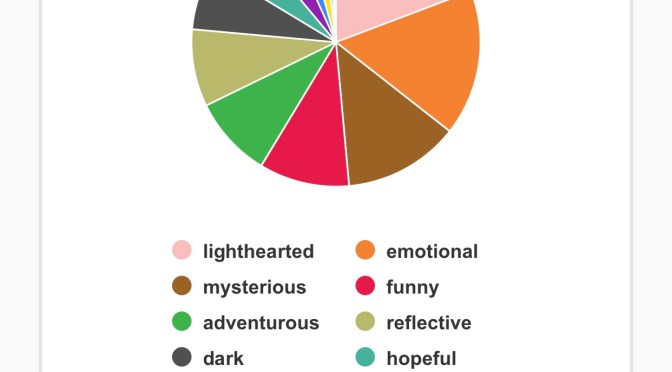
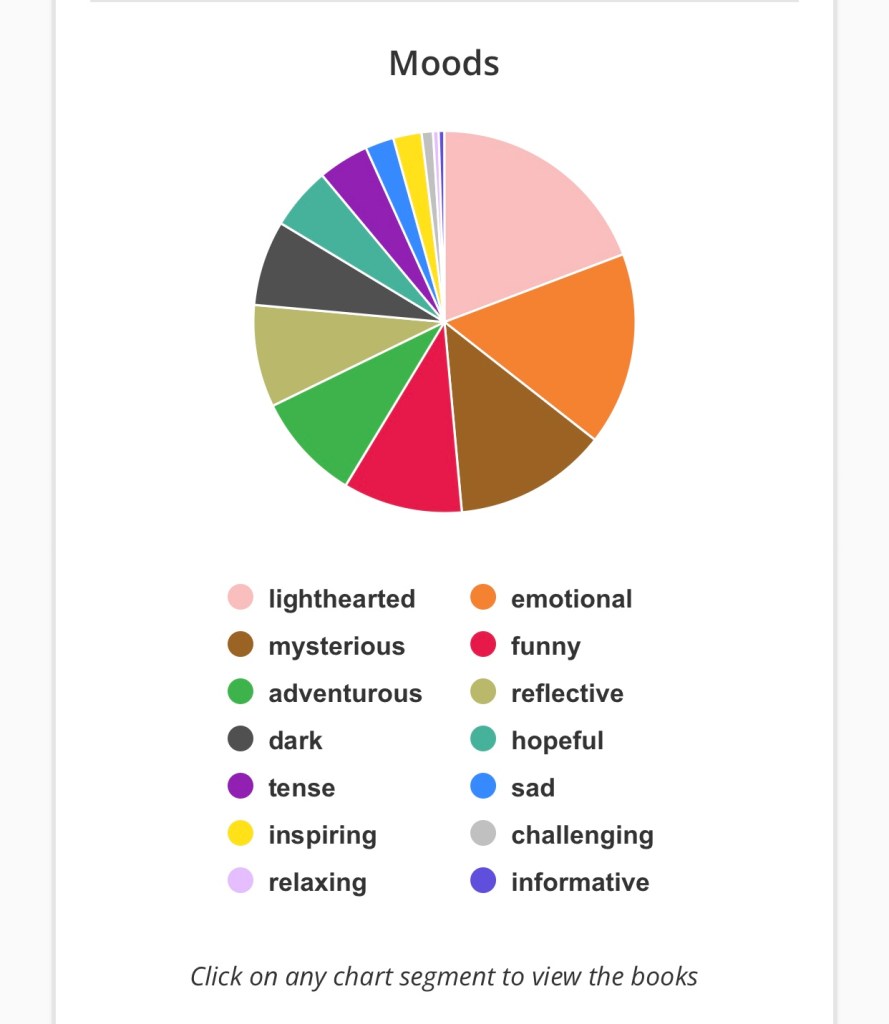
- ‘Moods’ of the books read
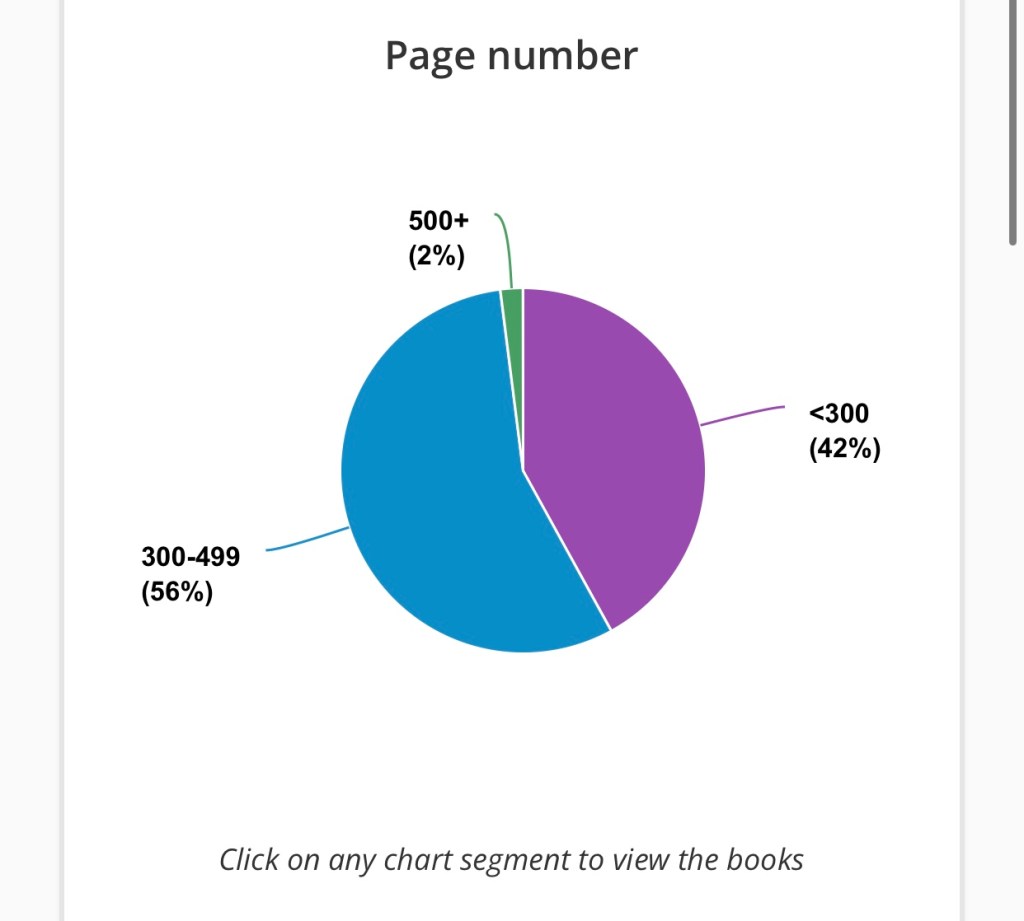
- Books by a total number of pages
- The pace of the books read
- The proportion of non-fiction to fiction books read
- A linear graph showing the number of books and pages read over a period of time
I have included some of the graphs below, showing all of this information (for all the books that I read in 2021.)

The top pie chart represents the proportion of pace of the books, between slow-paced, medium-paced, and fast-paced.
The bottom pie chart represents the proportion of books according to their total page number.
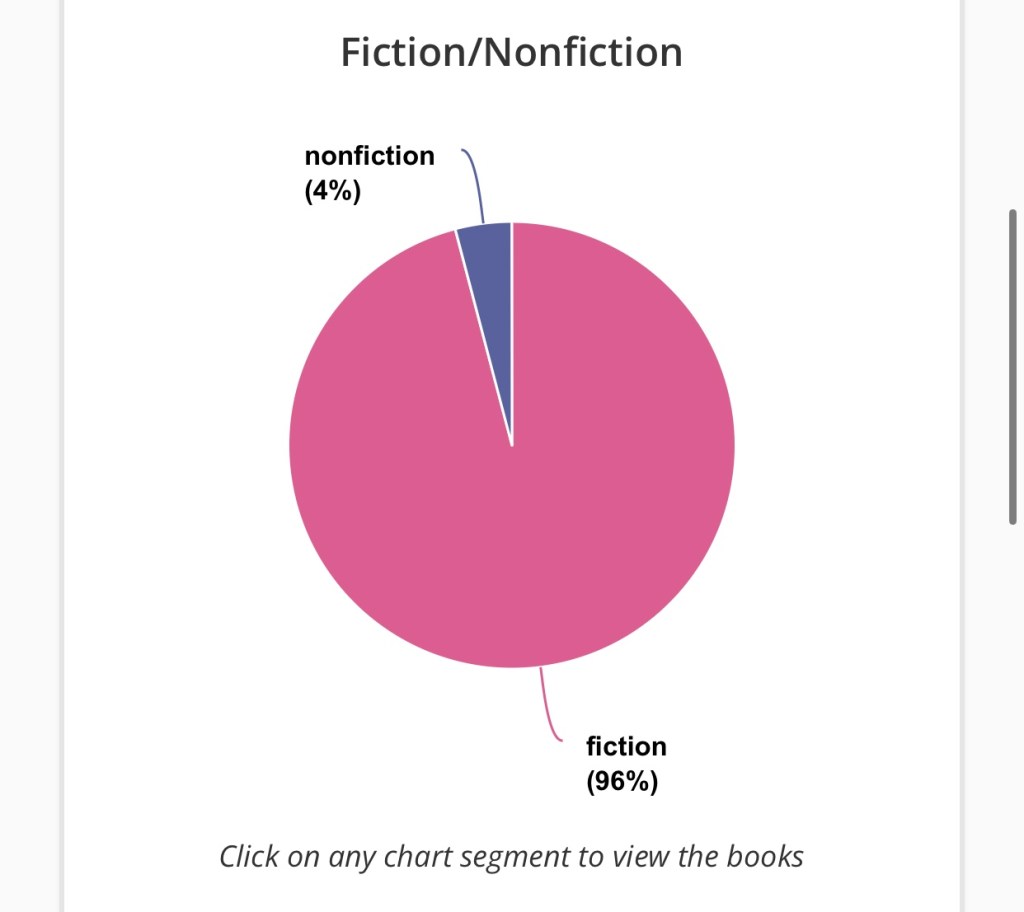
The top pie chart represents the proportion of fiction to non-fiction books.
The bottom graph represents the number of books for each specific genre.

Pie chart showing the ratio of different formats read – between print, digital and audiobooks.


The line graph is a linear representation of both books read and pages read from the beginning of the year to the current month.

Bar chart of your book ratings.
AUTHORS

Most read authors (by number of books read by them)
READING WRAP UP

I really love being able to see all of this information represented in such a clear and concise way. It is very interesting to me to be able to see all of my reading habits, even for just one specific month in general.
Fun fact: you are also able to compare two time periods, such as year with year or month with moth, to see how your reading has differed!
I recently used the feature to see how much I was reading in June 2020, three months into lockdown to June 2021 where things were a little bit more normal. (I have yet to compare it to this year!)
Book Recommendations
When you sign up to Storygraph one of the first things it asks you is all about your reading preferences, through a questionnaire. This includes your likes, dislikes, and the things that you would NEVER want to read about. You can also be extremely specific with the tropes that you like, such as enemies to lovers, city setting, strong females characters etc.
From this, Storygraph then provides you with a list of book recommendations that best match the preferences that you’ve provided.
I really love this feature because you can be very specific with the types of books you are looking for, and from my personal experience the books that have been recommended to me are absolutely top-notch.
Rating System
As readers, sometimes we will read a book and it won’t quite make a full star because it just lacks that little something. The downside I have found with Goodreads is only being able to award full starts to books. This can be annoying when a book is, for instance, not quite worthy of five stars, but is deserving of more than four.
I would hate having to choose between one full star to the other, ow awarding a book a lower star than I think it deserves, purely because it just didn’t hit the mark for me to make it a full star.
However, with Storygraph you can actually award half and quarter stars!!! This is such an amazing feature, because you can give books an exact rating. I find myself using the .5 and .75 options a lot, as many times a book will fall slightly short of the full star, and I like being able to specify exactly where between the two stars I feel the book lies.
It has honestly made such a difference to my rating and reviewing, and I love being able to see all of the half and quarter star ratings in the bar chart as well!
Reviewing System
Another reason why I think Storygraph is better than Goodreads is because of the reviewing system. I think that it is far superior in terms of content, and as with the rating system you can just be so much more specific with your reviews.
When you go to write a review for a book, there is a questionnaire similar to that which you receive when you sign up, only this one is designed specifically for the book your are reviewing.
It will ask you about the pace of the book, the mood, whether it is character-driven or plot-driven, but most importantly includes questions about content and trigger warnings!
The only downside so far is that you cannot link your reviews to social media accounts (which is what I used to do on here with my Goodreads), but then again Storygraph is a relatively new platform and the creators are working and developing new features and ideas constantly, so you never know what might be coming out in the near future!
Shelving
I know that the reason people like Goodreads so much is the way in which you can shelve book, but once again I feel that Storygraph is superior for this also.
not only can you shelve the books on the standard ‘read’ and ‘to be read’ piles, but you can also DNF books!!
Additionally, you can also mark a book as ‘owned’ so that you can see what books you have on your physical bookshelves! This is so handy if you’re trying to work your way through your physical TBR as you can filter by this option and it will show you all of the books you own!
(It’s also handy if you’re out book shopping so that you don’t end up buying the same book twice, especially if your bookshelves are overflowing to the point where you cannot remember what is on them!)
Reading Challenges
Storygraph also includes a similar feature to Goodreads where you can set your reading goal/challenge for the year, and it will track the amount of books that you have read towards this goal (it also tracks the total number of pages read too!)
I also love that, like Goodreads, you can see how close you are to your goal by how full the bar is!

Furthermore, Storygraph allows you to set your own reading challenges or join challenges that others have made! You can see how many tasks are in each challenge and how many participants there are. There are author, geographical, genre, word, title, page, and pop culture challenges, along with everything else that you can possibility think of. And, if there’s something that you think would make a wonderful challenge but you cannot find it – then make it yourself!
Importing Goodreads Library
Now, you’re probably thinking ‘why would I switch to Storygraph when all of my books are currently on Goodreads? Wouldn’t it be so time consuming to add each book one by one, especially if I have read a lot of books?’
Short answer: nope. In fact, it couldn’t be more simple.
Storygraph actually has the option for you to import your Goodreads library, meaning that you don’t have to add them one by one. You simply follow the steps that are given to export your library on Goodreads and upload this to Storygraph.
Once it’s complete and confirmed, all of your books with be transferred over to Storygraph on your specific shelves (including all of the dates read, ratings, reviews etc.) and voila! The only thing you will have to add is if you have DNF’d any books, as obviously this feature is specific to Storygraph.
You can then go through and edit your reviews to make them more thorough if you wish, such as including content warnings and points about plot/character/pace etc. as you normally would with any other book you have reviewed on Storygraph.
Supporting a Small Business
So, I have a love/hate relationship with Amazon. I love being able to have access to things at my fingertips exactly when I need them with Prime and I love my Kindle, but I also hate the fact that Goodreads is owned by Amazon, and by using them I am supporting a corporate giant. (I hate it even more now that Amazon is on track to own 85% of the book market by 2025… but that is a rant for another post.)
This is why I love Storygraph. It started as a side project for the founder, Nadia, and consists of a ream of only THREE people; and every reader that uses it is helping to contribute to their small business.
Because it is relatively new, the community for Storygraph is a lot smaller than Goodreads, but hopefully the more that people try it out (and end up loving it), and the more positive reviews that it receives, the bigger the community will become.
I know that I have seen a few Booktubers and highly popular Bookstagrammers post/talk about Storygraph, so hopefully people will love it and join in the fun!
Made for Readers
Finally, it is very clear to me that Storygraph is a platform tat is made for readers by readers. Though it is minimalistic, which I actually love, it is evident that they really thought it through and understand everything that readers are looking for – from being able to see their stats, refine their book recommendations, write specific reviews with exact ratings and content… they just got it absolutely right.
While you can sign up for the free version, there is also an option to subscribe for 4.99 a months, whereby you can submit suggestions and recommendations for new features, and even be on the list to possibly test our the new features before they are rolled out permanently on to the platform.
Ultimately, if I hadn’t made it clear throughout this post (which I hope I have), I absolutely adore Storygraph. I think it is an outstanding platform for readers, and I cannot wait to see where it is headed!
Discover more from
Subscribe to get the latest posts sent to your email.
 thebecksedit.co.uk